

Swap rates are falling fast. In fact, since the beginning of June, they have fallen at their fastest rate since the rapid retreat of the Global Financial Crisis (GFC) in 2008.
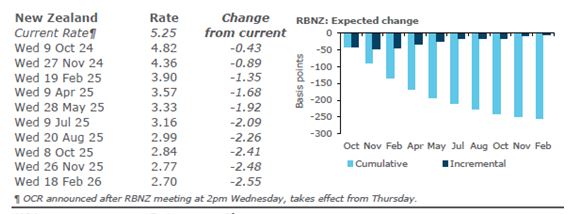
And more is expected. Wholesale markets are pricing in almost a full 50 basis points drop in the Official Cash Rate on October 9, followed by a similar drop on November 27. More is priced in for 2025.
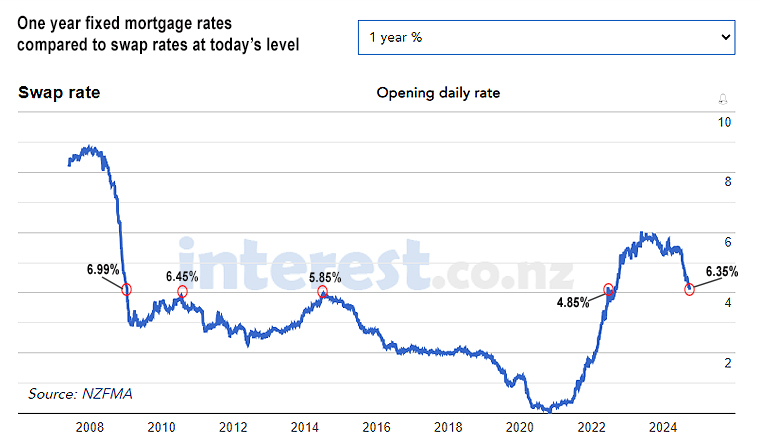
So it seems timely to take a look back at where both mortgage interest rates (and term deposit rates) were when swap rates were last at these levels.
Our look is just for the one year duration, the one most influenced by the Reserve Bank's OCR. (Longer terms are increasingly influenced by global forces.)
The current rate has some way to fall to match other periods when swap rates are at this level. Interestingly, when the last fast-falling period was underway in 2008, rates back then were 65 basis points higher than now.
A broader, holistic look at these rates shows that margins now are little different to their long-run average. The times the margin was unusually low were first in the silly pre-GFC bubble, and secondly during the equally silly pandemic bubble.
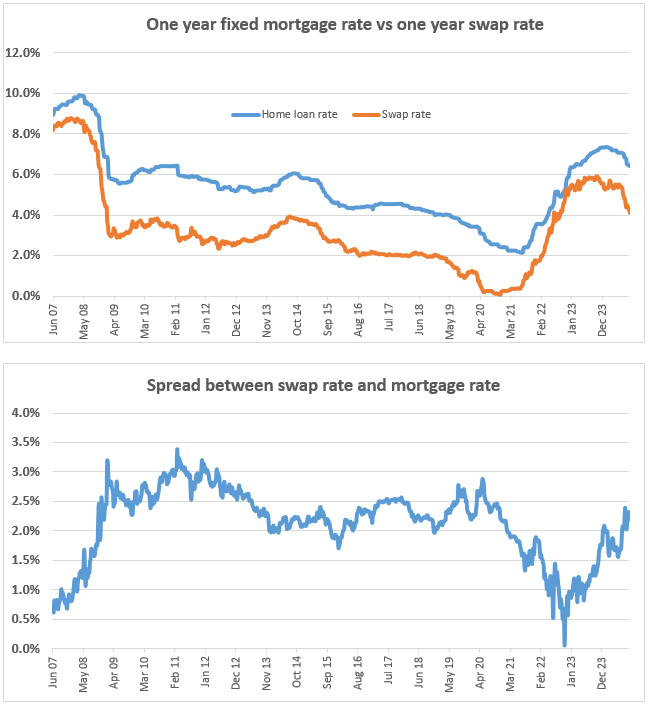
The good thing about this view is that it shows - even for a one year fixed home loan rate - the wholesale swap rate is a good real-time indicator of the retail mortgage rate offer tracks.
We should expect rate offers to reduce soon. And if the financial market pricing of a further 75 basis points to 100 basis points reductions before the end of 2024 actually happens, then this rate could be as low as 5.75%. We'll see. Financial market pricing is very fickle and shifts quickly as new influences arrive. It is not a predictor.
Term deposits
And here is the same situation for one year term deposits. We include the six-month rate as well, because that is more popular for savers.
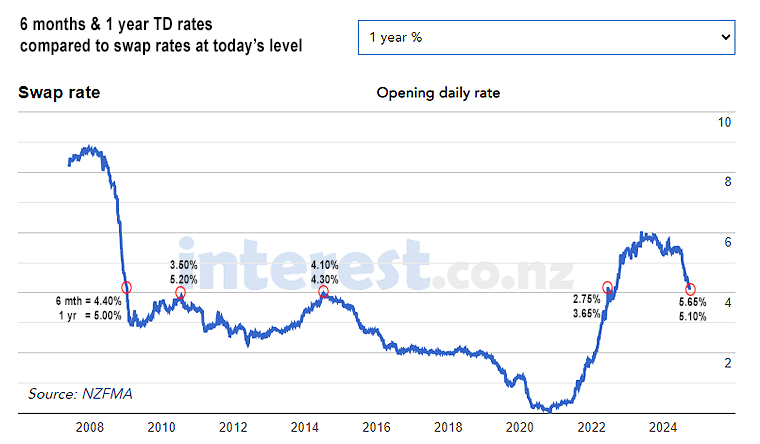
Current term deposit rates are unusually elevated based on these comparatives, especially the six month rates. So perhaps they have further to fall.
We welcome your comments below. If you are not already registered, please register to comment
Remember we welcome robust, respectful and insightful debate. We don't welcome abusive or defamatory comments and will de-register those repeatedly making such comments. Our current comment policy is here.