
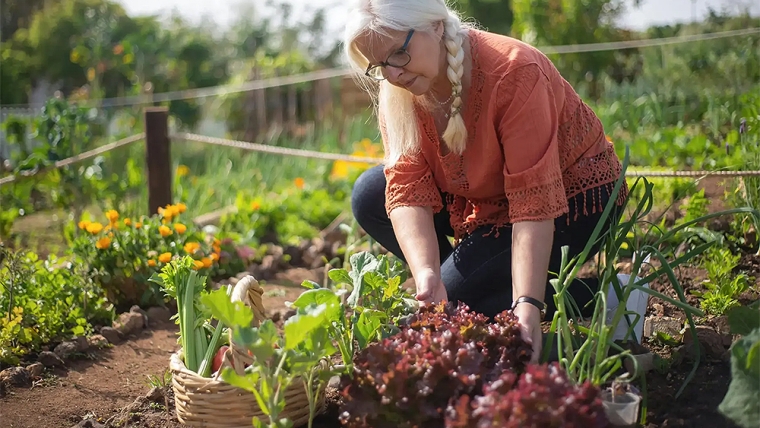
I was out on my morning walk the other day with Jett, when I stopped to chat with the lovely lady who looks after the gardens around our local parks. She's one of those people who genuinely loves what she does, and it shows in every flower bed she tends. I asked her what was going into the flower bed, and she said the 3P’s, petunia’s, peas, and something else...
We carried on chatting and she mentioned she'd been talking to the manager at the local garden centre, and he'd shared something that caught both of our attention. Flower sales were down. Vegetable plant sales were up. It's a small observation. But I think it says quite a lot.
There is psychology behind the shift, when people start choosing vegetables over flowers, it usually reflects something deeper than just gardening trends. It can point to how we're feeling about money, security, and even control.
There's a quiet shift that happens when times feel uncertain. People start leaning towards what feels useful (even if we aren’t very good at it). Practical. Sensible. A tray of lettuce seedlings can feel like a step towards self-sufficiency in a way that a bed of petunias simply doesn't. Even if the actual dollar savings are questionable, the intention behind it feels reassuring.
That's where the psychology becomes interesting. For many households, growing vegetables feels proactive. Instead of watching prices rise at the supermarket, you're doing something about it. But the reality isn't always so straightforward. Vegetable gardens take time, effort, and a bit of luck. Plants fail, pests turn up uninvited, and seasons don't always cooperate. By the time you factor in soil, seedlings, water, and your own time, it's not always the cheaper option people imagine.
There's also a timing gap that often gets overlooked. You don't plant a tomato and eat it the next day. After quite a bit of TLC my tomato plants very generously gave me six tomatoes over the course of a week, of which the bugs got four! While families are investing in growing their own food, they still need to buy them in the meantime. That's where the idea of a "false economy" can quietly creep in. It feels like saving, but in the short term, it can add pressure.
Not everyone growing vegetables is doing it to save money. And honestly, I think that's the more interesting conversation. For many people, it's about awareness. There's a growing desire to understand where food comes from, how it's grown, and what goes into it. Growing even a small amount at home can genuinely shift how a family thinks about food. Kids who help plant and pick vegetables are often more willing to eat them. There's a sense of connection and pride that doesn't come from a plastic bag at the supermarket.
And then there's something less tangible, but just as important. Growing food can feel grounding. In a world where so much feels out of our control, tending to a garden gives people something steady to focus on. You water it, you look after it, and over time, it grows. That process can be just as valuable as the harvest itself. My neighbour is over 90 and I see him outside everyday tending his very large garden, he does have help now, but his garden and the beautiful produce that he grows gives him purpose and a reason to get out of bed each day.
I’m not a great gardener, and I have probably killed more veges than I have successfully grown, but somehow this summer, I got into the rhythm and was able to produce enough lettuce to keep Mum and I happily in salads. There’s something very satisfying about picking your own, whether its veges or fruit from your garden. There’s also the sense of community that goes along with this too. Everyone around us grows something, and we happily share what we have with each other. Mum and I aren’t so good at the growing bit, so Mum makes jams and chutneys and we share those.
So where do flowers fit in? Flowers tend to be cast as the non-essential option. They don't feed you. They won't reduce your grocery bill. But that doesn't mean they have no value. A garden that looks beautiful can lift your mood, create a sense of pride, and make your home feel more welcoming. That has its own kind of return, even if it doesn't show up in your bank account.
Focusing only on the practical can lead to a very functional life, but not necessarily a very enjoyable one. And if you've quietly stopped buying flowers because they feel like a luxury you "shouldn't" have, it's worth reconsidering what role those small joys play in your overall wellbeing.
Can we have a bit of both? Absolutely. And I'd encourage it.
A small herb garden on the windowsill, a couple of vegetable plants you know you'll use, and a few flowers that make you smile when you walk past them. That combination often works better than going all-in on one idea and finding it harder than expected to maintain.
The same thinking applies to money more broadly. Not every decision needs to be purely about saving. If everything becomes about cutting costs, life can start to feel restrictive. On the other hand, if there's no thought to practicality at all, that creates its own kind of stress.
The goal isn't perfection. It's awareness.
If you're planting vegetables because you genuinely enjoy it and love the idea of growing your own food, that's a wonderful reason. If you're doing it purely to save money, it's worth taking a step back and honestly looking at whether it's achieving that in your situation.
A garden, in many ways, reflects priorities. What you choose to plant often mirrors how you're thinking about your time, your money, and your wellbeing.
And sometimes, the best answer isn't choosing between pretty and practical. It's making space for both, which is what Mum and I ended up doing, she came home from the garden centre with the petunia’s and I got the spinach.
*Lynda Moore is a Money Mentalist coach and New Zealand’s only certified New Money Story® mentor. Lynda helps you understand why you do the things you do with your money, when we all know we should spend less than we earn. You can contact her here.
4 Comments
Living on a hill in Dunedin, the soil is so poor that it was actually a good choice to put under houses, but it does mean vegetable gardens aren't really viable unless you're keen to spend a lot of effort improving the soil. I just gave up and mass planted locally evolved native plants that seem to be the only things capable of prospering.
Moral: maybe the old school, flat quarter acre plot as insurance against when times get really rough wasn't a bad idea. The people who laid those out had lived through the great depression, where there were more mealtimes than meals for many.
Facing the sun, or away?
If you're facing it, you can grow anything.
I'm not far north of you, and nearly self-sufficient.
Such a good point — those post-depression generations really knew what they were doing with that quarter acre! And working with your land rather than fighting it is always the smarter move
"If you're doing it purely to save money, it's worth taking a step back".
Of course you can save money growing your own food. Quite a lot actually. Depends if you're drowning in the same consumer mindset prevalent in the rest of daily life. The best place to start is a compost bin. 4 pallets being given away and cardboard to line them. Buying compost and potting mix is an expensive, unneccessary drain. Growing from seed instead of buying plants is also ultra cheap, you can even save your own seed over time. Take cuttings for perennials and berries. Also depends how you value time I guess? Sitting in front of the computer, or attending to your own self sufficiency. Gardening nouse doesn't come from the moment you decide food is too expensive, it comes from experience. If you can't be bothered tending a crop from planting to harvest, it's best you keep buying the expensive, wilted, chemically soaked, food mile items from the local cartel.
Chuckle. I just counted our fruit/nut trees today - first time ever. 99, it appears.
And 1/4 acre just the main garden. And she who mostly works it, works formally, too.
With the right mindset and a bit of know-how, the savings are very real. The compost bin point is spot on — so many people overlook that first step. You're right that it's a skill built over time, not a quick fix. Experience really is everything in the garden!
We welcome your comments below. If you are not already registered, please register to comment
Remember we welcome robust, respectful and insightful debate. We don't welcome abusive or defamatory comments and will de-register those repeatedly making such comments. Our current comment policy is here.