


Improvements in home loan affordability over the last 18 months appear to have come to an abrupt end in February.
The sudden deterioration in affordability occurred due to a combination of steadily rising mortgage interest rates and a jump in prices at the bottom of the market.
The average two year fixed mortgage rate has been rising since it hit a cyclical low of 4.49% in November last year, increasing to 4.72% in December, 4.74% in January and then 4.87% in February.
That was accompanied by a jump in the Real Estate Institute of New Zealand's lower quartile selling price to $600,000 in February, which reversed a sharp fall to $583,000 in January.
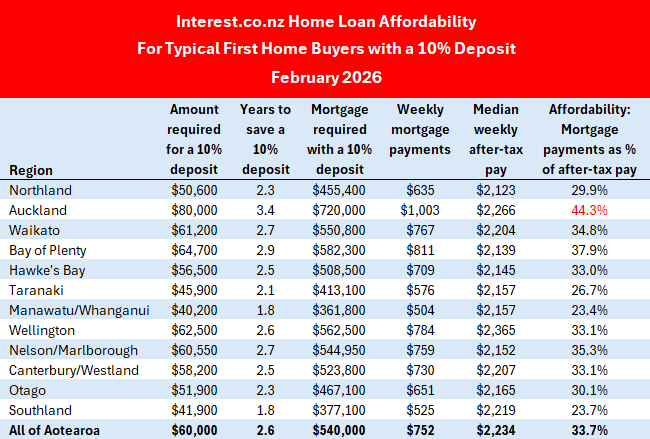
That combination of higher prices and higher interest rates pushed the mortgage payments on a lower quartile-priced home up to $752 a week in February, assuming the home was purchased with a 10% deposit, up an extra $32 a week compared to January.
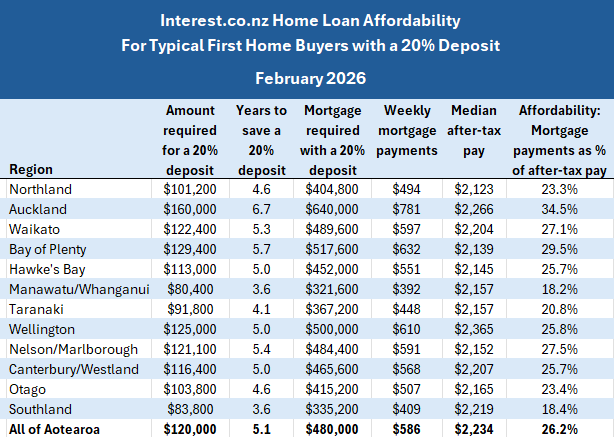
For buyers with a 20% deposit the mortgage payments would have increased to $586 a week, up an extra $26 a week compared to January.
However, it is important to note the recent rises in both lower quartile prices and mortgage interest rates have only taken them back to where they were late last year, and that housing remains well within affordable limits for typical first home buyers on average incomes in most parts of the country.
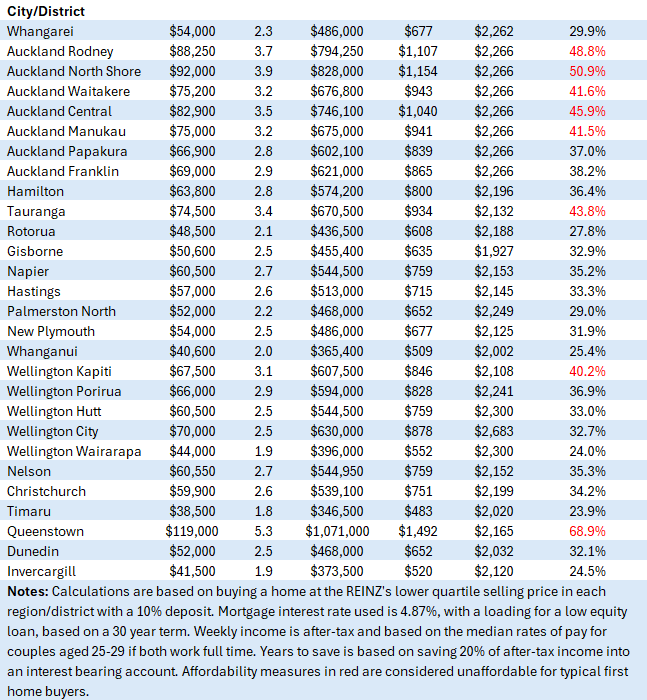
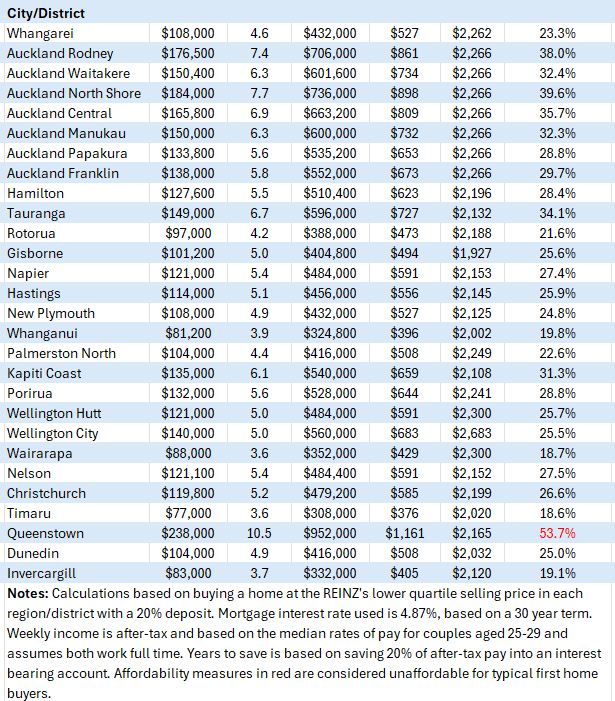
That said, they will likely need a higher than average income in most parts of Auckland if they have less than a 20% deposit. And home ownership in Queenstown remains well out of reach for all but the already wealthy or the highly paid.
Finally, the economic landscape in February was very different to that which is emerging in March, with the market being dominated by the twin themes of volatility and uncertainty over the last few weeks.
Consequently, it may well be the affordability picture that emerges at the end of March is quite different to the one we saw at the end of February.
The tables below show the main measures of affordability for all of the main urban districts throughout the country, for buyers with either a 10% or 20% deposit.
The comment stream on this article is now closed.

We welcome your comments below. If you are not already registered, please register to comment
Remember we welcome robust, respectful and insightful debate. We don't welcome abusive or defamatory comments and will de-register those repeatedly making such comments. Our current comment policy is here.