
By Mike Blackburn*
I was recently asked about the increasing cost of building supplies and the pressures facing the construction sector.
Specifically, the question was; was it really taking between two and three years to get a house built?
My initial response was that despite issues with the price and supply of some building materials, most builders were still able to complete housing projects within standard time frames.
However, that got me thinking.
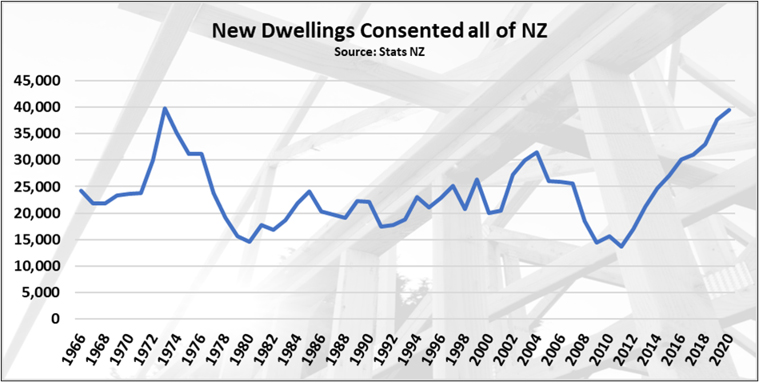
When you look at the whole process of building a house, the entire industry is pretty much at peak capacity. Currently the residential construction sector is applying for more building consents than ever before, and this puts pressure on all parts of the system.
Let’s start with land. If you can find a section here in Canterbury, it is likely that you won’t get “title” until the end of next year, that’s 18 months away. Demand for land is so high, that group housing companies are buying up sections in lots of 20 or more at a time. This is squeezing smaller builders out of the market, let alone private buyers. And it all leads to one thing, a significant increase in prices.
On top of this, continued development of new green field subdivisions are limited by the need for new infrastructure to support these developments. Despite the Governments $3.8 bln infrastructure fund, this is long term development. Projects of this nature take years in planning and development and money alone won’t necessarily speed up the delivery.
Then there is the building consent process. Because of the volume of building consent applications, Councils are under tremendous pressure to process the current flood of applications. MBIE requires Councils to process a building consent application in 20 working days. Christchurch and Selwyn Councils are currently taking almost twice this time. I understand that both are actively looking for more staff (like everyone), but this takes time, and skilled staff (in this particular field) are hard to find.
Builders are flat out. I have just completed a survey of local builders, where almost everyone says that they will build as many, if not more houses in the next 12 months than they did in the previous year. This means sub-contractors are in demand and there are only so many of them to go around.
Given the recent pandemic lockdowns and the current government policy on restricted immigration, builders and sub-contractors can’t get more staff to keep up with the increasing demand for work, which in turn limits the number of projects able to be completed.
It's no secret that imports of building materials and all goods into New Zealand are in limited supply. Again, this is driven by the global lock-downs, and the international supply chain and logistics are under severe pressure. The cost of shipping has risen significantly which all puts upward pressure on the price of building materials.
Add all of these things up and you have a building industry that is at capacity and stressed to breaking point.
So the questions is … how long can this go on for?
On a positive note, it looks like the demand for new housing is still strong. It is demand that drives this industry. But there will come a time (if we aren’t there already) where we reach the absolute capacity of the sector to build any more.
In my opinion, the ongoing upward surge in the number of building consents simply can not continue. It is beyond the building industry's capacity to meet this continued level of demand.
Building consent numbers must surely level off by the end of this year. History tells us that the construction sector works in cycles. This current “building boom” has been with us for 10 years now, which is extraordinary in itself, and if you look at the graph below, this run is unique with regard to anything that has happened in the industry in the past 30 years (even if we did start from a very low base).
The good news is that as long as the demand for housing continues, builders will keep building. But that buying demand will need to be prepared to pay today's costs.
Mike Blackburn is the principal of Blackburn Management. You can contact him here.
We welcome your comments below. If you are not already registered, please register to comment
Remember we welcome robust, respectful and insightful debate. We don't welcome abusive or defamatory comments and will de-register those repeatedly making such comments. Our current comment policy is here.