
The good news in Australia is that Covid-19 no longer dominates the headlines. The bad news is that it has been replaced by Russia’s invasion of Ukraine.
Like so many things about this invasion, its impact in Australia has been much greater than many would have predicted.
From the moment the world learned that Russian troops had crossed the Ukrainian border, the Australian federal government went on the front foot. One of the first steps was to prioritise the processing of visa applications from Ukrainian nationals. Prime Minister Scott Morrison announced that these applications would go to “the top of the pile”.
More significantly, in the first week Australia committed to “humanitarian assistance of an initial $35 million to help meet the urgent needs of the Ukrainian people” and “$70 million in lethal military assistance to support the defence of Ukraine, including missiles and weapons”.
Australia’s military assistance, organised primarily via the United Kingdom and the United States, has already arrived in Ukraine. Ukrainian President Volodymyr Zelenskyy, the hero of the hour, has thanked Scott Morrison on a phone call for the supplies provided and for Australia’s solidarity with the Ukrainian cause.
Morrison has certainly not held back, calling Russia a “pariah state” – “That's how they should be known all around the world. No-one should have anything to do with them."
To that end, the Australian government has imposed extensive sanctions against Russia, members of the Russian government, and various cronies of Russian President Vladimir Putin. Individuals sanctioned include Putin himself, his Foreign Minister Sergey Lavrov, and “339 members of the Russian Parliament who voted in favour of recognising the Ukrainian regions of Donetsk and Luhansk as independent republics”.
Prime Minister Morrison says that “Russia must pay a heavy price” and that “we will continue to add to that price as we consider every single option that is in front of us”.
The Australian Treasurer, Josh Frydenberg, has been as forthright as the Prime Minister. He told the Australian Financial Review that “we will not hesitate to inflict as much economic pain as possible on Putin’s regime”.
In a joint statement with the Minister for Superannuation, the Treasurer announced the government’s “strong expectation that Australian superannuation funds will review their investment portfolios and take steps to divest any holdings in Russian assets”. The superannuation industry has got the message and many funds are divesting Russian assets.
Australia’s $200 billion sovereign wealth fund, the Future Fund, has also announced that it will dispose of its $200 million holdings in Russian companies.
Some commentators have suggested that the enthusiasm of the federal government for ‘Russia bashing’ is being driven in part by domestic political considerations. An election is due by May and many view national security as a stronger suit for the governing Liberal/Nationals Coalition than for the opposition Labor Party.
Prime Minister Scott Morrison claims that his government is the “proven choice” on national security. He may prefer a ‘Khaki election’ to one that focusses on inflation and rising interest rates.
Political considerations may also partly explain the Prime Minister’s vociferous attacks on China. He has castigated the Beijing regime for failing to criticise Russia’s invasion of Ukraine and abstaining on key votes at the United Nations.
The fact that China opened up to Russian wheat imports on the day the invasion commenced was another trigger for Scott Morrison’s ire. As he put it, “You don't go and throw a lifeline to Russia in the middle of a period when they are invading another country. That is simply unacceptable."
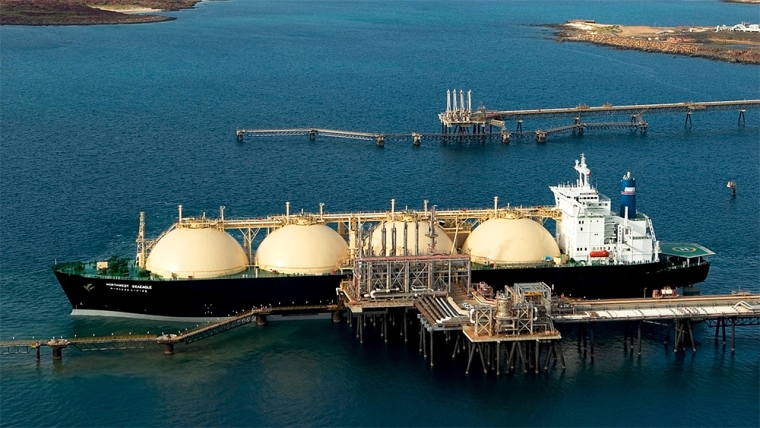
Putting aside the anti-Russia and anti-China rhetoric, Morrison’s reelection prospects might be assisted by the economic windfall for Australia arising from the Ukrainian invasion. The invasion has put a rocket under energy prices. That is great news for Australia, the world’s second largest exporter of both LNG and coal. The price of coal has more than doubled in the last ten days since Russia attacked Ukraine.
Russia and Ukraine account for about a quarter of world wheat exports. Unsurprisingly, the price of wheat has soared to a 14-year high following the invasion of Ukraine. Australia, with 6% of the world wheat export market, stands to be a big winner.
Geopolitical uncertainty is also pushing up the price of gold. Australia is the world’s second largest producer of the precious metal.
Australian exports were booming even before the current crisis. They hit a record high of nearly $50 billion in January. That record may well fall as the situation in Eastern Europe inflates prices for LNG, coal, wheat, gold, and many other Australian export commodities.
The lucky country strikes again.
Against this backdrop, it is not surprising that the Australian dollar has appreciated against most currencies since the outbreak of hostilities in Ukraine. It has even held up against the US dollar, the currency to which investors flee in times of international crisis.
Likewise, the Australian share market has suffered less than many markets overseas due to the relatively heavy weighting of mining and energy stocks.
The federal government will benefit significantly from the export boom via buoyant tax revenues. That’s just what the national budget needs after the crippling costs of supporting the economy through the last two years of the pandemic.
And just what Scott Morrison needs if he is looking to offer voters tax cuts or other goodies in the upcoming election campaign.
To be fair to Morrison, there is no doubt that his support for Ukraine, and his contempt for Russia, are genuine. Lucky for him, those views are shared by a majority of Australians.
In this case, good policy makes good politics.
Ross Stitt is a freelance writer and tax lawyer with a PhD in political science. He is a New Zealander based in Sydney. His articles are part of our 'Understanding Australia' series.
We welcome your comments below. If you are not already registered, please register to comment
Remember we welcome robust, respectful and insightful debate. We don't welcome abusive or defamatory comments and will de-register those repeatedly making such comments. Our current comment policy is here.