

Residential properties appear to be selling for around $100,000 less than their asking prices, with vendors being slow to accept how much values have fallen and buyers driving hard bargains.
Comparing the average asking prices on Trade Me Property with the Real Estate Institute of NZ's median selling prices, shows on average there is a huge gap between the prices vendors are hoping for and the prices buyers are prepared to pay.
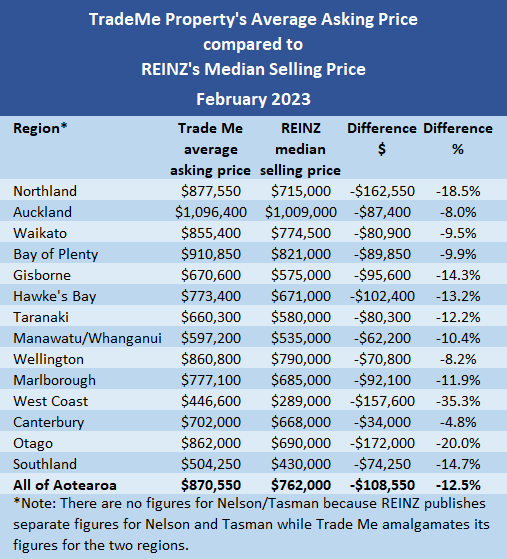
In February, the national average asking price of properties advertised on Trade Me was $870,550, while the national median selling price recorded by the REINZ in the same month was $762,000, a discount of $108,550 to the average asking price.
The same phenomenon was evident throughout the country, with selling prices substantially lower than asking prices in all regions.
The biggest difference between the two figures was $172,000 in Dunedin. Canterbury had the smallest difference at $34,000.
The size of the gap between asking and selling prices suggests many, if not most, vendors have not fully accepted how much the housing market has changed over the last 12 months and have unrealistic price expectations when they list their properties for sale.
Selling prices have also been falling faster than asking prices, with the REINZ's median selling price down 13.9% in the year to February, while Trade Me's average asking price was down 9.2% over the same period.
That also suggests vendors have been slower to adjust their expectations to the changing market than buyers.
That's likely to be one of the main reasons the market has been so slow, with residential sales down 31% in February compared to the same month last year, while the number of homes available for sale was up 25% compared to a year ago.
Although the Trade Me and REINZ figures are calculated differently, with Trade Me providing an average price and the REINZ a median price, the difference this creates is unlikely to be huge.
The chart below shows the difference between asking and selling prices throughout the country, and although it is not an exact measurement, it probably gives a reasonably good idea of what is happening in the market.
As the peak summer selling season is drawing to a close and economic uncertainties show no sign of abating, vendors hoping to achieve a sale over the next few months are probably going to have to bite the bullet on price in what is likely to be a painful exercise for many.
The comment stream on this article is now closed.
- You can have articles like this delivered directly to your inbox via our free Property Newsletter. We send it out 3-5 times a week with all of our property-related news, including auction results, interest rate movements and market commentary and analysis. To start receiving them, register here (it's free) and when approved you can select any of our free email newsletters.
We welcome your comments below. If you are not already registered, please register to comment
Remember we welcome robust, respectful and insightful debate. We don't welcome abusive or defamatory comments and will de-register those repeatedly making such comments. Our current comment policy is here.