
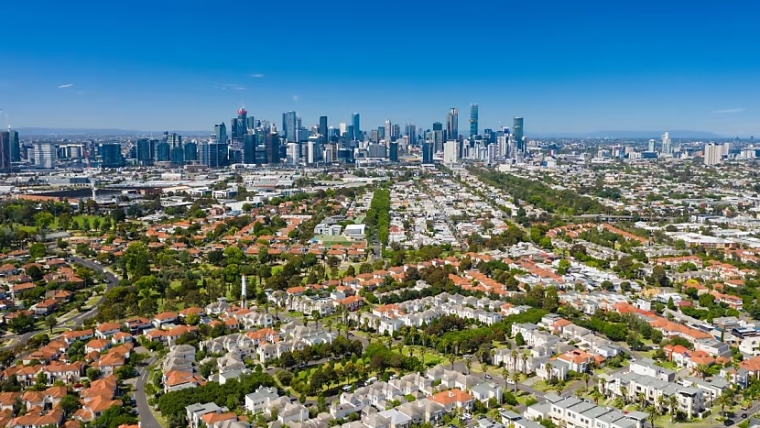
New Zealand and the state of Victoria have several problems in common. These include a housing crisis and a level of government debt that soared during the Covid-19 pandemic.
With an impending election, kiwis will be wondering what policy measures their next government might adopt to address these problems. Recent moves by the Victorian state government reveal some of the possible options.
And a warning. Some readers may find these options distressing.
A key element of the current housing crisis in Victoria is a severe shortage of residential property available for long-term rent. According to CoreLogic, the current vacancy rate for dwellings in Melbourne is just 0.8%. And new migrants and foreign students continue to flood into the city.
The Victorian state government claims that the rental housing crisis is being exacerbated by the number of properties employed in the short-stay market – the market facilitated by platforms like Airbnb and Stayz. According to the government’s recently released ‘Victoria’s Housing Statement – The decade ahead 2024-2034’, there are more than 36,000 short-stay dwellings in the state.
The government’s response to this perceived problem is the introduction of a ‘Short Stay Levy’ from 2025. That levy will be imposed at the rate of 7.5% on the revenues of the short-stay accommodation platforms. The expectation is that those platforms will pass the levy on to the hosts.
It’s not clear whether the government’s primary objective is to raise revenue or to increase the supply of long-term rental accommodation by making short-stay hosting less profitable. However, it has committed to using the revenue raised from the levy to fund social and affordable housing.
Unsurprisingly, there are many critics of the new levy. The short-stay accommodation platforms argue that it will put them at a competitive disadvantage vis-à-vis hotels. The government’s counter argument is that hotels don’t reduce the supply of long-term rental housing.
Tourist operators argue that the new levy will make Victoria a more expensive and therefore less desirable tourist destination. The levy has been dubbed a ‘holiday and tourism tax’.
Another tax in the Victorian state government’s toolkit for improving the supply of housing is the ‘vacant residential land tax’ (VRLT). This is an existing tax that applies ‘to homes in inner and middle Melbourne that were vacant for more than six months in the preceding calendar year’. The tax is imposed at the rate of 1% of the value of the property using the ‘general valuation process’ conducted by the Victorian Valuer-General.
The purpose of the VRLT is to incentivise property owners to either use their property or sell it.
This week, the Victorian Treasurer Tim Pallas announced a major expansion of this tax. First, from 2025 its application will be extended to all of Victoria not just parts of Melbourne. Secondly, from 2026 the regime will apply to unimproved as well as improved land.
The Treasurer described the objective of the changes in the following terms –
We know the best thing you can do to make homes more affordable is supply more of them – this is all about freeing up empty houses for rent and vacant land for new homes, particularly across the outer suburbs and regional Victoria.
Like the short stay levy, the expansion of the VRLT has been met with howls of protest. One of the loudest complaints is that holiday homes around the state will become subject to the tax. The government has said that the VRLT does not apply to holiday homes but it’s not clear if that will be the case for holiday homes owned by trusts, a common ownership vehicle in Australia.
Significantly, the short stay levy and the expansion of the VRLT are not the only adverse tax changes for Victorian property owners this year. In the May budget, the Victorian state government launched a ‘Covid-19 debt levy’. In the words of the government, this is ‘a temporary levy to help pay off the debt incurred during this one-in-one-hundred-year event’.
Temporary in this case means ten years.
In the first four years alone, the ‘Covid-19 debt temporary land tax surcharge’ as it’s called will raise nearly $5 billion from property owners. This will be achieved through a range of changes to the land tax regime including a reduction in the tax-free threshold for land tax from $300,000 to just $50,000.
This will dramatically increase the number of property owners subject to land tax.
As is often the case when governments go looking for extra revenue, one particularly onerous tax increase planned by the Victorian government is targeted at foreigners (who can’t vote). The ‘Absentee Owner Surcharge’ applicable to land tax will be doubled from 2% to 4%.
Kiwi readers living in a country with no stamp duty, no land tax, no short stay levy, no VRLT, and no comprehensive capital gains tax could be forgiven for wondering why anyone invests in property in Victoria.
*Ross Stitt is a freelance writer with a PhD in political science. He is a New Zealander based in Sydney. His articles are part of our 'Understanding Australia' series.
We welcome your comments below. If you are not already registered, please register to comment
Remember we welcome robust, respectful and insightful debate. We don't welcome abusive or defamatory comments and will de-register those repeatedly making such comments. Our current comment policy is here.