


Rising incomes and falling mortgage interest rates are having the biggest impact on affordability for first home buyers at the moment, with house prices at the bottom of the market staying largely flat.
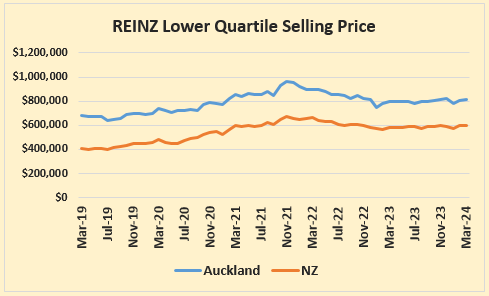
According to the Real Estate Institute of New Zealand, the national lower quartile residential selling price was $600,000 in March, which, give or take a few thousand either side, was more or less where it's been since August 2022. That's after dropping from its record high of $670,000 achieved in November 2021.
Those trends can clearly be seen in the first graph below, which shows only minor monthly movements in prices at the bottom of the market over the last 19 months, with the overall trend remaining flat.
In the meantime mortgage interest rates have been tearing away since mid-2021, with the average of the two year fixed rates charged by the major banks peaking at 7.04% in November last year. It has since declined in every month since and had eased back to 6.77% in March this year
While that is a hopeful sign for aspiring first home buyers, it's probably not enough of a fall yet to make any meaningful difference to affordability levels.
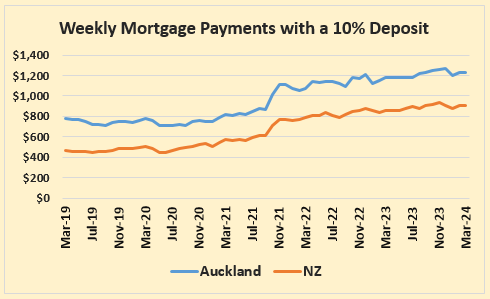
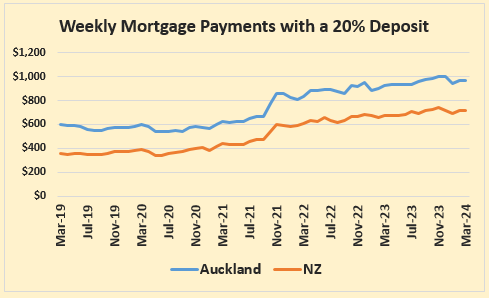
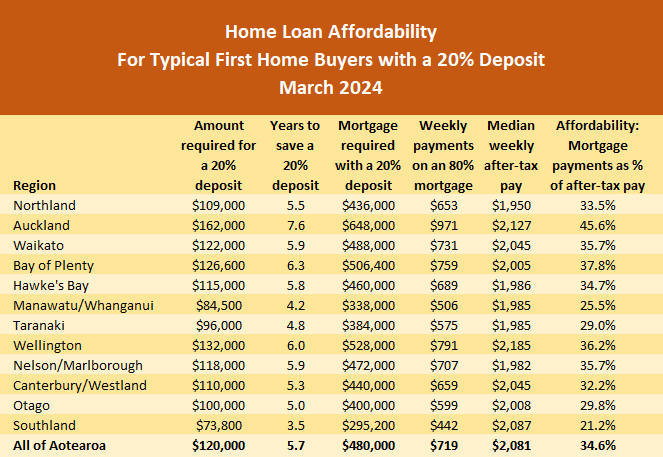
Interest.co.nz estimates the mortgage payments on homes purchased at the national lower quartile price with a 10% deposit would have been been around $911 a week in March, or $719 a week with a 20% deposit.
Although that's down from their respective record highs of $935 and $740 a week set in November last year, the trend over the last six months has been for mortgage payments to bounce around current levels, with relatively minor movements from month to month. (See the second and third graphs below).
The biggest change to the strings that pull affordability lately has been to incomes.
Interest.co.nz tracks the median rates of pay for people aged 25-29 to estimate the after-tax pay for a typical young couple working full time.
Using that formula, the median after-tax (combined) pay for a young working couple would have increased from $1955 a week in March last year, to $2081 in March this year, giving them an extra $126 a week (+6.4%) between them.
Unfortunately around 40% of the extra money would have been eaten up by the movement in mortgage payments over the same period and the remainder would likely have been slurped up by the ravenous beast called inflation. This means in spite of their rising incomes of late, affordability for typical first home buyers probably hasn't improved much over the last year.
While the increase in incomes, the flattening of prices at the bottom of the market and the recent modest decline in mortgage rates are all positive signs for future affordability levels, they have not been big enough so far to produce any meaningful improvements yet.
Whether the current movements in the fundamentals of affordability represent a turning point in the market or a brief pause before the resumption of business as usual, remains to be seen.
The best that could be said of the current market for first home buyers as that at least it's not getting any worse.
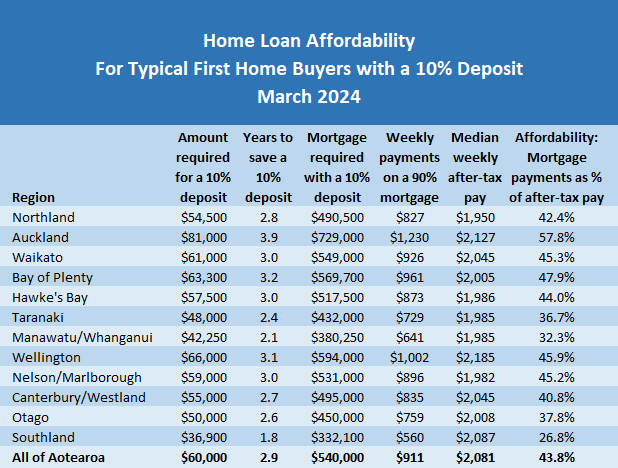
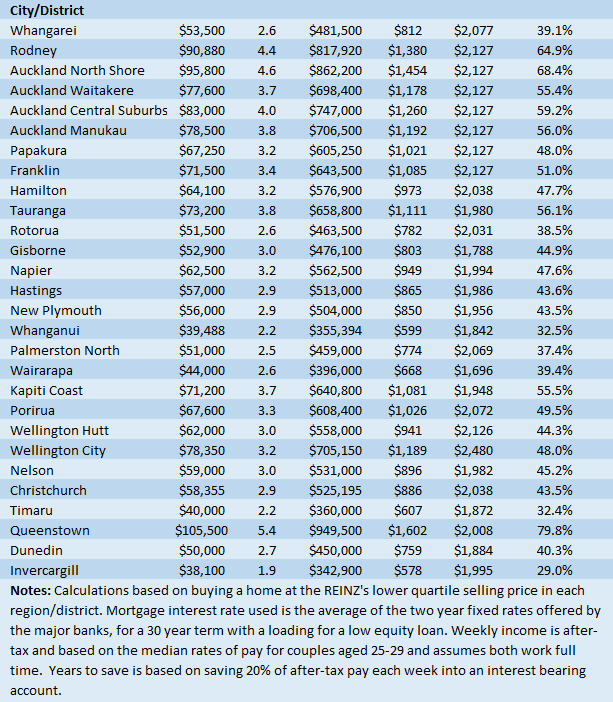
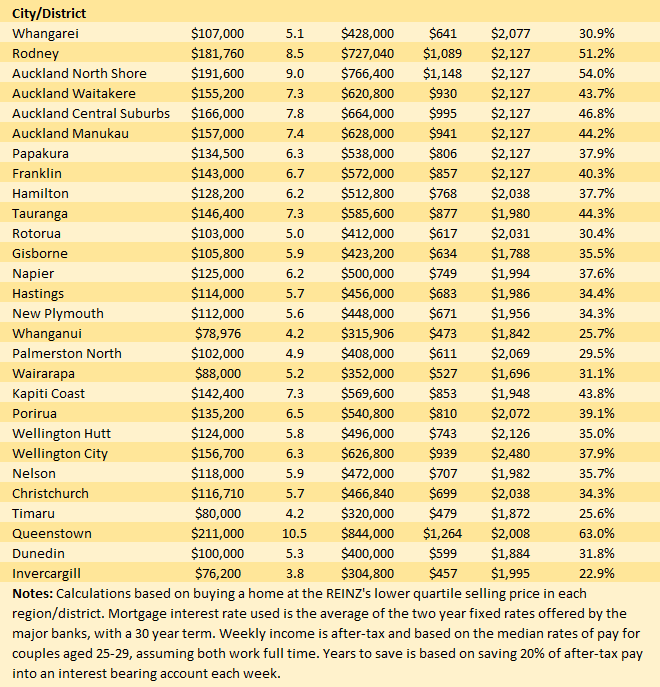
The two tables at the bottom of this article show the current main affordability measures for typical first home buyers in all of the main urban areas of Aotearoa.
The comment stream on this story is now closed.
•You can have articles like this delivered directly to your inbox via our free Property Newsletter. We send it out 3-5 times a week with all of our property-related news, including auction results, interest rate movements and market commentary and analysis. To start receiving them, register here (it's free) and when approved you can select any of our free email newsletters.
We welcome your comments below. If you are not already registered, please register to comment
Remember we welcome robust, respectful and insightful debate. We don't welcome abusive or defamatory comments and will de-register those repeatedly making such comments. Our current comment policy is here.