


They say a picture is worth a thousand words, so this month we have six of them, in the form of graphs, to help explain what is happening in the residential property market.
Unfortunately they paint a very messy picture.
The two sets of housing market data that attract the most attention are selling prices and sales volumes.
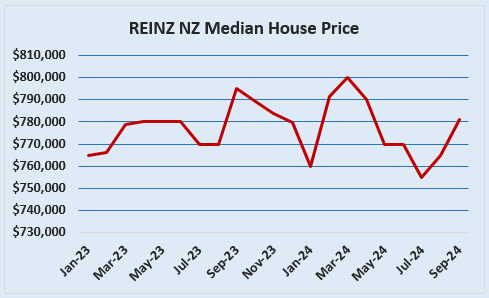
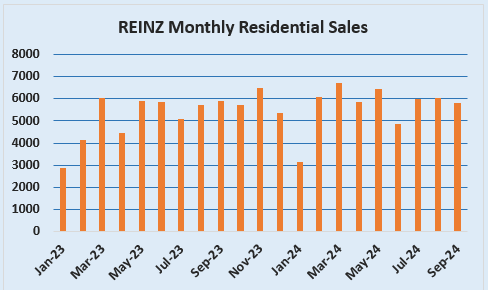
The recent trends for both of these sets are shown in the first two graphs below. The median selling price firmed up slightly in September, which was expected, while sales volumes declined slightly, which was not.
The Real Estate Institute of New Zealand's median price has risen for two consecutive months, from $755,000 in July to $781,000 in September.
This is being proclaimed by some as the start of general rise in prices, but the chart suggests all that's happening is prices are following their usual seasonal pattern, but at a slightly lower level than last year.
Overall, prices are following their usual seasonal trends, but remain within a fairly narrow band with slight signs of weakness.
The sales graph below is also telling.
Sales dipped in September, but only slightly, declining from 6015 in August to 5816 in September.
But if you look at the trend on the graph for the three months to September and compare it with the same period of last year, there are only minor monthly movements and little overall difference from one year to the other.
What we are looking at is a sales pattern that is remarkably flat.
Then there's new listings coming onto the market.
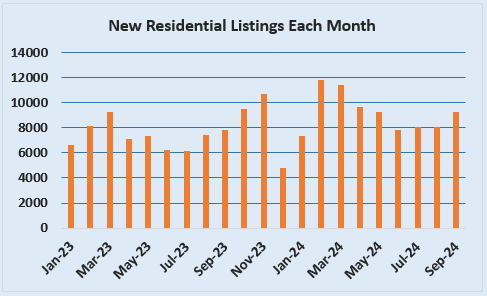
These usually start picking up at this time of year as vendors anticipate a seasonal increase in sales leading up to Christmas and this year is no different.
However there are a few more of them this year than last, with Realesttate.co.nz receiving 9276 new listings in September, up from 7812 in September last year, an increase of 18.7%.
So buyers might be biding their time, but the vendors are keen.
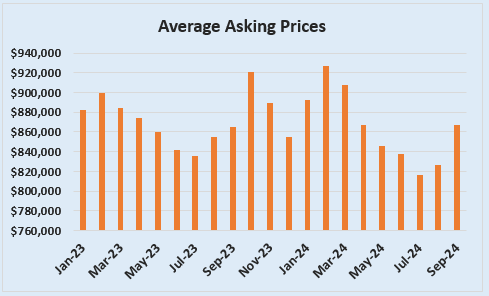
Vendor optimism is also showing up in the average asking prices on Realestate.co.nz (in graph below), which increased from $826,195 in August to $866,978 in September.
But that comes after the substantial declines that occurred from April to July, and asking prices have only bounced back up to where they were in September last year.
That suggests while vendors might be feeling more optimistic, they aren't getting carried away in their price expectations.
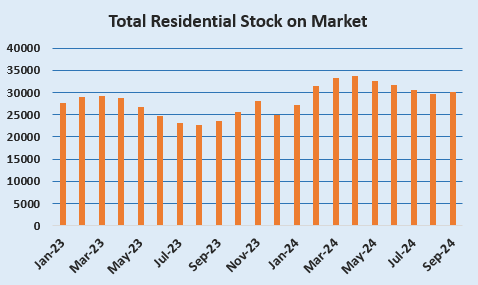
Then there's the total amount of residential stock on the market (se below).
This too is following the usual seasonal trends, but at much higher levels than previously.
There were more than 30,000 residential listings on Realestate.co.nz at the end of September, up 27% compared to the same time last year.
Put simply, stock levels are too high for the volume of sales being made, and if you don't know what that means for business, talk to a retailer.
It remains a buyer's market and they are taking their time making decisions.
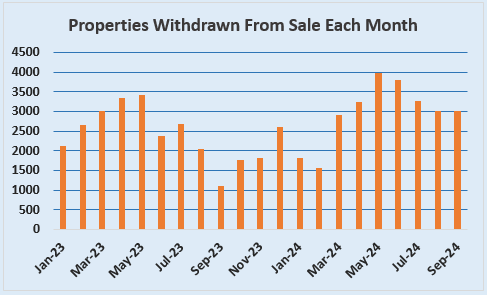
Even though stock on the market is currently at high levels, it would be even higher were it not for the number of properties being withdrawn from sale and taken off the market each month. (See graph below).
Interest.co.nz estimates that since April, more than 3000 properties a month have been taken off the market.
There are many reasons why a property can be removed from sale. But the odds on favourite is the vendor had unrealistic price expectations. And after several weeks of open homes and getting all the feedback from the agent and potential buyers, and then having their property languishing on the market unloved and unwanted, perhaps for several months, they decided to take it off the market rather than face reality.
However although these properties are no longer for sale, it's likely that their owners are still wanting to sell, making them a latent source of supply.
If you think stock levels are high now, wait and see what happens if market conditions improve to the point where they are tempted back onto the market to have another crack at it.
Overall it remains a buyer's market for sure, but it is messy and lacks any clear direction.
Buyers are active and will commit to a purchase, and falling interest rates will help in that regard, but vendors still need to be realistic on price and in some instances that will mean biting a bullet.
Otherwise their property will just end up on the heap with the thousands of others withdrawn from sale each month.
The comment stream on this story is now closed.
*This article was first published in our email for paying subscribers. See here for more details and how to subscribe.
We welcome your comments below. If you are not already registered, please register to comment
Remember we welcome robust, respectful and insightful debate. We don't welcome abusive or defamatory comments and will de-register those repeatedly making such comments. Our current comment policy is here.