

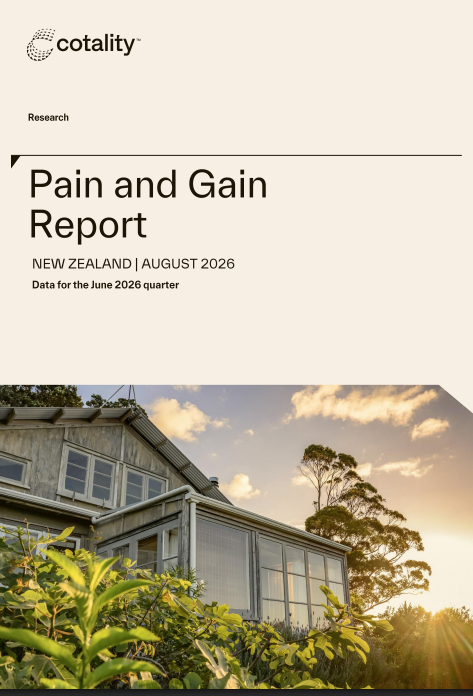
Almost one in eight residential properties sold in the second quarter (Q2) were sold at a loss, according to property data company Cotality's latest Pain and Gain Report.
At the national level, the percentage of sales made at a loss (13.1%), versus the previous purchase price, is now at its highest level since 2012.
Conversely of course, the percentage of properties selling for more than their previous purchase price (86.9%) was at its lowest level since 2012.
The percentage of properties selling at a loss has steadily increased since early 2022, when less than 1% of residential sales were loss making.
The loss making trend is nationwide, with properties in the North Island more likely to be sold at a loss than those in the South Island.
Around the main centres, the percentage of properties sold at a loss in Q2 was greatest in Auckland at 20.9%, followed by Wellington Region 18.4%, Hamilton 13.4%, Tauranga 10.7%, Dunedin 8.0% and Christchurch 5.3%.
The main determinant of whether a property sells for a profit or loss is the length of ownership.
The median length of ownership for properties sold at a loss in Q2 was 4.3 years, while the median length of ownership for those that sold a profit was 10.4 years.
The median loss on properties selling for less than their purchase price was $60,000, while the median gain for those that made a profit was $280,000.
However, the above figures make no allowance for selling expenses such as agent's commission, legal fees and sundry selling expenses, which would magnify the losses and reduce the profits. They also make no allowance for money spent on maintenance and home improvements prior to the resale.
Investors were slightly more likely to suffer a loss than owner-occupiers, with 13.5% of sales by investors made at a loss nationally, compared to 12.2% for owner-occupiers.
Cotality NZ Chief Property Economist Kelvin Davidson said the gradual deterioration in resale performance reflected the prolonged property market downturn, with national values around 18% below their peak.
"Property values peaked in early 2022 and have been through more than four years of falls and stagnation since," Davidson said.
However the market appears to have fared better than it did during the 2008 Global Financial Crisis, when the proportion of profitable resales dropped from around 98% in mid-2007 to about 80% within two years.
"We're not seeing the same widespread repayment problems or mortgagee sales in the current cycle, partly reflecting stronger [debt] serviceability testing within the banks," Davidson said.
"The rise in unemployment has come from more labour supply rather than mass job losses too," he said.
Cotality's full Pain & Gain report is here.
The comment stream on this article is now closed.

We welcome your comments below. If you are not already registered, please register to comment
Remember we welcome robust, respectful and insightful debate. We don't welcome abusive or defamatory comments and will de-register those repeatedly making such comments. Our current comment policy is here.