
sign up log in
Want to go ad-free? Find out how, here.

Number of properties rented in June quarter up almost 12% but median rent unchanged

Property / news
Number of properties rented in June quarter up almost 12% but median rent unchanged
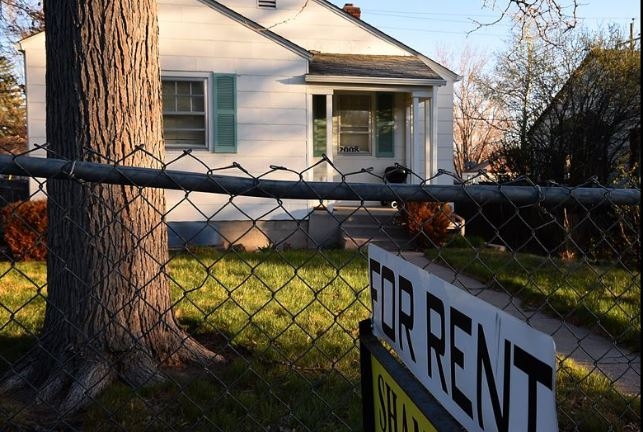
House for rent

There was a high level of residential rental activity in the June quarter (Q2), but no overall movement in the rents being charged.

The latest data from Tenancy Services' Bond Centre shows it received 40,980 new residential bonds from throughout the country in Q2, up 11.7% from Q2 last year.

That was almost the highest number of bonds received in Q2 since interest.co.nz starting collating the data at the start of 2021.

However, while rental activity was high, there was no movement in the rents being charged.

The median weekly rent from the bonds received in Q2, across all property types and locations, was $600 a week, unchanged from Q2 last year and Q2 2024, suggesting there has been little if any overall rental growth for the last two years.

In Auckland, the country's largest rental market, 13,872 bonds were received in Q2, up 5.3% compared to Q2 last year. That was also the highest number of bonds received in Auckland in Q2 in at least the last five years.

Auckland's median rent was $650 a week in Q2, unchanged from Q2 last year. The median rent in Auckland has now been hovering around the $650 mark for almost three years.

In Wellington City, 2307 bonds were received in Q2, up 7.1% compared to Q2 last year, while the median rent was $580, down by $15 a week (-2.5%) compared to Q2 last year. The last time the median rent in Wellington was that low was in 2022.

In Christchurch 3582 bonds were received in Q2, up 2.4% compared to Q2 last year, while Q2's median rent of $550 was up by just one dollar compared to Q2 last year but unchanged from Q2 2024, so essentially flat.

Dunedin went against the trend, with 693 bonds received in Q2, down 2.9% compared to Q2 2025.

The median rent in Dunedin was $530, up by $10 a week (1.9%) compared to Q2 last year.

The latest figures suggests there are plenty of tenants finding places to live in, with a healthy supply of properties giving them plenty of choice.

But the high level of supply doesn't leave any room for landlords to achieve rental growth on the properties, with rents remaining stagnant.

Even in Queenstown-Lakes, the country's most expensive rental district, the median rent was $800 a week in Q2, unchanged from Q2 last year.

The comment stream on this article is now closed.


We welcome your comments below. If you are not already registered, please register to comment

Remember we welcome robust, respectful and insightful debate. We don't welcome abusive or defamatory comments and will de-register those repeatedly making such comments. Our current comment policy is here.

33 Comments

I would be interested to unpick these figures. The key statistics is the total number of properties with a bond in place.  I suspect what has happened is that as rentals have fallen, many tenants have taken the opportunity to change addresses. To upgrade for the same rental or to change to a cheaper tenancy.  So the higher figures can reflect 'churn' rather than additional tenancies.

Up
3

Rents have mostly been flat for ~ 3 years now, which suggests a sharp upwards correction is due at some stage in the next year or so. I suspect average rent will be around 15% higher in 2028 compared with 2026 - possibly closer to 20% higher in Auckland.

Up
2

Or just as likely, rents went up too far/fast previously and are now reverting to mean/equilibrium based upon market supply/demand pressures - with no sharp upwards correction due whatsoever. 

Up
10

It's possible, but unlikely. Given that rental property owners face sharply higher costs going forward (post election), I'd say my 15 - 20% prediction could a bit on the low side. 

Up
2

The great myth is what the value of something is related to what it cost you (ask anyone with a boat). It is a supply and demand equation - and supply is continuing to grow faster than demand.  Rentals will go up at most 3% per annum over the next few years.


Up
6

And the offer from future investors will drop as alternate investments offer better returns.

US30Y is 5.195%

Yield from rentals do not stack up here, as past investors are asking too much to entice new entrants.  These things tend to fix themselves.


Up
7

Yip I think it’s quite probable we see a decade, or even two, before we see any meaningful house price growth - 99% certain of this in real/inflation adjusted terms, 75% confident of this in nominal terms. 

I just don’t see where the spare cash flows come from to offset higher discount rates that will push the present value of the sum of discounted cash flows to a higher level. 

Up
5

5 years ago property snake oil salespeople were frequently saying prices were going up because of a supply/demand imbalance.


But will refuse to acknowledge if the shoe is on the other foot and those same supply/demand principles will cause prices to remain flat or fall when market conditions and data change in the opposite direction. 

Up
8

Sorry, I should have explained my reasoning more. As costs come on to landlords, they will exit the market resulting in the number of rentals falling dramatically. What do you think will happen when there is a lack of supply with the same (or likely increasing) levels of demand? I'm not sure I follow your boat analogy. Boats don't generate an income or offer someone a bed for the night (unless it's a very big boat) and they certainly don't appreciate over time. 

Up
2

And what are these landlords going to do when they ‘exit the market’ with all these properties? Leave them empty?

Get no cash flow from them at all?

Or list them for sale and all try to sell at the same time? Meaning an extreme glut of houses for sale on the market? What would that do to prices?

Are you sure you’ve actually thought your position through in much detail?

Up
4

I'm personally not planning on exiting the market - I plan on using mine as a retirement income booster. I guess the point I'm trying to make is that when you remove a heap of rental stock from the market, you upset the supply/demand balance, which will inevitably result in rent rises (well above general inflation). Yes, there will be a temporary glut of houses for sale initially, but it would only be short term. I'm talking long term. If you remove incentives for people to invest in property, you will see a long term shortage of rental stock.

Up
1

If you are talking about supply and demand in rental you have to apply it to property as well. Along your rational if there’s a glut of properties to sell this would push prices down. Following that any investor who buys at a new lower price can then afford to charge lower rent to keep the return rate constant. So it wouldn’t necessarily raise rents. 

Up
1

An interesting take, and possible, however what would you make then of the increase in houses for sale as baby boomers downsize? Some will be purchased as rentals, more likely by those with an established portfolio and lower debt whom can leverage equity. Granted the size of this generation, and some of their rentals will be sold to investors also, it could be argued the other way in that supply will increase, or at least stay flat, putting downwards pressure on rents.
I do however acknowledge the likelihood of a CGT or some form of asset ax seeming likely in the next 2 election cycles the way we are going which may push more to offload their rentals to lock in capital gains achieved.

Up
1

Hamish - our birthrate is 1.55 and boomers are currently dying our liquidating their rental portfolios. The kids don’t want rentals, there’s a glut of properties set to enter the market. I can smell the hopium on your breathe 

Up
0

Thanks Rampart. I'm trying stay positive, but please don't take me for an evil multi-property specu-landlord. I'm just a humble agricultural contractor looking to invest in anything that works as an inflation hedge and that will help me out during my retirement. I honestly hope that property values stabilise about where they are now and that they don't go crazy high again like they did in the early 20s. If they can stay somewhere around the 5/6 x income range, that should help FHB enter the market. I also hope rents don't go crazy high also, but the proposed changes to property investment rules by some parties (who at this point look to have the numbers to win) will lead to a shortage of rental stock - which won't help the youngest/most impoverished people in our fine country.

Up
2

The reality is that a fair share of the landlords out there are renting because they can't sell. So, despite falling rentals and increased costs, more houses are for rent.  

You seem to think the houses will disappear if they aren't rented. If they sell - it is to people who were previously renting. 
 

And we had 17,000 people arrive in New Zealand, but completed 40,000 houses last year - which is enough for 100,000 people. So the "oversupply" of housing is not slowing down.  Because house prices are still artificially high.  Shilling (the nobel prize economist) says the sign of a bubble is when prices are above a sensible return on investment - and NZ prices haven't fallen to that point yet.

Up
2

Well if rents increase to the extent you predict, that will be as a result or a cause of widespread inflation >5%. (high rents will cause high wage demands across the economy). 

If that happens, CPI will be much higher,  interest rates/mortgage rates will be much higher and this will put further downside risks on house prices. 

I doubt this is the outcome you desire as a property bull. 

Up
3

Exactly.

Up
3

The fact that many speculords probably believe this delusion gives me even more confidence that house prices are going to keep sliding. How many are making a loss on their investment and holding on for the rebound in rent prices that won't come? And how long will it take them to realise and sell? 

Up
1

landlord yield % must be rough, rates up, insurance up, interest rates going up

rents flat


the other way to fix this is for the price of houses to fall, fixing the yield issue

Up
12

It’s the elephant in the room (lower prices) - which will solve many of the problems we face economically, in the long term, despite some short term pain for a few over leveraged parties/individuals. 

Cost of living and affordability problems are reduced if house prices are lower (less $$ spent on mortgages) - and yet many think house prices going down is like the descent into the pits of hell. Only if you’ve overpaid for your house or rental in a period of FOMO. 

There’s that famous saying ‘only fools rush in’ - and yet dodgy property pro people were encouraging as many people to ‘be quick’ as they possibly could during the peak years (late 2010’s - early 2020’s). ‘The best time to buy property was yesterday’ was the collective wisdom of society as little as a few years ago. Even though I argued at the time this was quite possibly a complete fallacy if we were in a bubble about to burst. 

Up
2

Technically enough FHBers may mean that prices are supported at a level higher than new investors are prepared to enter.   but stagnant house prices also mean these FHBers cannot move up the so-called property ladder, as the equity they have does not grow.

You then have an island of FHBer valued properties and another island above them.  These guys cannot do much either unless they trade amounts themselves. stuck on the island.   Sadly, so many in NZ largest asset is their real estate, but if there is no liquidity they cannot upsize or downsize.

Time fixes the debt position, but during that 25 years all the young people leave NZ.


Up
0

Not sure I get your argument - FHB equity increases as they pay off debt if prices remain flat. And if prices fall, they’ve still paid off debt and houses further ‘up the ladder’ are less expensive meaning they aren’t in any better or worse position to move up so called ladder. I guess FHB on low equity mortgages might be stuck for a few years if prices fall for another 10% or more. Or have I missed something? 

Up
0

Agreed. Costs up, but so much choice for renters. I would demand a rent decrease or move to get one. Lotsa options out there after all. 

Any LL bleating about costs and debt levels simply paid to much. That... clearly is their own problem. Lets wait a bit and see how the Trillions of US treasuries rolling over shortly pans out. Trumps govt may pull a rabbit out of its hat to avoid todays rates of circa 5%. 

If no orange tinted rabbit,  its a systemic shock tidal wave pushing up rates everywhere. Including little ol New Zeeelnd.

Specu lords will catch 🔥 

🍿 

Up
2

Yields are much better today compared with 5 years ago thanks to the tanking of the housing market. It's a pretty good time to be a landlord. However, if Interest-deductibility gets removed and CGT is introduced then they're faced with two options; 1) Exit the market, which will drive rents up through lack of supply; or 2) Hike their rents to cover the extra costs. Either way, the renter loses. 

Up
1

If option 1 - house prices will tank meaning current renters will be in a position to become owner occupiers of the houses they are currently renting. 

Option 2 - inflation will go north of 5%, mortgage rates will go up substantially, and house prices will fall more. 

Up
4

1 - partially, but owner occupiers are less likely to rent out rooms. Even if the housing stock quantity is the same, average occupancy would be lower and the remaining renters would be in a worse position than the status quo. The most well off renters would be in an improved situation.

All hypothetical of course, I don't think that the apocalypse for landlords will happen. Or at least the regs would be constructed to not totally blow up the market. Retaining deductibility for new builds. CGT doesn't matter as much if yields are better. Still probably net negative for renters generally however.

Up
0

I agree with your logic, but hiking rents only works in a tight market. If there is reasonable supply still then renter mobility will reduce the ability to pass on costs. No issue for older investors with mortgage free properties who are already making use of more favourable tax rates from having them under a company and claiming expenses, it only dents the yield somewhat. Those holding debt will be the ones looking for out when their multi decade plan doesn't seem to be likely to come to fruition. Some may exit, and others like yourself seem keen to hold on and expect things to get better. Time will tell either way :-)

Up
3

You left out 3. Educated youth renters go FU and moves their tax to Australia. 

Would add to counter 1. There are so many unsold developments that are being rented, or older LLs who have no debt who cares if the interest only speulords sell up and make a loss. If they can sell at all. 

Debt laden overshoot. Burn.

Up
1

How many people need to tell you your logic is wrong before you get the point - higher costs don't mean higher rentals

Up
1

Let's just agree to disagree on this. You can say I told you so in a few years time if I turn out to be off the mark.

Up
2

Consents are trending up well. Auckland is already at its pre-covid level, which was high historically.

The market has structurally changed new houses are actually being built

Up
3


Look what an epic overbuild did to the Chinese housing market:
Real Residential Property Prices for China (QCNR628BIS) | FRED | St. Louis Fed


Up
0