
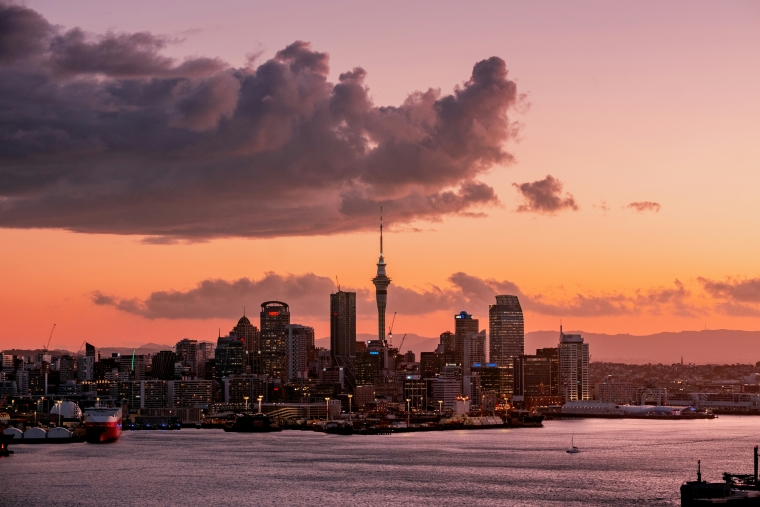
An investigation into planning changes estimates there would be capacity for almost 85,000 new dwellings in Auckland's city centre, which could go towards Auckland's housing requirement in the controversial Plan Change 120 (PC120).
Earlier this year, Housing Minister Chris Bishop launched an investigation into whether Auckland’s city centre planning rules were holding growth back. On Friday he said that work is now complete. It recommends removing planning restrictions that constrain how the city centre can develop, including height limits, tower dimension and setback rules, plus floor area ratios.
Bishop says these changes could result in:
- 20.3 million m² of additional theoretical floor space, with 2.75 million m² being commercially feasible
- About 17,000 additional dwellings
- About 37,200 jobs and 31,600 residents located in the city centre
- An annual national GDP increase of about $1.87 billion, with a net present value of about $42.6 billion over 40 years.
“The report also recommends removing non-contributing sites from the Karangāhape Road Historic Heritage Area,” he said.
“These are sites within the heritage area that do not themselves make a significant contribution to its recognised heritage values, often because they have already been substantially altered or redeveloped.”
Bishop said that would create greater opportunities for redevelopment on sites with “limited heritage value, while continuing to protect the buildings and places that give Karangāhape Road its distinctive character”.
Following consultation, Auckland Council would consider feedback alongside the investigation findings and the Council’s views before deciding whether changes to the Auckland Unitary Plan should proceed.
Auckland Mayor Wayne Brown, who backed the announcement, said the proposals were "a practical way to make the most of what Aucklanders have already paid for, and put growth where infrastructure is".
“I’ve consistently said Auckland needs to intensify in the right places. That means enabling more homes and businesses close to rapid transit, jobs and existing infrastructure," said Brown.
“I welcome the government's moves to unlock more housing capacity in Auckland's city centre, get rid of heritage protections from non-heritage buildings on Karangāhape Road and remove seismic constraints. Now I look forward to the government tackling other planning controls in the future, such as fire rules."
He said they had invested billions in the City Rail Link (CRL) and in roads, pipes and other infrastructure.
“Our job now is not just to enable capacity, but to actually ensure things get built so we can make the most of CRL and grow the city centre into a place more Aucklanders choose to visit, live and work in.”
The investigation used an approach comparable to Auckland Council’s methodology for PC120, estimating that the recommended changes would enable “theoretical capacity” for 84,489 additional dwellings in the city centre.
If it were to go ahead, the additional housing capacity would contribute towards Auckland’s requirement under PC120 to provide for at least 1.4 million dwellings.
In March, changes were made so the housing capacity requirement for Auckland’s housing plan could be lowered from 2 million to 1.4 million. Initially this number was 1.6 million but at the time, Bishop said Cabinet agreed to drop housing capacity to 1.4 million and “our expectation is that this revised capacity number finally brings consensus on this important issue”.
PC120 had been an ongoing political issue for the Government.
While Bishop has been a champion of the proposed plan, there was speculation that some of National’s Auckland MPs were feeling the heat from constituents opposed to urban densification in their neighbourhoods.
We welcome your comments below. If you are not already registered, please register to comment
Remember we welcome robust, respectful and insightful debate. We don't welcome abusive or defamatory comments and will de-register those repeatedly making such comments. Our current comment policy is here.