
Australia goes to the polls in a week and for most people the election can’t come soon enough.
It seems like voters have gone through the five stages of grief. At first they were in denial that the campaign had started. Then they moved to anger as they were bombarded by political propaganda. That was followed by bargaining when voters briefly engaged with the campaign.
Depression has now set in after the awful ‘leaders’ debate last Sunday, an unedifying shouting match that was lost by both participants and the TV channel that hosted it.
Acceptance is the final stage of grief but it’s unlikely to ever occur for many Australians given the low esteem in which they hold their politicians.
This is not how it was supposed to be.
From 2007 to 2018 Australia went through a turbulent period of political upheaval – twelve years that saw seven different prime ministers and six different leaders of the opposition. Canberra became known as the ‘coup capital’ of the democratic world.
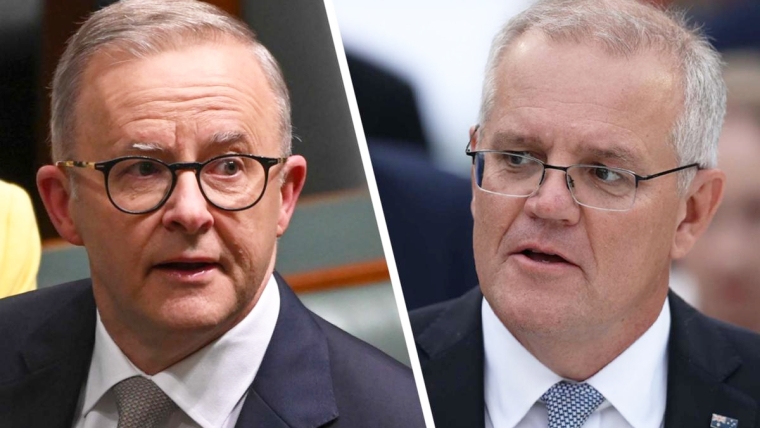
To prevent the constant bloodletting, the two major parties then changed their rules for leadership appointments. That has achieved stability but not much else. According to the polls, neither Prime Minister Scott Morrison nor opposition leader Anthony Albanese is popular with, or highly regarded by, voters.
What’s the most likely outcome of the election? This week’s polls from Ipsos (for The Australian Financial Review) and Newspoll (for The Australian) show Albanese’s Labor Party increasing its lead over the Liberal/Nationals Coalition government. If those polls are reflected in the final election result, Labor should comfortably be able to form government on its own without the assistance of the Greens Party or any independents.
Labor is ahead despite Albanese not having a good campaign. He stumbled early on when he was unable to tell reporters the current unemployment rate or the cash rate. Since then, he’s been subject to unrelenting, sometimes vicious, questioning by various reporters trying to trip him up. ‘Gotcha’ journalism must make for better ratings than an analysis of the issues.
When asked this week if the minimum wage should be increased by 5.1% in line with the latest inflation figure, Albanese responded “Absolutely”. His instant enthusiasm was risky, and it will feed the Coalition’s scare campaign that a Labor government would cause a wage/price spiral pushing inflation to new heights. Scott Morrison has already labeled it “economic vandalism”.
There’s no doubt that the rising cost of living is a significant, possibly insurmountable, obstacle to the Morrison government’s reelection. According to a recent poll of 3,500 voters by the Australian National University, “64.7 per cent of Australians think the high cost of living needs to be urgently addressed”.
This election campaign has witnessed the release of the highest inflation figure in more than a decade and the first increase of the cash rate in more than a decade. Unsurprisingly, consumer confidence is crashing.
The last time the Reserve Bank increased the cash rate during an election campaign was in 2007. The then Howard government subsequently lost that election.
Prime Minister Scott Morrison is running the argument that it would be reckless to hand over the nation’s finances to a big spending Labor Party in such troubled economic times. There’s one obvious problem with that argument. For many voters the government’s credentials as a sound economic manager have been seriously undermined by its profligacy during the Covid-19 pandemic, and subsequently in the March budget and on the campaign trail.
The federal budget is in structural deficit and there is a sea of red ink as far as the eye can see. Government debt will soar past a trillion dollars in the next couple of years. In the decades ahead, today’s younger voters will suffer from either compromised budgets or a slow decline in the nation’s economic prosperity.
Or both.
Neither side of politics is offering a realistic plan to repair the nation’s finances. The best they can come up with is glib assurances that their policies will “grow the economy” out of trouble. They extol the importance of “fiscal responsibility” and insist they will balance the budget, eventually.
It’s a classic case of Saint Augustine – “Give me chastity and continence, but just not yet”.
This reflects the current formula for electoral success in Australia. To win an election requires votes and the easiest way to get someone’s vote is to offer policies that appeal to their self-interest. That almost always means cutting taxes or increasing government spending.
Increasing taxes or reducing government spending – both potential vote losers – now seem permanently off the table.
The clearest demonstration of this formula in the current election is the largesse lavished on older voters. The Coalition and Labor are falling over themselves to throw (borrowed) money at Australian seniors. The government talks of “shielding” seniors against the rising cost of living but that is just self-serving pretense. The primary objective of the politicians is to win votes.
It’s pork barreling on an industrial scale. The electoral version of ‘buy now, pay later’. The politicians buy votes now, the voters will pay the price down the track.
There’s been much speculation about the electoral impact on the Coalition of the ‘teal independents’, a group of independent candidates focused on two issues – climate change and integrity in politics. These issues resonate with liberal, eco-conscious voters in wealthy, inner-city seats.
A very recent YouGov poll commissioned by The Australian suggests that the current Australian Treasurer, Josh Frydenberg, could well lose his seat of Kooyong to the teal candidate, Monique Ryan. That would be significant on two counts. First, Kooyong has long been a safe Coalition seat and a loss to a centrist independent might signal a major shift in the Australian political landscape.
Secondly, Josh Frydenberg is Scott Morrison’s heir apparent. If the Coalition loses the election, Morrison will almost certainly go as leader of the Liberal Party. If Frydenberg loses his seat, then the party’s leadership will be wide open.
That could trigger a return to the internecine warfare between the party’s conservative and liberal wings that blighted the Tony Abbott/Malcom Turnbull era. And that would make the election a double victory for Labor.
Ross Stitt is a freelance writer and tax lawyer with a PhD in political science. He is a New Zealander based in Sydney. His articles are part of our 'Understanding Australia' series.
We welcome your comments below. If you are not already registered, please register to comment
Remember we welcome robust, respectful and insightful debate. We don't welcome abusive or defamatory comments and will de-register those repeatedly making such comments. Our current comment policy is here.