
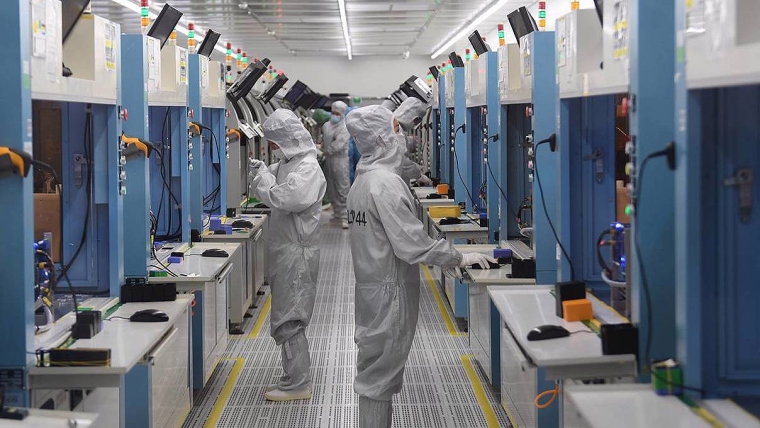
A newly released industry transformation plan aims to tackle low productivity in New Zealand’s manufacturing sector by increasing investment in advanced technology and attracting high skill staff.
The government has committed $30 million to begin putting the plan into action, with $3.7m for company-specific advice on adopting new technologies, $4 million to upskill workers, and $2.9 million to help companies lower emissions.
The Advanced Manufacturing Industry Transformation Plan was launched this morning by the Minister for Economic Development, Stuart Nash, in South Auckland.
It is one of eight transformation plans created in an effort to increase productivity and performance in key sectors of the economy. Others include agri-tech, construction, forestry, tourism, and digital technologies - which is due to be released later this month.
Nash said advanced manufacturing accounts for 10% of the economy and 73.5% of goods exports, many of which are based outside of urban centers.
“The advanced manufacturing sector has significant untapped potential to increase productivity and high wage jobs, and to support the transition to a globally competitive, low emissions economy. This plan sets out how that can be achieved.”
Advanced manufacturing refers to the use of modern technologies, processes and business practices to improve products or manufacturing processes rather than whether the final products are high-tech.
The transformation plan has set six priorities that the government and key stakeholders believe will accelerate growth in higher-tech manufacturing.
They include increasing investment, developing a high-skilled workforce, creating a net-zero sector, improving research and development, and creating more global connections.
Productivity remedy
The transformation plan is intended to help New Zealand improve its low productivity and boost wages.
A report outlining the plan noted the manufacturing sector has low capital investment in technology compared to international benchmarks, which correlates with low productivity.
“Over the last 40 years, New Zealand has persistently been one of the poorest performers in terms of productivity. The average New Zealand firm produces just over half the output of similar firms overseas using the same amount of labour,” it said.
The Productivity Commission has highlighted a number of reasons for our poor productivity, one of which being “capital-shallow” businesses which have not invested in the best equipment and processes. (Also see this episode of our Of Interest podcast with Reserve Bank Chief Economist Paul Conway on productivity).
Businesses often attempt to grow by employing more workers, rather than investing in plants and machinery that could increase output with lower staff numbers.
The transformation report said refocused industry policy could encourage businesses to make the investments that could lead to increased productivity and wages - without working more hours.
The advanced manufacturing sector made up 10% of gross domestic product in the year ended March 2020 – at $24.1 billion – making it the third largest sector in the NZ economy.
While it has grown 15% over the past decade, its share of GDP has declined from over 19% in 1985. This has been a global trend in developed countries as manufacturing has moved offshore, and services sectors have grown rapidly.
A report by the Heavy Engineering Research Association, which included analysis by Business and Economic Research Ltd (BERL), found more advanced technologies and processes in the local construction sector would boost wages and economic output.
Modeling done by the research firm found GDP could be boosted by as much as $8 billion and wages by almost $3.5 billion across the economy by 2026.
A less optimistic scenario model showed an increase of $4.1 billion in GDP and almost $1.8 billion in wages.
Rachel Mackintosh, a union executive and fellow co-chair of the transformation plan’s steering group, said the plan would help make the industry attractive to future generations of workers.
“New Zealand has the opportunity to harness the creativity of the diverse manufacturing workforce to develop a sustainable industry, where people can build their skills and enjoy decent work and decent wages,” she said.
Mackintosh said the plan was “a testament to the tripartite model” being drafted by unions, workers, businesses and government.
We welcome your comments below. If you are not already registered, please register to comment
Remember we welcome robust, respectful and insightful debate. We don't welcome abusive or defamatory comments and will de-register those repeatedly making such comments. Our current comment policy is here.