
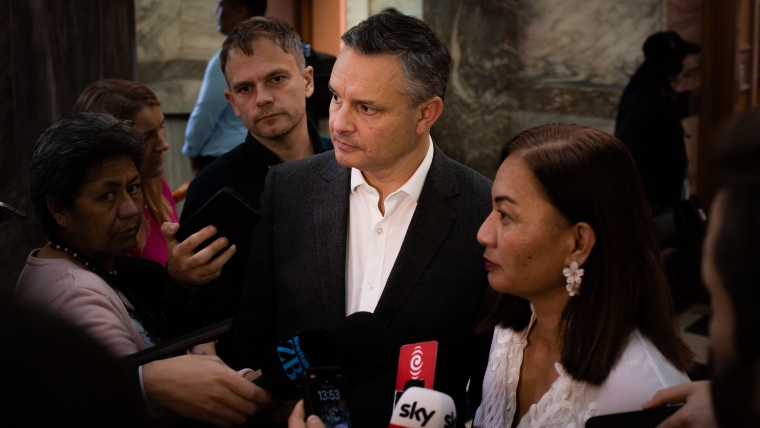
The Minister for Climate Change says he is not worried about being taken to court over a Cabinet decision which activist lawyers claim breached the Climate Change Response Act.
Lawyers for Climate Action NZ (LCANZI) are seeking a judicial review of the Government’s emissions trading scheme settings, arguing the decision was not made in the way required by law.
In a statement, the society of 300 lawyers said the loose settings were motivated by concerns about how higher unit prices would flow through to households and did not align with emissions budgets.
The legal action asks the High Court to declare the regulations are inconsistent with the Climate Change Response Act, and an order that the regulations be remade.
It cited the Minister of Climate Change as the respondent, as the government minister responsible for administering the act and carrying out Cabinet’s decision.
James Shaw holds the climate portfolio but is not a member of cabinet and recommended the government impose tighter ETS settings in line with Climate Change Commission’s advice.
On Wednesday, he told reporters that he couldn’t comment on the specific case while it was before the court.
“But, I’ve always said that citizens should have the right to challenge Government decisions in court and we fought quite hard to ensure there were provisions in the Zero Carbon Act that enabled people to do that.”
“We’ll just have to see how it plays out,” he said.
While Shaw is not a Cabinet Minister, he does attend meetings when climate decisions are being made and is bound by the collective responsibility rule.
Carbon chaos
The emissions trading scheme has been clouded with uncertainty ever since the December decision to ignore the Climate Change Commission and keep unit prices low.
Confidence in the scheme has been shaken and unit prices have fallen much lower than anticipated as investors question the Government’s commitment to the scheme.
Additionally, a review into the role of forestry and gross emission reductions has thrown more uncertainty into the mix.
The chaos has left a $800 million shortfall in Government revenue relative to forecasts, with units priced at $54.50 instead of $85, which means less money is available to pay for climate initiatives.
Bronwyn Carruthers, president of LCANZI, said the ETS was supposed to act like a tether on emissions by making it costly to burn too much carbon.
“But, Cabinet signalled that whenever tension starts to go on it will throw out more rope. Unsurprisingly, the price of ETS units has collapsed following the December decision”.
The society of lawyers has argued the Cabinet decision went beyond the powers given to them in the Climate Change Response Act by weighing up cost-of-living over emissions budgets.
In the court filing, they claimed the government lacked the legal ability to base its decisions on considerations not included in the Act, at the expense of its relevant purpose which was meeting emissions budgets.
LCANZI has asked the High Court to declare the regulations were made without legal authority and were inconsistent with the Climate Change Response Act.
It then asks for a court order which would require Cabinet to remake its decision in accordance with the law.
Cabinet needs to make a final decision on the ETS settings for 2024 in time for the regulations to be updated by the end of September.
The Climate Change Commission has recommended even tighter volume and price settings than last time, but Government ministers have declined to say if they will accept the advice.
We welcome your comments below. If you are not already registered, please register to comment
Remember we welcome robust, respectful and insightful debate. We don't welcome abusive or defamatory comments and will de-register those repeatedly making such comments. Our current comment policy is here.