

By Brendon Harre*
The Labour-led government has had a mandate since 2017 to reform the built environment. To change the Resource Management Act (RMA), and how transport, housing, and infrastructure systems are delivered. They had this mandate because of the public’s concern about the housing crisis.
Arguably so did the earlier National led government because John Key campaigned on housing affordability before the 2008 election.
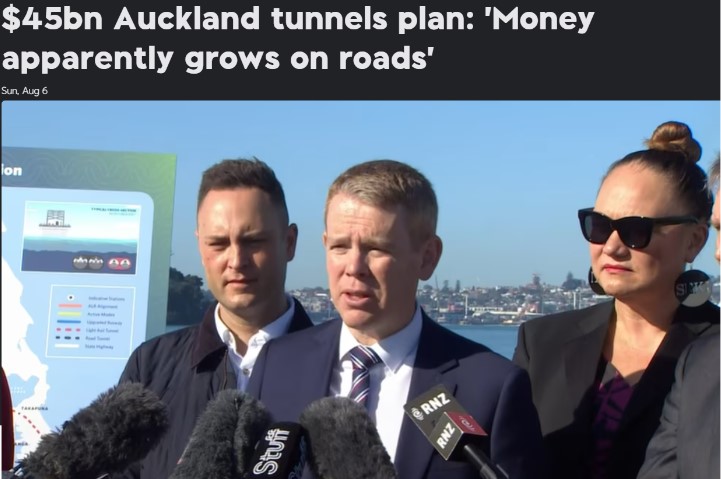
But Labour failed to deliver. Kiwi Build hasn’t even achieved 5% of its 100,000 houses target, and Auckland light rail has become a 60km underground metro system from the airport to the North Shore that will never be built because it is too expensive.
Much of what has been delivered there has been a backlash against, such as, the three-water reforms, and the medium density residential standard amendment to the RMA.
Added to the backlashes and the undelivered promises has been compounding events like the Reserve Bank inflating the housing market in response to Covid.
All of this has meant the public has lost faith in Labour’s ability to deliver solutions for the issues they care about.
Not delivering on campaign promises is likely to be the underlying cause of Labour’s declining public support. Governments get voted out rather than oppositions get voted in. Something if National gets into government they will need to be mindful about because they have been campaigning strongly on ‘cost-of-living’.
In a month’s time we will have a new government that will carry the ‘delivery’ yoke. Most likely the new government will not be led by Labour.
This means in the built environment space the overall strategy can be reviewed.
Labour has tried a top-down, Wellington-centric, steam roller strategy. It hasn’t worked.
Houses are too expensive, infrastructure is too expensive, and what infrastructure we do have is often of a third world standard.
What New Zealand’s infrastructure is like, can be described in crude terms by the following examples – repeatedly there has been shit flowing down the streets of New Zealand’s capital city and you have to boil water in New Zealand’s premier tourist town to not get the shits!
In summary, local government is broken, and Wellington has shown itself incapable of riding to the rescue. Serious consequences, like the housing crisis are the result.
I think this means the next government will need to grow a growth coalition.
What does this mean?
International evidence shows that when local and regional government are given better infrastructure funding tools, they form a growth coalition that implements more pro house-building policies – for instance, they voluntarily relax zoning requirements without being steam rolled into it.
I would be deeply suspicious of a continuation of the steam roller strategy with the likes of capacity assessments. For instance, National’s 30 years of zoned housing supply capacity will be subverted without wholesale reform to how local government funds infrastructure. The subversion process has already started.
National committing to forming growth coalitions with local and regional government would be a much better strategy for achieving its cost-of-living promises. A growth or change coalition would be the opposite of the vetocracy that currently reigns in the built environment space. The political scientist Francis Fukuyama believes that the public gets despondent with the lack of progress that vetocracy causes which then leads to populism and authoritarianism.
My impression from National’s housing and infrastructure spokesperson - Chris Bishop – is that he would favour solutions whereby infrastructure pays for itself. This could be consistent with a growth coalition approach.
The infrastructure commission has a great little video looking at how New Zealanders pay for transport, electricity, water, and telecommunications services. This is part of an ongoing area of work for the commission. So, there is some thinking at the institutional level on different ways that infrastructure can be funded.
For transport infrastructure I believe there are four hypothecated funding solutions.
-
Motor vehicle pays - what we currently use to fund the National Land Transport Fund (NLTF). And this system could be updated with better congestion charging, car parking fees, and road tolling.
-
Building construction pays – central government shares construction related GST with local government (ACT’s policy).
-
Land pays - better land value capture tools, such as targeted rates, or land readjustment as used in Japan.
-
Agglomerated clusters of people pay – in France for instance, there is regional transport taxes in bigger towns and cities. Roughly 1 cent in the euro of PAYE tax goes to regional transport providing entities, which are appointed by local or regional government. it is called Versement transport (VT). Essentially this means the agglomeration gains from transport infrastructure that allows a greater number of people to be better connected raises incomes above what they would have been (and reduces living costs). A small, hypothecated tax on these better-connected peoples over time pays off the infrastructure that provides the improved transport connections.
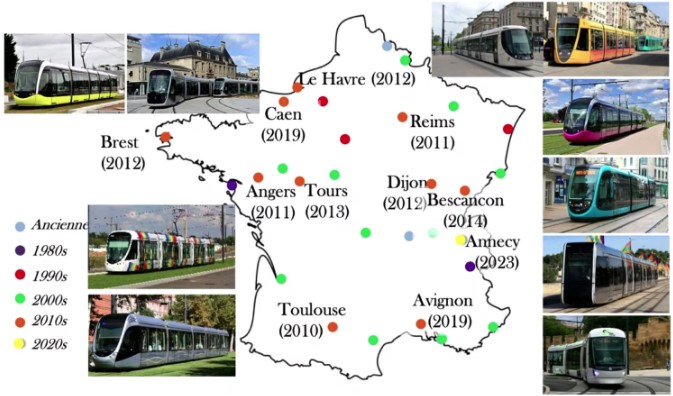
See this link for the segment of the video that discusses how France used VT taxes to roll out light rail across an increasing number of large, medium and small French cities. Pay particular attention to how in French cities workers are better connected to places of employment compared to similar sized cities in the neighbouring UK which does not have the VT infrastructure funding tool. Note research has indicated the more workplaces a worker can access in a given commuting time is associated with higher levels of productivity.
Finally, when looking at creating a new built environment strategy that grows a growth coalition New Zealand should look to examples from outside the English-speaking world. Because the English-speaking world has for decades under built housing and has the most expensive infrastructure costs.
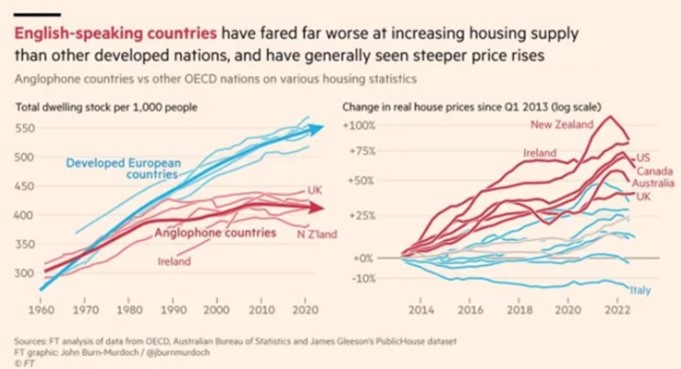
Source - The Anglosphere needs to learn to love apartment living.
Housebuilding rates in English-speaking states have fallen behind the rest of the developed world
It is noteworthy that New Zealand’s transit infrastructure building costs are four times France’s. Imagine how much transit infrastructure New Zealand could build if it had France’s cost structure and imagine how much housing supply this would unlock!
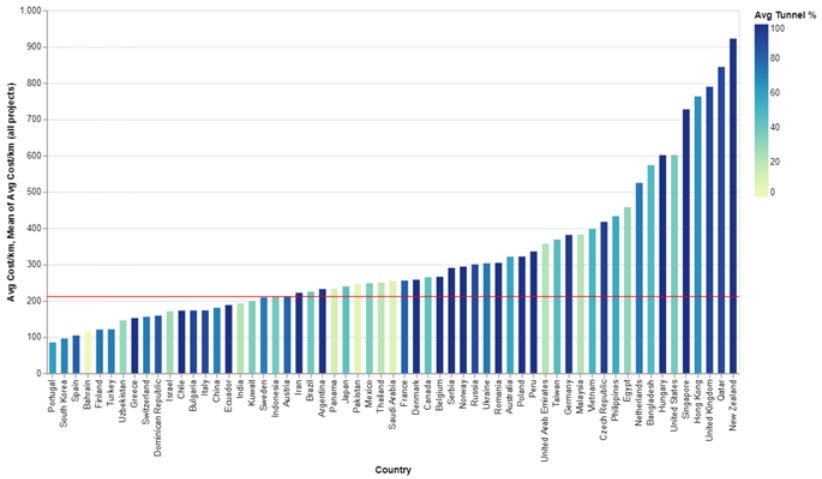
Source – Transit Cost Projects.
This is a repost of an article here. It is here with permission.
We welcome your comments below. If you are not already registered, please register to comment
Remember we welcome robust, respectful and insightful debate. We don't welcome abusive or defamatory comments and will de-register those repeatedly making such comments. Our current comment policy is here.