
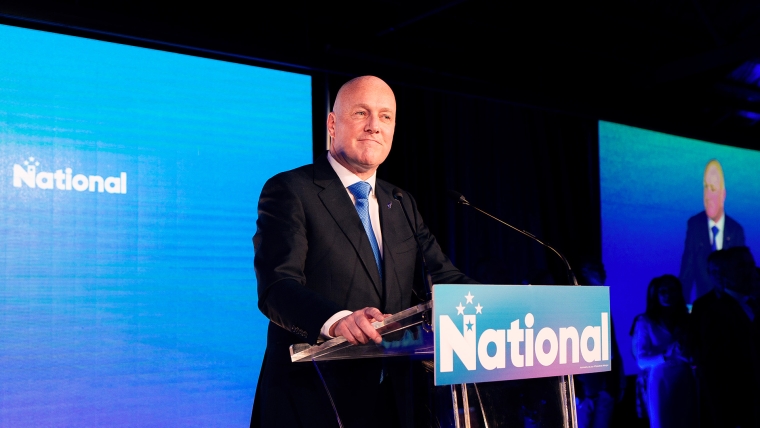
Christopher Luxon likely thought he’d thrown Melissa Lee and Penny Simmonds softball portfolios but these two ministers simply weren’t ready for the big leagues.
In demoting them quickly, the Prime Minister is burnishing his Chief Executive of New Zealand persona and letting other members of his Cabinet know there is a standard to meet.
It is a double standard, of course, as the National Party leader can take this kind of decisive action with ministers from his own party but not so easily with those from others.
Labour leader Chris Hipkins was quick to ask why Winston Peters, Shane Jones, and David Seymour hadn’t been given the boot for various near-breaches of the Cabinet manual.
It’s a valid question but the truth about MMP politics is that you can only really fire another party’s minister if you have permission from that party’s leader.
Luxon bravely claimed in a press conference that he as Prime Minister did have the authority to appoint and dismiss any and all ministers. But that is true only in a constitutional sense.
The other problem with axing poor performing ministers is that there is an extremely finite supply of bums to fill the seats around the Cabinet table.
In this case, Climate and Revenue Minister Simon Watts has been elevated to the top table—perhaps he impressed on his week abroad with the PM—but who comes next?
One problem which plagued the previous Labour Government was that it started to run out of ministers. It had a huge crop of newbies after the 2020 election but few with executive talent.
In the private sector, you theoretically can bring in replacements from an extensive pool of talent. In government, you only have those who were voted in at the last election.
Since the National Party won many more electorates than planned, very few of their shoulder-tapped list MPs made it into Parliament.
Melissa Lee, perhaps ironically, was one of the party’s most experienced MPs. She was first elected in 2008 and held ministerial positions under John Key.
She held the media portfolio in opposition for six years but was not ready for the Newshub fallout. Newsroom has reported Cabinet was unimpressed with the quality of her work.
It’s not particularly clear what her replacement, Paul Goldsmith, will be expected to deliver as the Government is obviously not going to step in with subsidies or suddenly find some silver bullets.
News media is economically sensitive and television news has structural challenges related to demographics and technology. Neither of these problems can be legislated away.
In the case of Penny Simmonds, it seems she was simply not across the detail of her disabilities portfolio and was unable to communicate compassionately when it went wrong.
Luxon might expect Louise Upston, who was ranked 10 places ahead of Simmonds on the 2023 party list, will be more capable of watching out for potential landmines in the portfolio.
Besides, Simmonds’ speciality before entering Parliament was tertiary education. One could imagine she was focused on the big reforms in that area and dropped the ball elsewhere.
She also holds the environment portfolio, which would usually be an important job, although under the Coalition Government it has been somewhat sidelined.
Luxon’s decision was designed to keep the wheels of government turning and keep ministers on their toes. But it also sets a high standard that could prove impossible to maintain.
After all, politicians are largely elected based on their door-knocking skills.
We welcome your comments below. If you are not already registered, please register to comment
Remember we welcome robust, respectful and insightful debate. We don't welcome abusive or defamatory comments and will de-register those repeatedly making such comments. Our current comment policy is here.