
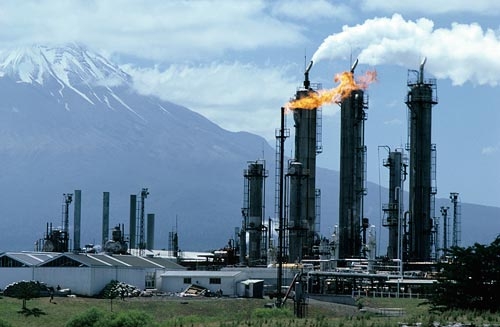
The Government has raised the option of storing CO2 underground to keep it out of the atmosphere and combat climate change.
The gas would mainly be pumped into depleted gas fields in and around Taranaki and held there to keep it out of the air.
The technology is called Carbon Capture, Utilisation and Storage (CCUS), and a discussion document has been released by the Coalition Government for consultation.
The Minister of Energy, Simeon Brown says he wants to reduce red tape and remove barriers to investment.
“As part of our plan to transition to a low emission economy, we are enabling innovative technology that reduces net CO2 emissions,” Brown says.
CCUS has been pushed for many years. The idea is that CO2 could be captured at a power plant, pumped underground and capped, to keep it out of the atmosphere. The aim would be to add a useful device to the climate change toolbox rather than replace the need for lower emissions overall.
Brown estimates that implementation of CCUS would reduce New Zealand’s net CO2 emissions by 4.65 megatonnes over 10 years.
It would be aimed at hard-to-abate industries such as natural gas production, which is used to top up New Zealand’s electricity supply at peak times.
Brown adds CCUS could be a low-cost solution and would mesh in with other countries.
The proposal comes as gas production levels have shrunk to an historic low, which the current administration blames on the previous government’s ban on new offshore oil and gas exploration.
“Natural gas production is critical as we transition towards renewable energy,” Brown says.
A document released as part of the Minister’s statement suggests that CCUS in New Zealand would be subject to a robust approvals process, and companies operating a CCUS project would be liable for any CO2 leakage via cracks in the rock. Civil penalties would be imposed in the event of any failure.
The document says the trapped CO2 could be dipped into later for a variety of industrial purposes. These could include the manufacture of dry ice, the replenishing of fire extinguishers and even the provision of fizz in a bottle of beer.
The document goes on to cite a case study. It says the Ngawha geothermal power plant in Northland currently injects CO2 from its own processes back underground. In the first half of 2023, this amounted to 35,000 tonnes of CO2, which saved $2.5 million at a carbon price of $70 per tonne.
The announcement by the Government has been welcomed by the industry group, Energy Resources Aotearoa, whose Chief Executive John Carnegie applauds a “pragmatic approach".
"CCUS is a vital piece of the puzzle to meet our net-zero emissions goals for the gas sector and other applications,” he says.
“By capturing emissions before they are released into the atmosphere, CCUS provides a critical tool for limiting CO2 emissions.”
He adds New Zealand needs to catch up with the rest of the world. And he cites a study his group commissioned from Castelia, which showed CCUS was economical.
Green groups have generally been hostile to CCUS, seeing it as a failed alibi for countries that don’t reduce emissions in the first place.
Scott Willis is energy spokesperson for the Green Party, and says it is little better than “magical thinking".
“The best carbon capture is keeping coal, oil and gas in the ground in the first place,” he says.
“There have been hundreds of millions spent globally on trying to find a technical solution, instead of simply doing the simple thing, which is to stop burning fossil fuels.
“Carbon capture is a really good way for politicians to spend money to get a photo op, but it doesn't do anything else.
"Countries can look for technical solutions to enable us to keep on burning fossil fuels. That will cost millions upon millions, or they can employ solutions that they have at their fingertips, like getting cars off the road, like building rail, like ensuring we have rail enabled ferries and electric buses.
“These are solutions that we have right now.”
We welcome your comments below. If you are not already registered, please register to comment
Remember we welcome robust, respectful and insightful debate. We don't welcome abusive or defamatory comments and will de-register those repeatedly making such comments. Our current comment policy is here.