
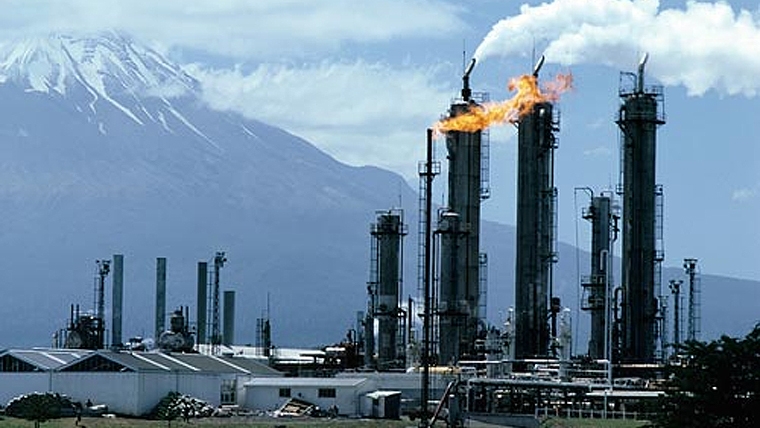
New Zealand's natural gas production has dropped to its lowest level for almost 30 years, according to the Ministry of Business Innovation and Employment (MBIE).
At the same time, the use of coal has soared.
MBIE says net gas production for the March quarter was 31.89 petajoules (PJ).
This was a 12% decrease on the same quarter last year, and was the lowest such figure since March 1985.
There has been steady slippage in gas production for several years, which was highlighted in a report last year and another one in May.
A planned outage at the Pohokura gas field for maintenance in March added to this process.
“The trend is expected to continue into Quarter Two, with Kapuni gas field going offline for planned maintenance in April,” MBIE Markets Manager Mike Hayward says.
In contrast, Genesis Energy’s Combined Cycle gas plant at Huntly came back from maintenance four months early, which helped overall thermal capacity. However, because of the gas shortage, Genesis burned a lot of coal, and MBIE says total coal use for electricity generation rose 99% compared with the same quarter a year ago.
This process was pushed further by dry weather in summer.
“As the share of renewable electricity generation decreased, greenhouse gas emissions from electricity generation increased to 861 kilotonnes of CO2 equivalent, which was a 21.5% rise on the March quarter in 2023," says Hayward.
There was a slight offset to this trend, with new solar and wind generation helping to compensate for a 3.2% drop in hydro generation.
Overall, renewable electricity was 85.7% of total electricity, down from an earlier peak but still historically high (see graph).

The trends revealed by MBIE are alarming to the industry lobby group, Energy Resources Aotearoa.
Its chief executive blames politics.
"It is now also clear that the previous government’s policies have resulted in the sector burning more high-emitting imported coal than before," says John Carnegie.
“If we don’t close the widening gap in our domestic energy supply, New Zealand will be left with only high-emission coal to support intermittent renewables during winter. This, or importing LNG, will be likely to become our reality on our current path."
The current government halted investigations by MBIE's NZ Battery Project into a pumped hydro scheme at Lake Onslow late last year. The NZ Battery Project has been looking at potential solutions to the dry year problem, when hydro-power catchments don’t receive enough rainfall or snowmelt and the level of the storage lakes runs low, other than fossil fuel generation. It continues a wider electricity security work programme including considering the question of security of supply and the need for long-duration energy storage.
We welcome your comments below. If you are not already registered, please register to comment
Remember we welcome robust, respectful and insightful debate. We don't welcome abusive or defamatory comments and will de-register those repeatedly making such comments. Our current comment policy is here.