
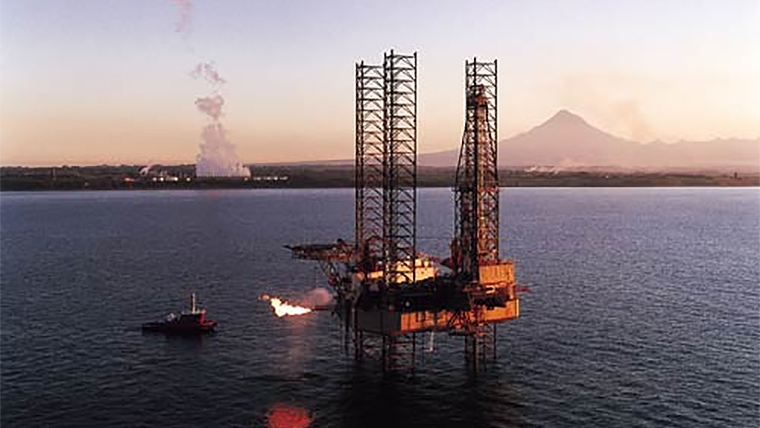
The amount of natural gas held in reserve will last less than 10 years, according to new information from the Ministry of Business, Innovation and Employment (MBIE).
And a major energy campaigner is comparing this problem to the European gas crisis and challenging Government leaders to come up with a solution.
The data covers both onshore and offshore gas permit holders, and reveals a 17% decrease in proven plus probable (2P) reserves.
It says 1635 Petajoules (PJ) of gas reserves have been reported as at 1 January 2023, down from 1967 PJ a year earlier.
The most significant decreases were in the Mangahewa and Maui fields.
The data has been revealed to give gas users a clear understanding of the industry, according to MBIE’s Digital, Data & Insights manager, Mike Hayward.
“Oil and gas are a finite resource and gas continues to play an important role in the energy system," Hayward says.
"We hope that by sharing this information, we can support informed gas supply and investment decisions to be made across the sector.”
Hayward says estimated gas reserves have now dropped below 10 years of remaining use for the first time, based on average usage over the last 10 years. He notes, however, that the rate of gas consumption is declining.
New Zealand used 145PJs of gas last year, down from 155PJs for 2021, and 183PJs for 2020. This decline was driven by things like the mothballing of Methanex’s Waitara Valley facility and the closure of the Marsden Point oil refinery.
The fall in reserves is also caused by lower production, with gas output falling in 2022. In addition, future production is forecast to fall.
A prominent energy campaigner says this is a serious problem.
"Almost 10% of the electricity we use to heat our homes and keep businesses’ lights on comes from New Zealand’s domestically produced natural gas," says John Carnegie of Energy Resources Aotearoa.
"It is a vital component in our energy mix and picks up the slack when weather-dependent renewables cannot get there on their own.
"Natural gas is not just used to generate electricity. New Zealand’s industry is powered by affordable natural gas, including industries such as dairy, methanol and steel."
Carnegie says that greater investment confidence is needed immediately, as New Zealand now faces an energy shortfall.
"What affordable alternative renewable energy source at scale can possibly fill the gap now forecast to emerge in less than eight years’ time? Alarm bells should be ringing," Carnegie says.
"Without enough domestic supply of energy there will be no further electrification of transport. Large manufacturers will close, and there will be no energy source capable of firming up renewables in the depths of winter other than high-emissions coal. That will be our reality if we continue down this track."
Carnegie is comparing New Zealand's problem to the gas crisis in Europe which was caused by Russia's invasion of Ukraine.
"I am throwing down the gauntlet to the Government, demanding to know what they will do about this problem."
The latest development comes after Transpower warned of a vulnerable electricity supply system.
Energy Resources Aotearoa is an umbrella group representing users and producers of energy such as oil, gas and hydrogen.
We welcome your comments below. If you are not already registered, please register to comment
Remember we welcome robust, respectful and insightful debate. We don't welcome abusive or defamatory comments and will de-register those repeatedly making such comments. Our current comment policy is here.