
By Chris Trotter*
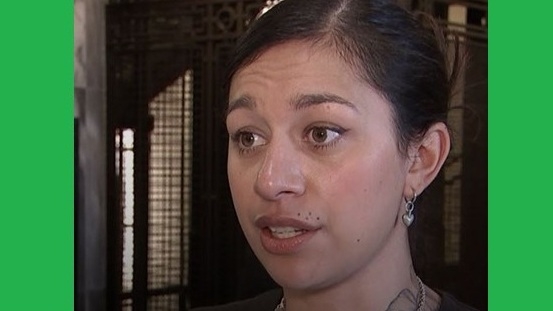
Can the Greens save themselves? Are they even aware of the peril in which they stand? The Green Party Member of Parliament for Wellington Central, Tamatha Paul, would appear, finally, to have placed herself on “Mute”, but only after a week of inflicting grievous bodily harm on her party’s brand. Why does this keep happening?
Part of the answer lies in the increasing political compartmentalisation of New Zealand society.
Perhaps the best example of this phenomenon is the oft-repeated factoid that 70% of National Party voters don’t know anyone in receipt of a social-welfare benefit. Another is the fact that practically every member of the New Zealand House of Representatives is a university graduate – when more than 60% of Kiwis are not. (Those same MPs also score high when it comes to owning more than one residential property!)
The extent to which individuals are influenced by, and subscribe to, the values and aspirations of those with whom they interact every day is considerable. The smaller and tighter one’s compartment becomes, the harder it is to recognise those statements and positions which, while perfectly congruent with the values of the people one rubs shoulders with every day, are likely to be wildly at odds with just about everybody else’s.
Seated on a Christchurch stage with Green Party colleagues and members of Peace Action Otautahi (don’t ask!) Tamatha Paul’s comments regarding the Police undoubtedly elicited many murmurs of agreement. It is an article of faith among confirmed leftists that the constabulary is no friend of the poor, brown, or LGBTQI community. In affirming this article of the anarcho-socialist catechism, Paul was preaching to the choir.
That her comments were being recorded probably didn’t register with the 28-year-old MP. People of her generation record everything, and are not in the least bit fazed when someone points a smart-phone at them. It was this absence of political awareness that got Paul and her party into so much trouble: failing to frame her remarks concerning policing so that nobody hearing them (most particularly nobody from the Right) would feel moved to whisper gleefully: “Gotcha!”
Once said, Paul’s remarks could not be recalled. They were damaging, and they would be used to discredit the Greens. That was a given. The smart move, therefore, was to shut up and stop handing ammunition to your political enemies – they’d already been given more than enough.
So, why did Paul keep on talking? Why did she double-down?
The answers to these questions are to be found in the way people in politics – especially left-wing politics – perceive the compartments in which they are operating.
It takes a truly remarkable politician to acknowledge the fact that their political ideology, their compartment, is but one among many. Even rarer is the politician humble enough to accept that, while in their own ears the party’s ideology rings true, in the ears of a great many others it most certainly does not.
Much more common is the way political partisanship encourages the conviction that one’s compartment and the real world are one and the same. By this reckoning, those inhabiting other compartments lack all political substance. Like the sad souls of Hades’ monochrome kingdom, they are to pitied – not heeded. Only those wise enough to accept the party’s incontrovertible truths get to see the world in colour.
Ideologues like Paul double-down on their controversial statements for the very simple reason that they do not believe them to be controversial. Like Thomas Jefferson, they believe their truths to be “self-evident”. They have only to lay them before the monochrome hordes, step back, and watch the world turn, green, red, blue, pink … whatever.
Push-back and derision from the insubstantial world need not be taken seriously. Indeed, if it were to be taken seriously, then an argument could be made that the view from the perspective of the Green’s verdant little compartment might not be all-embracing. The subversive possibility that other perspectives, other truths, might exist, could then gain traction – and that would be completely unacceptable.
Also called into question would be the ultimate reality of the great causes – like climate change – upon which Paul and her Green colleagues, both here in New Zealand and all around the world, have constructed their all-or-nothing political narratives.
Acknowledging even the slightest doubt about the unavoidable and cataclysmic consequences of climate change, would undermine the Greens’ moral and scientific arguments for the hugely disruptive changes being demanded of the entire human population. The Green crusade to “save the planet” would be vitiated.
Equally at risk would be Greens’ crusade to eliminate the many injustices visited upon Māori by colonisation. Paul’s criticism of the Police framed by this interpretation of New Zealand history. As a colonised people, Paul argues, Māori cannot reasonably be expected to respond to the presence of the colonial state’s law enforcers with anything other than fear and/or indignation. The experience of Māori in the colonisers’ prisons offers even greater cause for outrage. For Paul to shy away from making these arguments openly and fearlessly: biting her tongue in the name of political expediency; would rightly be regarded by rangatahi Māori as a base betrayal.
The religious flavour of these arguments is not coincidental. What else, after all, were Christianity and Islam in their early years but the theological constructs of tiny, compartmentalised, minorities. Contemporaries derided the stiff-necked insularity of these communities, and grew impatient with their self-destructive refusal to compromise. In retrospect, however, it was Christianity’s and Islam’s unshakeable conviction that the rest of the world was embroiled in sin, and gripped by error, that allowed them to endure and, ultimately, flower into worldwide faiths.
And lest anyone fall into the trap of believing that such uncompromising fidelity is to be found only on the Left, it is useful to recall the obduracy of Neoliberalism’s high priests. Indeed, it is difficult to think of an ideological compartment with a narrower view of the world than the Mt Pelerin Society – not that it prevented the free-market faith of its founders from toppling the graven images of socialism in all but a handful of the world’s nation states.
But that is the problem, is it not? The human world, in its long and bloody history, has almost never benefited from the triumph of ideologies espoused by people who were absolutely certain that the rest of the world was wrong, and in need of correction.
Though it is now in retreat across the globe, Democracy’s great virtue is still that it encourages its practitioners to make economic and social progress by discerning those measures most likely to elicit the electorate’s general agreement. The politician with a flair for recognising what can draw people together will always be remembered more kindly than the politician who, blinkered but unbowed, spurned the generous embraces of democratic consensus for the high, cold, pleasures of righteous duty.
Tamatha Paul may seek the protection of the Mongrel Mob in a dark alley. Most New Zealanders, however, will continue to call the cops.
*Chris Trotter has been writing and commenting professionally about New Zealand politics for more than 30 years. He writes a weekly column for interest.co.nz. His work may also be found at http://bowalleyroad.blogspot.com.
We welcome your comments below. If you are not already registered, please register to comment
Remember we welcome robust, respectful and insightful debate. We don't welcome abusive or defamatory comments and will de-register those repeatedly making such comments. Our current comment policy is here.