
By Chris Trotter*
The perennial problem with budgets is the political noise that accompanies them. The Government of the day devotes tremendous energy to massaging public expectations. The news media struggles to present itself simultaneously as soothsayer, expert, and advocate. Interest groups attempt to insert themselves into the increasingly cacophonous budget conversation. Meanwhile, the citizens on the receiving end of all this noise grow increasingly frustrated and bewildered. Will this budget be good for them? Will it be fair? Will it work?
Few now appreciate the bland – albeit crucial – purpose of the appropriation bill we call The Budget. Since no government is entitled to go on spending the money it takes from its citizens without renewing, annually, the explicit permission of their parliamentary representatives, the preparation and presentation of the budget constitutes the key task of government. Everything else that a government does depends upon its passage. Failure to muster the parliamentary support required to go on financing the state’s operations must bring a government crashing down.
On the face of it, then, the preparation and presentation of the budget should be a sober and largely technical exercise in basic economic management. How much of what the state is currently obliged to do should it go on doing? And if it enters into new obligations, how should they be funded? Entirely by taxes? By a combination of taxes and borrowing? Or, by axing a number of old obligations to pay for the new ones?
Over and above its responsibility to keep the operations of the state ticking over, a government must also give thought to keeping fat the golden geese that lay its fiscal eggs. The wealthier a nation becomes: the higher the wages of its workers; the bigger the profits of its businesses; the easier it is for a government to meet, and increase, the state’s obligations. Rising prosperity, equitably shared, makes good government easy.
By the same token, what makes good government difficult is an economy in decline. When profits and wages fall, businesses fail, and unemployment rises, then the state’s revenues must also decline – to the point where it can no longer meet the cost of its existing obligations – let alone assume new ones. Rather than renounce at least some of those obligations, most governments opt to borrow the money needed to go on meeting them. Providing the decline is brief, and the economy recovers quickly and strongly, borrowing is a perfectly acceptable policy. But, if the decline is protracted, or, worse still, structural in nature, then borrowing will only make matters worse.
Were parliaments made up of representatives chosen at random for a strictly limited term, it is just possible that the preparation and presentation of the budget could indeed be accomplished soberly and rationally. Unburdened by the need to secure re-election, representatives could weigh dispassionately the pros and cons of the limited range of economic options available to them and through open and constructive debate arrive at the combination of fiscal measures deemed most likely by the majority to deliver success.
This is, after all, the way “Citizen Assemblies” are intended to operate. Their virtue and utility lying precisely in the fact that they are not composed of political parties. Supplied with expert advice, formulated and delivered with maximum transparency, the Citizen’s Assembly is tasked with considering the matters submitted to it in a manner calculated to produce the rational, evidence-based, collective decisions that Parliaments, riven by rancorous partisanship, are no longer able to deliver.
The problem, of course, is that in dealing with the challenges emerging from something as large as a nation’s economy, the human consequences of applying the conventional economic wisdom are almost always intolerable. When the 1929 Wall Street Crash sent the economy of the United States into a tailspin, the experts of the day called upon the administration of Herbert Hoover to apply the accepted remedies. Accordingly, Hoover’s Treasury Secretary, Andrew Mellon, responded with his now infamous instruction to:
“Liquidate labour, liquidate stocks, liquidate farmers, liquidate real estate. It will purge the rottenness out of the system.”
In following this advice, however, the Hoover Administration inflicted extreme hardship on millions of Americans, and in so-doing not only liquidated itself, but also came alarmingly close to liquidating the whole capitalist system. It took an American aristocrat, Franklin Roosevelt, with more intelligence and a bigger heart than Hoover and his conventional wisdom, to rescue American capitalism from itself.
Mutatis mutandis, the response of successive New Zealand governments to the Great Depression mirrored the conventional economic thinking of Mellon and his advisers. Saddled with obligations it could no longer afford, the Reform and United Parties cut, cut, cut, and cut again – unleashing massive deprivation and misery across the country. This time it was Labour that came to capitalism’s rescue.
Astonishingly, given these historical precedents, there are still individuals and groups advocating Andrew Mellon-style “liquidations” in 2025. The Taxpayers’ Union’s “Go For Growth” alternative budget urged the same massive reductions in state expenditure that doomed the 1931-35 Coalition Government. A level of state retrenchment that even the TU’s heroine, Ruth Richardson, thought better of attempting!
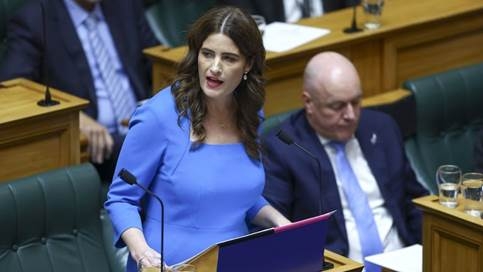
Nicola Willis is a considerably wiser Minister of Finance than the author of “The Mother of All Budgets”. Though enmeshed, like all MPs, in the logic of partisanship and all its consequent distortions, she nevertheless produced a budget that, while curtailing state spending and scaling-back its obligations, fell well short of the Milei-style “chainsaw massacres” demanded by the more extreme disciples of Kiwi neoliberalism.
No, she did not address the looming crisis in health: how to accommodate the medical costs of an ageing Baby Boom generation. The alleged unaffordability of NZ Superannuation serves as a proxy for this massive health-care challenge to the state’s fiscal resources. NZ Superannuation, by itself, is predicted to absorb less than 8 percent of GDP by 2060 (it is already well above that percentage in many OECD countries) declining sharply after that date as the Boomers pass into history.
That said, lifting of the age of eligibility for NZ Super to 67 or 68 would contribute significantly to absorbing the projected surge in aged health expenditure. It’s a move Willis would undoubtedly grab with both hands if NZ First was no longer a participant in the Right’s coalition negotiations.
What saved New Zealand from the chainsaw, however, was, indisputably, the scaling-back and reining-in of Pay Equity. In the absence of this measure (long-planned it would seem, even if introduced in a parliamentary ambush) Willis would have been forced to contemplate either, ideologically unacceptable tax increases, truly savage expenditure cuts, increased borrowing, or, most likely, a combination of all three.
The sheer size of the state’s projected Pay Equity liability certainly adds weight to the Coalition’s criticism of the now dismantled Labour regime. (Leaving hanging the question of how the Left proposes to pay for its reinstatement.) By dramatically reducing that liability, Willis was able to avoid presenting the “austerity budget” her opponents were anticipating. The Pay Equity savings also paid for the 20 percent “Investment Boost” tax write-off. A supply-side measure that promises considerably more productivity bangs for the State’s foregone bucks than a mere corporate tax-cut.
Certainly, Willis’s second budget was not the document that an AI-assisted finance minister, shorn of party-political constraints, would have presented. (Although that scenario may arrive a great deal sooner than many of us would care to imagine!) Inevitably, it played favourites – rewarding the Right’s friends at the expense of the Left’s electoral supporters. But that is the price we pay for accepting that the fiscal temptations of democracy will always be too strong for politicians to resist. In theory Parliament is a “citizen’s assembly”, in practice it is a rancorous gathering of ideological clans.
So, yes, there is, and likely always will be, a lot of political noise emitted by the process of passing the annual appropriations bill. Plenty of “sound and fury”. But is it also “a tale told by an idiot, signifying nothing”?
No. Not yet.
*Chris Trotter has been writing and commenting professionally about New Zealand politics for more than 30 years. He writes a weekly column for interest.co.nz. His work may also be found at http://bowalleyroad.blogspot.com.
We welcome your comments below. If you are not already registered, please register to comment
Remember we welcome robust, respectful and insightful debate. We don't welcome abusive or defamatory comments and will de-register those repeatedly making such comments. Our current comment policy is here.