By Andrew Blakers, Harry Armstrong-Thawley & Timothy Weber*
When Snowy 2.0 is in the news, it’s usually about money. The cost of the huge project has gone well beyond the initial A$6 billion estimate and will now cost more than $12 billion.
But cost overruns don’t affect the real value of this pumped hydro project. When it comes online – likely in 2028 – Snowy 2.0 will bring something fundamentally new to the Australian electricity system: energy storage at a scale far beyond anything else.
It will have five times more storage than all of Australia’s other pumped hydro and grid batteries combined, its capital cost is five times lower than batteries per unit of energy storage, and its lifetime is ten times longer than batteries. Our calculations show Snowy 2.0 will cost about one cent per day per Australian over its 150-year lifetime, assuming the final cost is between $15 billion and $18 billion.
Australia is aiming to have 82% of its electricity supplied by solar, wind and hydro in five years’ time, while coal generation declines rapidly. Storing variable renewable energy for later use will keep electricity supply reliable.
That’s where Snowy 2.0 and other planned large pumped hydro projects come in. Coupled with grid-scale batteries, these energy storage methods will allow us to wean ourselves off gas power.
How will Snowy 2.0 work?
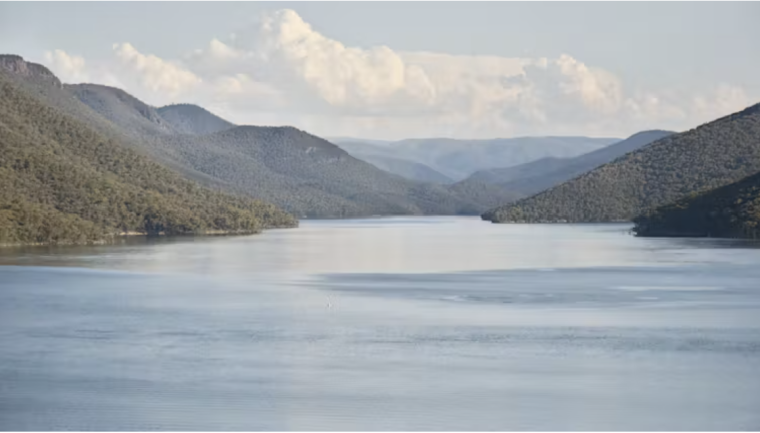
Snowy 2.0 is an expansion of the original postwar Snowy Hydro Scheme. It links two existing reservoirs with a 27-kilometre tunnel and underground hydropower station. When power is cheap, water will be pumped uphill to the top reservoir. When power is expensive, water will run back downhill through the hydro station to produce electricity.
The project will be able to store 350 gigawatt-hours of energy – the equivalent of 7 million electric vehicle batteries, or 350 large grid batteries.

There has been scepticism over whether Snowy 2.0 will be able to perform as intended due to constraints in how much water can be moved around the system.
In fact, the Tumut River system, around which Snowy 2.0 is constructed, has plenty of flexibility, including five interconnected reservoirs with a total capacity 30 times larger than required for Snowy 2.0, and six hydropower stations.
Pumped hydro and batteries solve the energy storage problem
For years, Australia’s grid operators have relied on gas-fired power stations to meet sudden demand. Unlike coal, gas can fire up within minutes. The problem is, gas is no longer cheap, and now generates only 5% of east coast electricity. East coast gas prices have tripled since LNG exports began in 2015, inflating household power bills.
Gas has been a necessary evil to keep the grid reliable. But it’s now possible to begin displacing it using a combination of short-term storage in batteries and long-duration storage in large pumped hydro such as Snowy 2.0.
Batteries and pumped hydro are already replacing gas and coal generators in stabilising the grid. Energy storage now keeps Australians powered during increasingly common sudden failures of ageing coal power stations, or when transmission lines are damaged.

On sunny and windy days, Australia now regularly produces more electricity than it can use. As a result, wholesale electricity prices can become negative. This means energy storage companies are being paid to take and store excess electricity.
It’s hard for coal stations to shut down and restart quickly. As a result, they now scale back as far as possible when prices are low or negative. Their inability to shut off entirely means some cheap, clean wind and solar can’t be used. Coal is still dominant in overnight generation.

Grid batteries do a superb job of discharging stored electricity at high power to cover regular peak-demand periods in mornings and evenings when solar energy isn’t flowing and energy prices are high. These periods are usually brief, meaning the amount of battery energy needed is relatively small.
But batteries are an expensive way to store enough energy to cover electricity demand for longer periods. That’s because very large quantities of battery chemicals and metals are required. At these times, fossil fuel generators make a lot of money as there’s currently no alternative.
This is where large-scale pumped hydro comes in. Snowy 2.0 and other pumped hydro projects can help meet regular morning and evening peak demand and can also provide much of the electricity required overnight. Pumped hydro uses stored water, which is extremely cheap.
Snowy 2.0 is large enough to generate flat-out for a whole week if needed. This means it can do two useful things at once: meet demand from the grid, and help recharge grid batteries when solar and wind are scarce.
Pumped hydro can act as insurance against high prices. A third of Snowy 2.0’s revenue is expected to come from long-term contracts with retailers, renewable generators and large industrial users.
Snowy 2.0 could snatch a substantial portion of the energy market currently occupied by coal and gas. Building several more large pumped hydro systems would make it possible to get rid of coal and gas altogether.
Fewer new transmission lines
Interstate transmission lines are essential. If one state is wet and windless, power can be imported along transmission lines from neighbouring states with better weather. But many planned transmission lines have run into issues with rural pushback and slow construction speeds.
Large pumped hydro systems make it possible to avoid building some expensive and politically fraught new transmission lines.
If each state or territory had one large pumped hydro scheme, it would reduce the need for more transmission lines by using low- or negative-cost electricity on sunny and windy days to pump water uphill. This would reduce import requirements.
Australia has 23,000 potential pumped hydro sites, far more than we would ever need. Of these, we have identified 315 as premium sites in Queensland, New South Wales, Victoria and Tasmania. South Australia and Western Australia also have good options, albeit at higher cost.
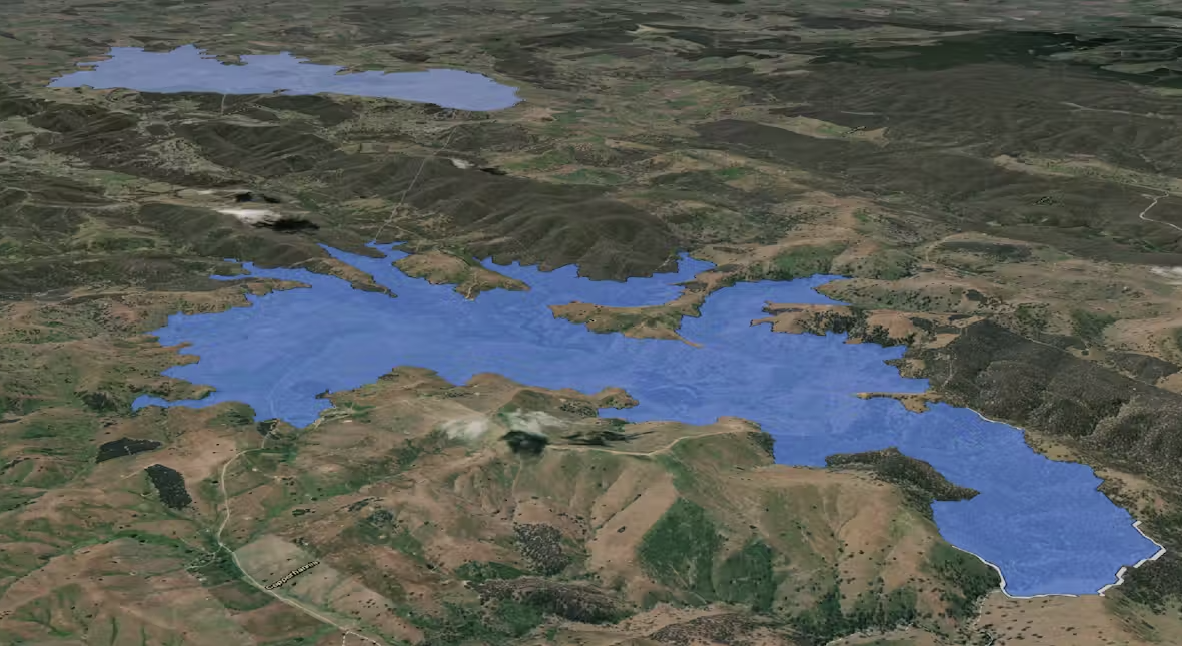
A good option for energy storage is to build pumped hydro in hilly country and grid batteries near cities to reduce grid congestion and avoid the need for more transmission lines.
For example, Tasmania’s pumped hydro allows the state’s wind energy to be exported to Victoria continuously, maximising the usage of expensive undersea cables. Used in conjunction with batteries near Melbourne, Tasmanian wind can meet high-value morning and evening peak loads in Victoria.
Big project – but big benefit
When Snowy 2.0 comes online, it won’t be long before it proves its worth. Operating alongside grid batteries, it will help push expensive gas generation out of the grid.
*Andrew Blakers, Professor of Engineering, Australian National University; Harry Armstrong-Thawley, Research Officer, Australian National University, and Timothy Weber, Research Officer, School of Engineering, Australian National University.
This article is republished from The Conversation under a Creative Commons license. Read the original article.
We welcome your comments below. If you are not already registered, please register to comment
Remember we welcome robust, respectful and insightful debate. We don't welcome abusive or defamatory comments and will de-register those repeatedly making such comments. Our current comment policy is here.