By Tom Robinson*
The recent deaths of eight people in two New Zealand landslides has left the public searching for answers. Some questions will be technical, about what failed and why.
But one should surely sit above the rest: why do we keep accepting the human and financial cost of this risk?
While it might be assumed that earthquakes or volcanic eruptions are Aotearoa’s deadliest natural hazards, landslides have claimed more than twice as many lives – approximately 1,800 – as both combined over the past 200 years.
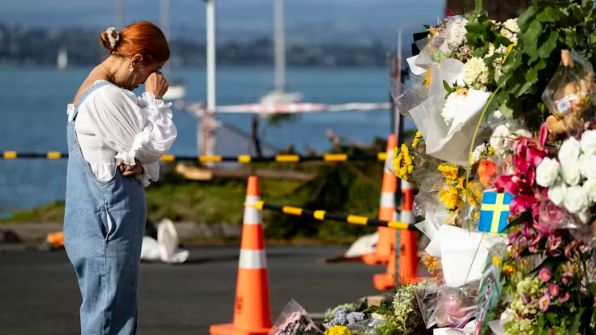
They remain such an insidious and under-appreciated hazard because they cause deaths relatively frequently, but typically only in small numbers. Being one of the most fatal New Zealand landslides since 1846, last month’s tragedy at Mount Maunganui was a stark exception.
A useful analogy is our tolerance for car crashes versus aeroplane crashes. Road deaths in New Zealand kill hundreds of people each year, one by one, with little national reckoning. The 1979 Mount Erebus air disaster, in which 257 people were killed in one afternoon, forever changed aviation policy and remains part of the country’s collective memory.
In natural hazard terms, landslides are car crashes; earthquakes and volcanic eruptions are aeroplane crashes. Yet, with climate change driving heavier rainfall, it’s worth asking whether this is a danger we should be comfortable to continue living with – and paying for.
Since 2010, central government has incurred about NZ$19 billion in costs associated with natural hazards, but 97% of that has gone on response and recovery, with just 3% on reducing risk and building resilience. In practice, New Zealand keeps paying for disasters after they happen, rather than spending to stop them happening in the first place.
A hazard hiding in plain sight
The risk of landslides, specifically, is managed through a complex mix of laws, led by the Resource Management Act (RMA). It largely falls to territorial authorities, which can restrict new developments but, due to land use rights, are more constrained with existing buildings even if at high risk.
There have been some successful attempts to change land use rules, but they have been few and far between. It remains to be seen what effect the latest reforms to the RMA will have.
Recent disasters have also exposed gaps in how local councils, emergency services, central government agencies and insurers respond to events, with unclear responsibilities and slow information flows. This underscores the need for a more joined-up response to events such as floods and landslides, as a high-level inquiry recommended in 2024.
On top of all this is the need to gain a clearer national picture of the hazard. Past landslides indicate where failures are most likely: steep slopes, weak rock, wet soils and sparse vegetation, particularly where forestry was recently cleared. But outcomes also depend on subtler factors such as slope shape and aspect.
We also know landslides come in different shapes and sizes, which determines how far they travel and how much area they can threaten. In New Zealand, the most common type are shallow slides, typically one to two metres deep and involving only the top layer of soil.
Despite their size, these slides can be highly dangerous, carrying hundreds of tonnes of debris at high speed. Their paths are not always straightforward: wet landslide debris can behave like a liquid, following channels in the landscape and travelling for kilometres.
While scientists’ understanding of landslides has improved markedly over recent decades, important gaps remain. Because landslides are highly localised, they demand detailed local knowledge. But New Zealand’s inventories are still patchy, particularly in Northland and the Bay of Plenty, and existing local studies are often hard to access or compare.
This also makes it harder to understand precisely what climate change means for national landslide risk.
Although a warming climate is already driving more intense and frequent storms, emerging research suggests future landslides will mostly increase in areas already prone to them, rather than spread into entirely new regions. Even so, uncertainty in these projections remains high.
The cost of living with risk
To paraphrase New Zealand’s former prime minister Geoffrey Palmer, if you want natural hazards, you’re in the right place in Aotearoa. Managing the ever-present threat from landslides, earthquakes, volcanoes, flooding, tsunamis, liquefaction and wildfire is a daunting responsibility. But it’s a job we expect our authorities to do, all while running other services and keeping our rates and taxes as low as possible.
With the cost of landslides mounting, we might expect that when local authorities identify actions to reduce risk that could save money in the long run, these efforts would be welcomed by central government. Instead, they are often met with a phrase we have become too familiar with: we are in a “fiscally challenging environment”.
That may be. But it is also true that the costs associated with natural hazards are only likely to increase. The cheapest time to invest in resilience is now.
When it comes to landslides, we need to consider whether repeated fatalities from a known and worsening hazard are something we are prepared to tolerate. Aeroplane crashes have always been unacceptable to us, but the 2019 Ministry of Transport Road to Zero strategy suggested deaths in car crashes were becoming intolerable as well.
Perhaps now is the time to take a similar approach to landslides. With an election looming, political parties have a chance to put forward credible plans to reduce natural hazard risk or, better still, to agree on a non-partisan path that builds resilience for the long term.
*Tom Robinson, Senior Lecturer Above the Bar, University of Canterbury.
This article is republished from The Conversation under a Creative Commons license. Read the original article.
8 Comments
'With an election looming, political parties have a chance to put forward credible plans to reduce natural hazard risk or, better still, to agree on a non-partisan path that builds resilience for the long term.'
Don't hold your breath for either, because
'Since 2010, central government has incurred about NZ$19 billion in costs associated with natural hazards, but 97% of that has gone on response and recovery, with just 3% on reducing risk'
We will offer icecreams just prior to the general election but anything beyond that is excessive wasteful spending. Planning is woke.
Change is real. That said destroying NZs economy to improve our .084% of global CO2 must be gross stupidity. Stop giving them airtime and tell them to go protest somewhere were any change makes a read difference. Aka vomplain in China, India, and the US.
There is no such thing as zero risk. Humans are just one of the gazillion biological species inhabiting planet earth. Like all other species, we live and we die.
Part of resilience planning is making information about natural hazard risks easily accessible and understandable. Personal responsibility for choices of where to live/build needs to be elevated. Property values need to reflect inherent natural hazard risks imposed on properties by their topographical and geological location.
Kiwis need to shift away from what seems to be the current thinking of the government of the day (central and local) picking up the aftermath costs of natural disasters happening. The land owners that subdivided the Esk Valley into small lifestyle blocks walked away with profits and no responsibility for what buyers of those blocks did on them. That changed the land use in that historically recognised extremely flood prone valley from cropping/livestock finishing to rural residential. Then when the not unexpected flood arrived, the cost of recovery was socialised. That, to me is a salutary message: just because you can does not mean you should.
I was reassured by a court ruling over a subdivision at Tongoio (coastal end of Esk Valley) that local/regional councils were not liable for a developer's losses for their failed subdivision in a known flood risk zone. That's a start.
The debacle on the Kapiti Coast where council mapped coastal hazard zones and tagged that to property LIM records, that property owners overturned. That demonstrates to me the attitude or wilful blindness of people toward natural hazards when there is a perceived negative impact on property values.
The natural hazards of landslide and flooding are not new and due to current climate change. These natural processes have formed the landscapes that people lull themselves into thinking, are static and will not change. All the while, those natural processes are quietly (until the slip moves) working away beneath the surface they walk on. The land forms of NZ are not static they are dynamic.
Part of resilience planning, or should I say training, is to let the costs lie where they occur. Individuals made conscious decisions to build/buy on the Esk flood plains. Arguably facilitated by banks. Then those red zoned properties were bailed out by the public purse. What has society learnt from that? Not the important lesson in life: s**t happens and there is cost (sometimes massive) associated with it when it does. The lesson perpetuated is: individually, I can be reckless and when the inevitable disaster comes to be, someone else will pick up the cost.
That demonstrates to me the attitude or wilful blindness of people toward natural hazards when there is a perceived negative impact on property values.
NIMBY definition right there.
Being alive entails risk, and the thing to do is to work out what level of risk is tolerable, as devotion to absolute risk avoidance is paralysis at enormous cost.
It's the stereo system conundrum: are we prepared to pay 5 times the price to get a - maybe - 5% improvement in performance?
The problem is when aspirational goals, like the road to zero, get taken as writ and, more to the point, people's KPIs and performance bonuses get tied to them.
In that case, the efforts can look like going down the far end of that cost/performance curve.
All that said, we have built a lot of hard infrastructure in some awfully dumb places, and the poor choices would have been visible at the time - but that was tempered by factors other than the data, like transport and greed.
For the numbers-driven folk, dismissive of a single death as it relates to an inconvenience or higher cost to their work/business, consider the compounding loss to society of that person and their hypothetical offspring going forward:
(Gemini )
When a person dies, society doesn't just lose a data point; it loses a trajectory. Here is how that loss scales:
Economic Productivity: You aren't just losing today’s labor. You are losing decades of future innovation, taxes paid, and local spending. In economics, this is often calculated as the Value of a Statistical Life (VSL), which accounts for the cumulative economic contribution a person would have made.
The "Care Gap": Most individuals play unpaid roles—parent, caregiver, volunteer, or emotional anchor. When a single "linchpin" person dies, the people they supported often see a decline in their own productivity, mental health, or stability. One death can trigger a downward spiral for an entire family unit.
Knowledge and Mentorship: Human capital is compounded through teaching. When an experienced plumber, a brilliant scientist, or even a wise grandmother passes, the "unspoken" knowledge they would have passed to the next generation vanishes. That's a loss of future efficiency.
Social Connectivity: Sociologists look at "social capital." Every person is a node in a network. Removing one node doesn't just remove a point; it breaks the connections between other people who were only linked through that individual.
The Mathematical Perspective
If we look at it through a generational lens, the loss is exponential. If a young person dies, society loses not just them, but their potential children, grandchildren, and every contribution those descendants would have made. In this sense, a single death is a permanent subtraction from the future’s total potential.
A Touch of Perspective
While "compounding loss" sounds like a cold, financial term, it’s actually a very profound way to acknowledge someone's worth. It suggests that no one is an island; we are all infrastructure. When a piece of infrastructure is removed, the whole bridge feels the strain.
The Bottom Line: Calling it a compounding loss isn't an exaggeration—it’s an acknowledgment that human value is measured in ripples, not just the initial splash.
We are a we way from April 1st....
What are you suggesting?
At the basic premise level - life always ending in death.
It is only those purposefully ending their own lives who know when they will die. The rest of us have absolutely no idea when that will occur but we all know it will occur and it cannot be prevented.
Merely suggesting that costs and inconvenience in the aid of improving safety pale in comparison to those of an avoidable death.
We welcome your comments below. If you are not already registered, please register to comment
Remember we welcome robust, respectful and insightful debate. We don't welcome abusive or defamatory comments and will de-register those repeatedly making such comments. Our current comment policy is here.