
Te Pāti Māori has announced a new suite of tax policies which include making the first $30,000 people earn each year tax free, which the party says will mean 97% of the population will pay less income tax.
Te Pāti Māori released its election year tax policy called the Kiwi Tax Plan on Wednesday afternoon, saying it was “a tax policy for everyone, ensuring everyone in Aotearoa has an opportunity to thrive”.
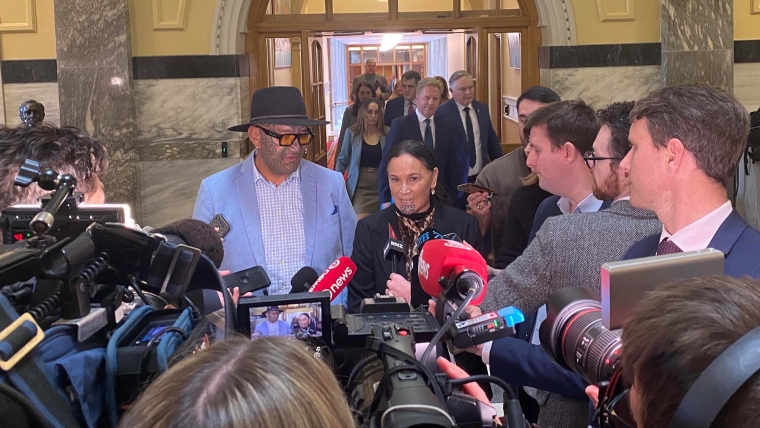
Following the tax policy release, Te Pāti Māori co-leader Rawiri Waititi told reporters that transforming the tax system was a bottom line for the party.
Alongside creating a tax-free threshold for the first $30,000 people earn, the party would also make changes to the income tax system with people earning between $30,001 to $60,000 having a rate of 15% while those earning between $60,001 to $90,000 have a tax rate of 33%.
Those making between $90,001 to $180,000 will have a tax rate of 39% while those making $180,001 to $300,000 would have a tax rate of 42%. People making $300,001 and over would have a tax of 48%.
Te Pāti Māori said: “Whether you are a cleaner, a nurse, a teacher, a tradie, a pensioner or raising a whānau, we want you to keep more of what you earn."
Targeted wealth tax
Te Pāti Māori also wants to implement a wealth tax that is targeted at people with an average net wealth of $6 million each.
This targeted tax would only affect the wealthiest 3% of people while 97% of New Zealanders would pay no wealth tax at all, the party said.
A 1.5% net wealth tax would be imposed on those with $2,000,001 to $5,000,000 while those with $5,000,001 to $10,000,000 would incur a 2% tax rate.
People with a net worth of $10,000,001 and over would receive a 2.5% tax.
Te Pāti Māori said: “4.5 million people (97%) pay less income tax. The wealthiest 3% contribute more. That's what a fair economy looks like.”
Investing to help ‘eliminate aggressive tax avoidance practices’
The party also wants to return the company tax rate back to 33% (it’s currently at 28%) and to introduce an international profit transfer tax with a rate of 5% on the value of profits transferred offshore.
Te Pāti Māori is also calling for a $1 billion investment into the Inland Revenue Department, the Serious Fraud Office, the Financial Markets Authority and the NZ Police Financial Intelligence Unit to help “eliminate aggressive tax avoidance practices.”
Vacant house tax, targeted support with kai costs
The party is also proposing a land banking tax of 33% to discourage land banking and its policy document said this would support the productive use of land.
It also wants to implement a vacant house tax of 2% “to free up the 11,700 empty homes across Aotearoa” and a 5% stamp duty on residential sales - except for first home buyers for homes under $1 million.
Te Pāti Māori is proposing a targeted tax credit for people earning $60,000 or less. The tax credit would provide up to eight weeks of free kai each year and the party said it would benefit about 64% of Aotearoa, which is about three million people.
Bottom line for Te Pāti Māori
Transforming the tax system was a bottom line for Te Pāti Māori, co-leader Rawiri Waititi told reporters.
"When the next government requires our support, there must be meaningful tax transformation that puts pūtea back into the people's pockets and asks extreme wealth to contribute its fair share."
Waititi said Te Pāti Māori was not interested in changing the government simply to change the people sitting around the Cabinet table. "We are here to transform what government does."
Te Pāti Māori co-leader Debbie Ngarewa-Packer said when it came to the overall package, they would be spending $16 billion, making $20 billion with a net surplus of around $4 billion.
This meant they would not have to borrow to do this, Ngarewa-Packer said. "And I think that was a really big picture. That was a challenge, and why we've taken so long to study and wānanga on this with the experts is that we want to be in a situation where we can make this happen and not hear the argument that we're going to have to borrow billions ... That's just not the situation."
She said it was important Te Pāti Māori was transparent about what it stood for and how they saw its tax policy working.
‘Put pūtea back in people’s pockets and give Aotearoa some room to breathe’
In its policy document, Te Pāti Māori said every component of its tax policy has been modelled using the “best available Government data and, where appropriate, benchmarked against Treasury and Parliamentary Service analysis.”
Alongside this, the party is proposing to align its tax policy with climate responsibilities by “incentivising low-emissions activity and discouraging environmental harm”, its policy document said.
Te Pāti Maori said it wanted to “ensure any environmental taxes are designed to protect low-income households and do not transfer disproportionate costs onto whānau.”
In its policy document, the party said revenue raised through progressive taxation would be directed toward housing, health, education, climate resilience and Kaupapa Māori solutions that strengthen to collective wellbeing.
"Te Pāti Māori is committed to a tax system that restores fairness, funds public good, and supports whānau to live with dignity ... A fair tax system is not only the foundation of a fair society; it is the price of civil society. Our commitment is to ensure that the economy serves people, not the other way around."
People across Aotearoa were feeling the squeeze, the party said.
“The kai bill is up. Housing costs are up. Power is up. Everything is taking a bigger bite out of the household budget."
“Our answer is simple: put pūtea back in people’s pockets and give Aotearoa some room to breathe," the party said.
“This isn't about Māori versus non-Māori, or workers versus business. It's about building an economy that works for the overwhelming majority of people who call Aotearoa home."
We welcome your comments below. If you are not already registered, please register to comment
Remember we welcome robust, respectful and insightful debate. We don't welcome abusive or defamatory comments and will de-register those repeatedly making such comments. Our current comment policy is here.