
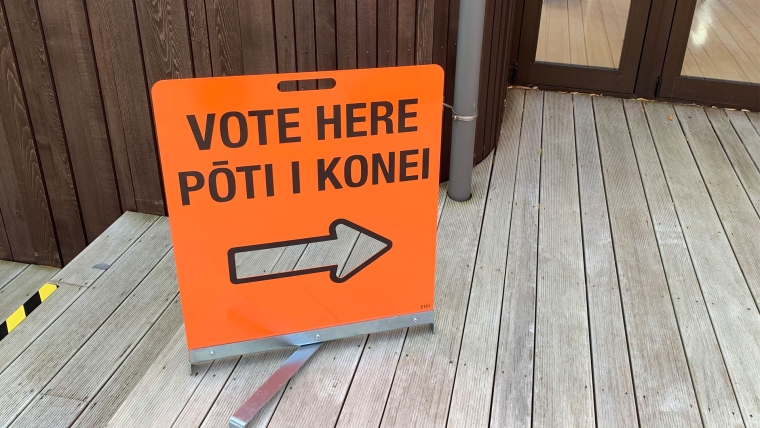
With only four days left to enrol to vote in the election, young people are lagging behind with only 66.7% of 18 to 24-year-olds currently enrolled.
Data from the Electoral Commission, last updated on October 17, shows from an eligible population of 440,692, only 294,050 people aged between 18 and 24 are currently enrolled.
Early voting opens on October 26, with election day November 7. People have until Sunday midnight October 25 to enrol online or post their enrolment form.
Meanwhile, 98.1% of the 55 to 59 age group and 96.0% of the 60 to 64 age group are enrolled to vote.
By population, this means 313,231 out of an eligible population of 319,200 55 to 59-year-olds have enrolled, and 302,957 out of a population of 315,701 of 60 to 64-year-olds are enrolled to vote.
Out of a total estimated eligible population of 4,051,640 - about 3,708,247 have enrolled (this is about 91.5%).
Electoral law changes
This year’s general election also coincides with electoral law changes passed in December 2025.
Changes include:
- Closing enrolment 13 days before election - this means people can no longer show up at a voting booth on Election Day to enrol and cast their vote.
- Requiring 12 days of advance voting at each election.
- Introducing automatic enrolment updates.
- Creating an offence that stops the provision of free food, drink or entertainment within 100 metres of a voting place. This would be punishable by a fine of up to $10,000.
- Reinstating a total ban on prisoner voting. Under the previous Labour Government, people serving less than three years were allowed to vote.
At the time of the electoral law changes, Justice Minister Paul Goldsmith said late enrolments had placed too much strain on the system.
“The final vote count used to take two weeks, last election it took three. If we leave things as they are, it will likely take even longer.
“Therefore, this legislation closes enrolment before advance voting begins. People will need to make sure they enrol or update their enrolment details by midnight on the Sunday, before advance voting opens on the Monday morning.”
“This is a significant, but necessary change, and New Zealanders have plenty of time to get organised and enrolled,” Goldsmith said.
Labour calls enrolment changes a ‘reckless’ decision by the Government
Labour has made clear that if elected, it would restore same-day election enrolment.
And on Sunday, leader Chris Hipkins, on TVNZ’s Q+A, raised concerns about having “tens, if not hundreds of thousands, of people completely disenfranchised from … the result of this election”.
“We’re going to have people showing up at the polling booth and realising too late that they’re not on the roll, and I think there will be a big outcry when a whole lot of people who didn’t know they weren’t on the roll, show up and find that their vote is not going to count.”
Hipkins said he thought this was a “reckless” decision by the current government to change enrolment laws.

He said the Electoral Commission hadn’t done enough but to be fair to the organisation, it probably did not have the resources.
However, Hipkins said he had observed, during his time in politics, that the Electoral Commission had been “progressively doing less and less”.
“When I first started as a political candidate, I’d be out door knocking, and the Electoral Commission would be out door knocking too. They were sort of one street ahead of me, making sure everyone was on the roll,” he said.
“They haven’t been doing that, in that scale, for quite some time now and I think that is the approach we must get back to because getting the electoral roll up to date is a critical precursor to there being a good, robust election.”
Hipkins said he would accept the results of the election but pointed out that there would be some upset people who go to vote and find out that their vote was disqualified because of the new enrolment rules.

National Party leader Christopher Luxon told RNZ that he believed the Electoral Commission was doing enough to get people enrolled to vote, pointing to “a lot of advertising, a lot of promotion.”
"We're just asking you to get registered 13 days before an election. It's pretty straightforward. You've got [till] the 25th of October, so I just encourage all Kiwis to do it."
Advance voting will begin on October 26 and ends on November 6. People can also vote on election day, which is November 7, from 9am to 7pm.
Preliminary election results will be released progressively on November 7 from 7pm here.
We welcome your comments below. If you are not already registered, please register to comment
Remember we welcome robust, respectful and insightful debate. We don't welcome abusive or defamatory comments and will de-register those repeatedly making such comments. Our current comment policy is here.