

With early voting opening on Monday, political parties over the long weekend have been campaigning hard, continuing to make policy announcements and meet with New Zealanders across the country. Here's what some of the political parties have been up to this long weekend so far.
The Opportunity Party announced on Sunday, that if elected, it would establish an independent Future Generations Commissioner to give future New Zealanders a voice in the decisions being made today, and to “help end the cycle of short-term political thinking”.
A Future Generations Act would be introduced to establish an independent Commissioner, who would be appointed through Parliament for a five-year term, “to hold governments and public bodies accountable for the long-term consequences of their decisions,” the party said.
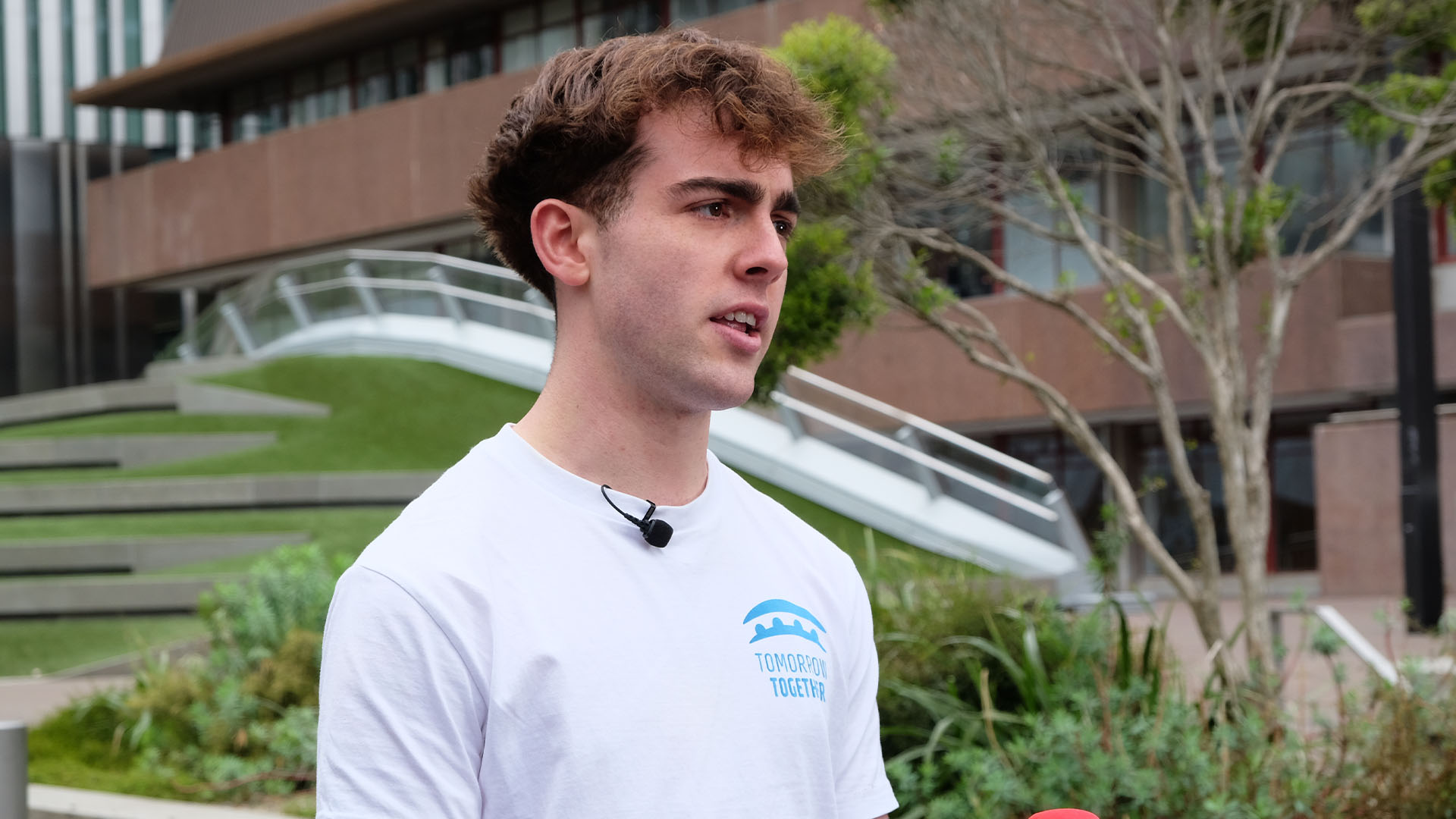
Speaking to reporters near Auckland's Albert Park, Opportunity leader Qiulae Wong said it was no secret that her party wanted more long-term thinking in politics, especially when it comes to things like energy and infrastructure.
"We believe that a Future Generations Commissioner would be a very useful mechanism to enable a lot of that to happen."
Under a Future Generations Act, major government policy, Budget and investment proposals will have to disclose their long-term costs, benefits, risks and impacts on future generations - including the cost of doing nothing.
The Commissioner would not replace the role of elected representatives. However, they would play a role in bringing New Zealanders together through citizens' assemblies and other forms of public participation, to help develop long-term national goals.
This process would be designed and delivered in partnership with Māori, consistent with Te Tiriti o Waitangi, Wong said.
This policy draws on Wales' Well-being of Future Generations Act, which established an independent Commissioner and placed long-term obligations on public bodies.
Asked what type of problems she envisioned this Commissioner tackling, Wong said the Commissioner in Wales was able to stop a motorway from being built, "which was not in the interests of the environmental concerns of the next generation."
"I think we see similar debates here around Roads of National Significance and whether they are really the best investment of taxpayer money in the long term, so these kinds of things would make those trade-offs a lot clearer. It would force that financial business case to actually look at the cost of doing things in the long term on the environment, on social cohesion, and on our economy."
Looking at similar-sized Commissioners in NZ and in Wales, the cost would be around $5 million a year, she said.
"It's not a huge amount of money, and particularly when you think about the billions of dollars we are wasting on flip-flopping on infrastructure, on changing tax around health and education. This would ensure that money doesn't get wasted because we are taking in that long-term view right from the outset."
Nate Wilbourne from Wellbeing Economy Alliance Aotearoa, a group that wants to redesign NZ's economy into one that focuses on wellbeing and the environment, has been campaigning for a Future Generations Act in Aotearoa. He welcomed Opportunity's announcement.
Asked if a Commissioner was established, what type of things he would like to see tackled first, Wilbourne pointed to climate change and infrastructure.
"When we're building highways, new suburbs, and housing developments ... Not only will they impact us in the next few years as you know ratepayers and taxpayers, but also the long-term burden on my children and future generations."
National's 100-day plan
Meanwhile National outlined its 100-day plan if elected into government, unveiling the 26 actions - many of which have previously been announced by the party - it wants to pursue.
As part of its 100-day plan, National wants to:
- Introduce KiwiSaver changes to Parliament
- Launch a first trade mission to India, with food, beverage and seafood exporters
- Issue a Budget Policy Statement showing a return to surplus and lower debt and spending
- Lock in no new taxes and Budget Responsibility Rules
- Pass the rates cap, keeping council rates increases within 2% to 4%
- Introduce legislation to extend paid parental leave to 27 weeks from July 2027
- Pass legislation to power up the Commerce Commission, and require them to report on separating Foodstuffs within six months
- Progress work to finalise new safety rules for plug-in solar
- Lift the First Home Loan income cap to $300,000, so more Kiwis can buy with a 5% deposit
- Reduce student loan repayments from 12 to 10 cents in the dollar
- Implement changes at Immigration NZ to prioritise and expedite visas for partners of New Zealand citizens
- Progress development of National’s Home Energy Fund for low-cost solar, battery and insulation loans
- Boost funding for Pharmac to fund more cancer and life-changing medicines by redirecting foreign aid money
- Deliver free cervical screening for all women aged 25 to 69
- Set a national clinical trials target, so 5% of cancer patients have part of their care through a trial within 10 years
- Expand the Maths Acceleration Programme
- Begin work to end the use of screens in early childhood education and limit device use in Years 1 to 3
- Develop an implementation plan for a School Start Check, so every child’s “strengths and needs are understood” before they start school
- Pass the first reading of the Online Safety (Minimum Age and Child Safety Risk Assessment) Bill and progress it to select committee
- Progress the Government’s Public Service Transformation programme
- Adopt legislation to ban taxpayers’ money being used to fund gangs
- Begin work on a new offence for staying silent when a child is killed, with up to 10 years in prison
- Introduce legislation to modernise consent laws, so consent must be actively given
- Begin work to toughen sentences for sexual offending, so good character or public standing can no longer reduce a sentence
- Establish a dedicated Auckland Transport Police Team
- Introduce legislation to "get tough" on overseas student loan defaulters, with penalty interest, KiwiSaver restrictions, tougher arrest settings and charges over New Zealand assets
National leader Christopher Luxon said his party’s 100-day plan sets out what it will prioritise if elected “to build on our progress.”
ACT and Big Pinky
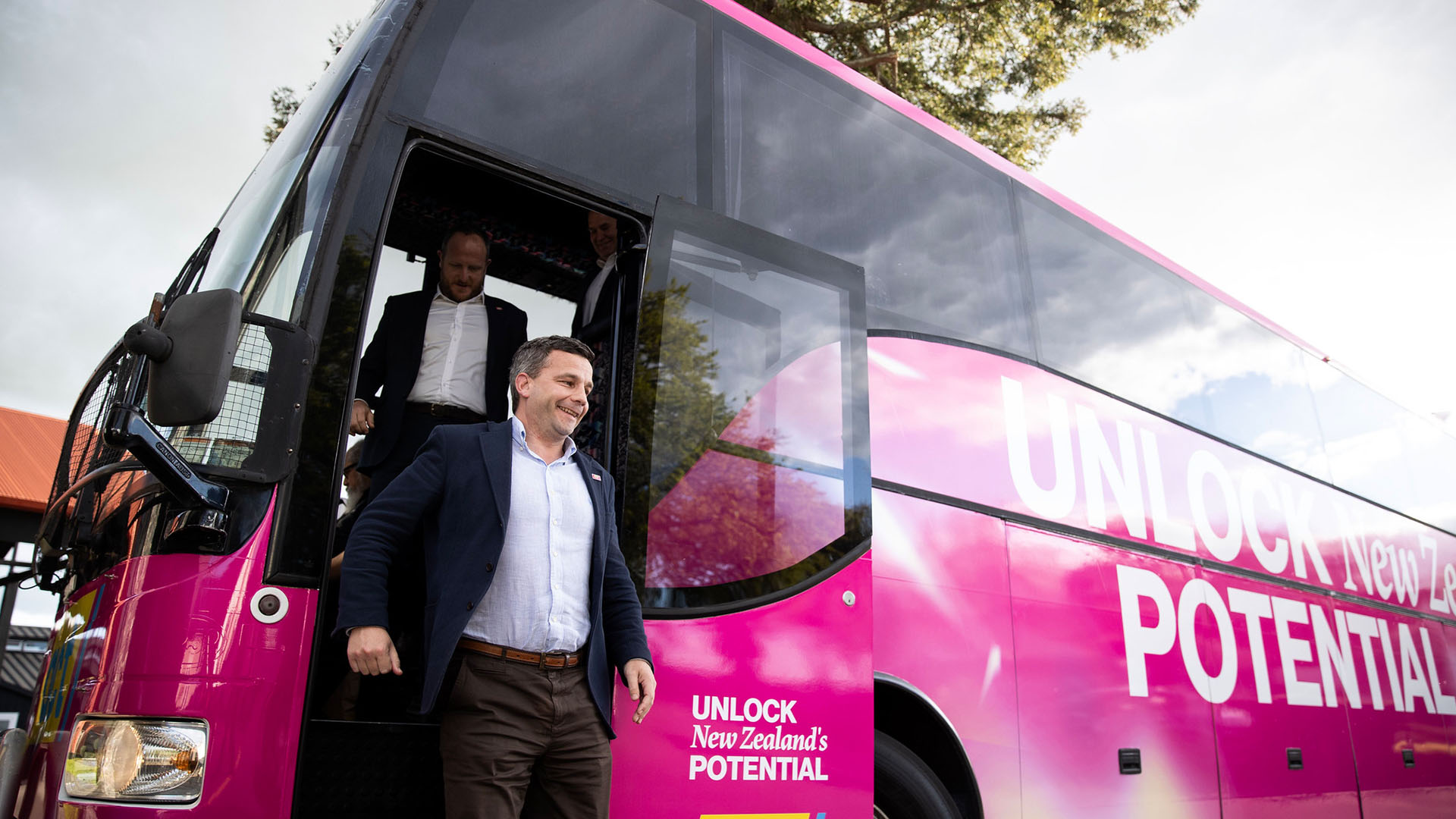
Over on the North Shore, ACT candidates, with the help of their party bus Big Pinky, made their way around the North Shore in Auckland, stopping in places such as Takapuna and Milford Beach.
But the ride doesn’t end there. On Monday, the ACT Party plans to release its campaign manifesto.
Abolishing the ETS charge from fuel
New Zealand First announced on Saturday, that if elected, it would abolish the Emissions Trading Scheme (ETS) tax from fuel.
In a statement, the party said this would mean that immediately, fuel would be 12 to 14 cents a litre cheaper.
“Over the past year fuel consumers have paid 12 cents a litre of petrol, and 14 cents a litre of diesel under the ETS, adding to the excessive cost of our imported fuel.”
NZ First said a total of $850 million had been “taken away in the past year from consumers and businesses and allocated for the purchasing of Carbon Credits as part of the ETS linked to the Paris Agreement.”
The party said it would remove this “burden” on consumers and businesses over the next term of government.
“There is no substitute for diesel for industry. Likewise, ordinary consumers have suffered too much with the cost of petrol.
“People need to understand that when you propagate woke green ideology, it costs New Zealanders while delivering us nothing.”
Financial literacy
Financial literacy was also a popular topic on Saturday with ACT launching its financial literacy policy.
In a statement, ACT leader David Seymour announced that ACT would give every Year 11 student $500 to invest in a “Sharesies-style account.”
“Financial literacy should absolutely be part of the curriculum. In the modern world it’s extraordinary to think otherwise. But the real challenge is getting children motivated to learn,” Seymour said.
“ACT’s policy, already fully costed in our fiscal plan, literally gets young people invested. Instead of just learning about investment in a textbook, students will have real skin in the game."
“Students will start with a term deposit, then graduate to managed funds, New Zealand shares, and international investments as they demonstrate their understanding of risk and reward.”
ACT also made further commitments to its digital economy policy with deputy leader Nicole McKee saying: “ACT will prioritise better coordination and ministerial responsibility for the work programmes underway across five agencies related to the digital economy.”
Meanwhile National leader Christopher Luxon announced that as part of his party’s plan for parents, National would ensure financial literacy was part of the school curriculum.
He said this would help children develop good money habits and skills for life.
The party also wants to make a child’s bank account more streamlined and easier for parents by progressing amendments to the anti-money laundering legislation.
We welcome your comments below. If you are not already registered, please register to comment
Remember we welcome robust, respectful and insightful debate. We don't welcome abusive or defamatory comments and will de-register those repeatedly making such comments. Our current comment policy is here.