
While both National and ACT have pushed back on the current government's proposals for bringing agriculture into some form of payment system for emissions, it has been ACT that seems to have a clearer pathway as to how they see a future proposal working.
At its basic level it works on the premise; why should farmers be penalised when the countries they are competing against are not having to meet the same criteria? To this end ACT has said; “Tie any emissions price to that of our five main trading partners to ensure there is a level playing field for growers and producers competing overseas.”
This should appeal to farmers' sense of justice rather than the current feeling (rightly or wrongly) of being hung out to dry.
So, with ACT’s proposal out there, it may be a worthwhile exercise to examine just what our five major trading partners are up to. Both at present and in the future. The five partners in question are:
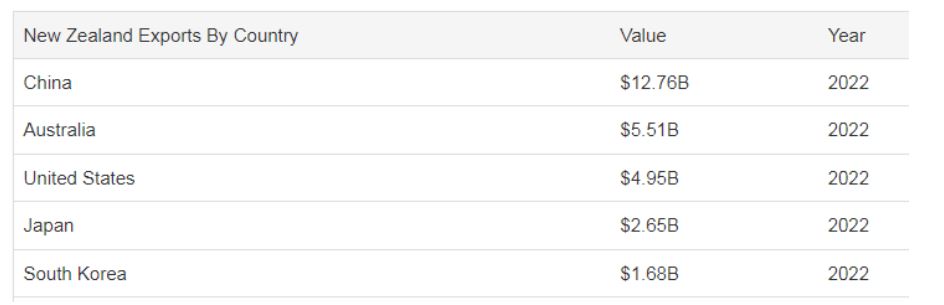
While exports are only one part of the equation, imports being the other, the list does not change dramatically.
Another anomaly is most data is by country rather than region and this could be relevant when it comes to the EU. While individual EU countries don’t feature, as a block with around $1.72B they would push South Korea off the list.
Given the EU is looking to incorporate agriculture into some scheme before 2030, this might be a relevant detail. ACT’s policy also doesn’t say whether it is the average emissions price or the highest etc, so some detail to be sorted through.
Starting with China, agricultural emissions make up around 7.8% of total emissions, sourced from both livestock and cropping, largely rice paddy fields. President Xi has committed China to a pathway of carbon neutrality but by 2060 (NZ aims for 2050).
Over the last 20 years there has been considerable growth in agriculture emissions. However due to greater production efficiencies in recent years growth has declined. And according to their data, there has been a decline in animal emissions, which make up one of the largest sectors.
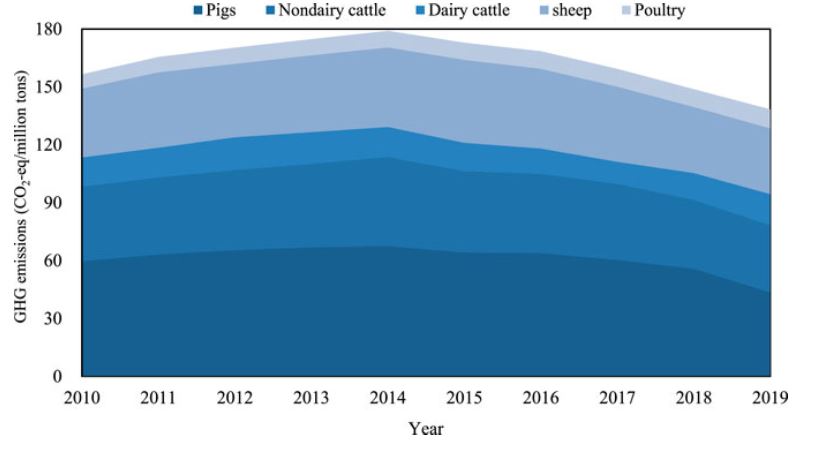
Source : Frontiers China.
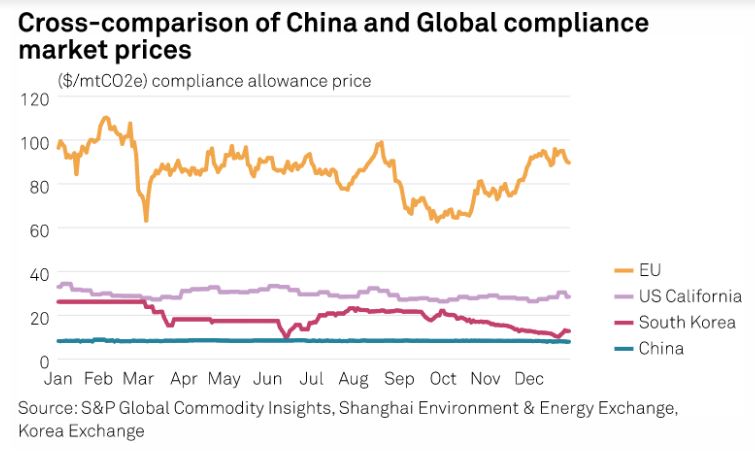
Currently China has a price on GHG (greenhouse gas) emissions of around US$8 to US$9 so, not a lot to be concerned about over here as a driver of emissions prices for agriculture. However, if they are serious about getting to the 2060 neutrality target then they will have to bring in some mitigation techniques or penalties.
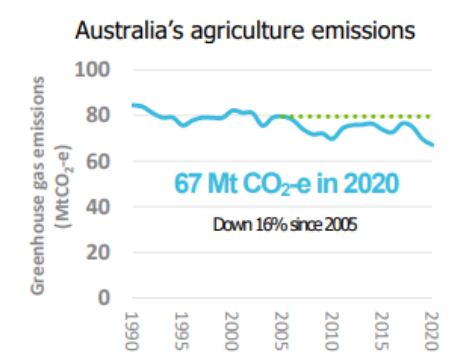
Australia gets about a 13% contribution from agriculture. As shown below there has been a decline of 16% in the last 15 years (1% per year). As with New Zealand, Australia has committed to being carbon neutral by 2050. A relative newcomer to carbon markets (due to its history of being a ‘hot potato’ and emissions policies rolling governments). the current Labor government is bringing in an ETS (emissions trading scheme) like scheme targeting the 215 heaviest ‘polluters’.
At present the cost cap is set at $75 per tonne, but rising over time. Agriculture does not fall into the ‘polluter’ category. And as they are already reducing gross emissions and are a relatively small part of overall emissions, farming is not under the microscope. However, at some stage if the energy sector can reduce their emissions then the spotlight may turn on agriculture. But they’re safe for the time being.
The US has a very piece-meal approach and works in a state by state methodology. Some have opting in, some still remain to do so. However there is an overall policy set by the White House. Similar to many OECD countries it plans to:
♦ Reduce U.S. greenhouse gas emissions 50% to 52% below 2005 levels in 2030
♦ Reach 100% carbon pollution-free electricity by 2035
♦ Achieve a net-zero emissions economy by 2050
To achieve this government efforts are largely focused on government spending and ‘encouragement’ to get the country to adopt ‘clean energy’. Already the USA is close to having three million plug-in EV’s on the road.
For agriculture, which makes up about 11% of national CO2e emissions, the federal policy focuses on voluntary measures and ‘encouragement’ with no mention of any penalty payments. There is a focus on methane reduction with the US being actively involved in helping meet the target to reduce global methane emissions by at least 30% by 2030.
But agriculture specifically appears to be not in the ‘actively pursued reductions category’. It is however, being examined closely through modelling. The model was developed to evaluate the welfare and market impacts of public policies and environmental changes affecting agriculture and forestry. But to date no decisions seem to be on the horizon to pull agriculture into anything other than voluntary reduction status.
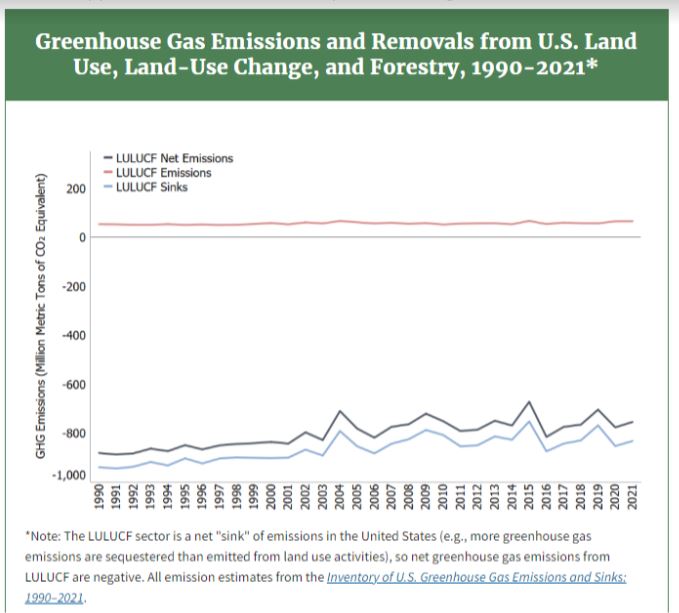
Having said that, US agricultural emissions have increased about 7% since 1990, New Zealand agriculture in comparison has increased about 9%, not so different. Within the US, as stated, different states have their own policies and California stands out as being the most ‘progressive’ with climate policies.
Currently they have an ETS price of around US$32 or NZ$52, but even here in probably the “greenest” state in the US agricultural emissions reductions appear to be aimed for by positive incentives rather than penalties. And agriculture is not included in their ETS.
Japan’s government’s broad aims are not very different from the US and New Zealand etc etc. Net zero by 2050 and milestones along the way. Only 4% of its emissions come from agriculture (largely rice growing and livestock) so not a large contributor. There is still an expectation that agriculture will reduce emissions, but largely through efficiencies. There is also discussion to reward land owners with payments for mitigation measures (as seen below).
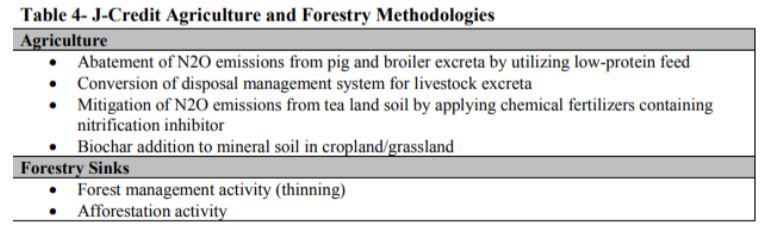
Japan introduced a carbon tax in 2002 for carbon pricing, and the best interpretation of the final tax rate equals ¥289 per ton of CO2 (or NZ$3.25) after several adjustments, and there has been no further increase since April 2016. So hardly enough to drive change for which it has been criticised within. Some 76% of emissions fall into the ‘taxed’ category but not agriculture.
South Korea (briefly) does have a carbon market currently with a price per tonne of about US$10 although it has been over double the price. Agriculture, which is highly subsidised to the tune of around 45% to 50% of gross farm receipts does not fall into the ETS. (Given the high level of subsidy why would it, robbing Peter to pay Paul). Like Japan and the US etc, the Korean government appears to be working on gaining efficiencies in production rather than penalising farmers and food security is still an issue for them.
Finally, a quick look at the EU which as a block is a major trading partner. As can be seen below they have the most ‘mature’ ETS currently at about US$90. Through its European Green Deal policy, the EU is stepping up its efforts to reduce agricultural GHG emissions. The European Climate Law Regulation introduced an ambitious overall target for the EU's mitigation policy, requiring the Member States to have emissions and removals of GHGs.
However, a recent audit found that of the €100 billion of CAP (Common Agricultural Policy) funds that were spent between 2014 and 2020 with the aim of addressing climate change, the end result was a 0% reduction due to the spending.
Over time, the European Commission sees merit in the creation of an agriculture, forestry and land use sector with its own specific policy framework covering all emissions and removals. It expects, presumably through the utilisation of forestry which seems to remain within the land based sector, to become the first sector to deliver net zero greenhouse gas emissions.
Subsequently, this sector would generate carbon removals to balance remaining emissions in other sectors induced by a robust carbon removal certification system. At the individual country level and among the goals that need to be achieved are “to contribute to climate change mitigation and adaptation, including by reducing greenhouse gas emissions and enhancing carbon sequestration”.
From New Zealand farmers' perspective, the EU is the most likely block/country to consider penalising New Zealand farmers for their emissions. But the chances of that at this stage would have to be considered pretty remote. The only caveat likely to be is if they wished to introduce some sort of trade barrier as a form of protectionism.
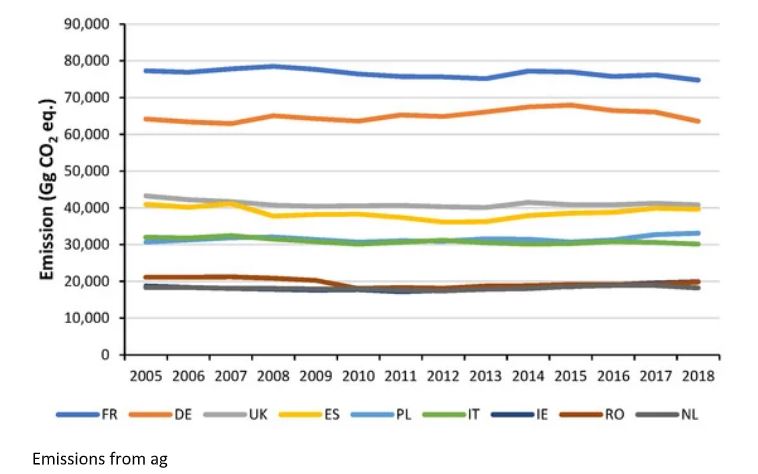
Most EU countries have reduced their agricultural emissions to some degree so they do have some moral high ground. Some countries like the Netherlands and Denmark have begun to make moves to limit livestock farming’s impact.
However, to date, the CAP's contribution to reducing agricultural GHG emissions has been limited. This is partly due to the voluntary nature of the instrument: Farmers who do not apply for financial support under the CAP are not bound by its rules (although, it is reported for many farms, CAP funds are vital for their survival).
So it seems ACT is not at great risk of being embarrassed by its agriculture emissions policies, assuming we are discussing a price on ag emissions not all and sundry. And if and when the top five trading nations collectively have a price on agriculture induced GHG emissions I suspect most, given the average age, of New Zealand farmers may well be retired.

We welcome your comments below. If you are not already registered, please register to comment
Remember we welcome robust, respectful and insightful debate. We don't welcome abusive or defamatory comments and will de-register those repeatedly making such comments. Our current comment policy is here.