
Interest.co.nz is unpacking how AI will change your everyday life - the risks, the opportunities, and what to actually expect. Our series brings you the policymakers, experts and industry leaders from New Zealand and overseas.
By Anna Whyte
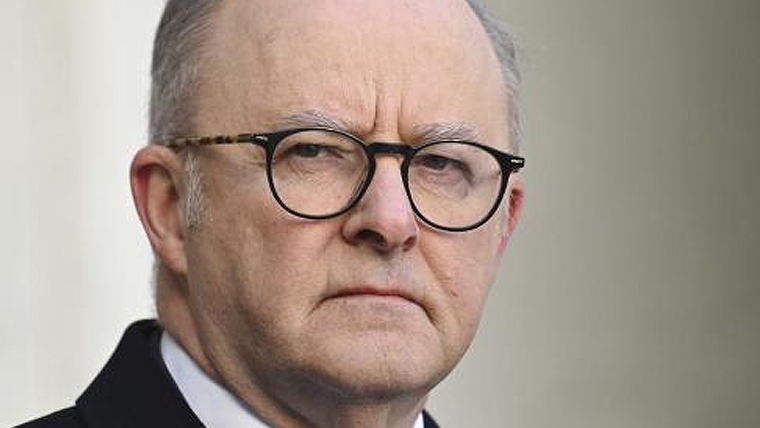
Act now, or someone else will write the rules, was Australian Prime Minister Anthony Albanese's message as he unveiled Australia's AI roadmap this week, which included a new Office of AI, new energy rules for data centres and legal protections for local content.
Not acting risked ceding "sovereignty and security to the control of foreign monopolies," he said.
The AI framework
No Government can turn back the clock or press pause on AI development, Albanese said, speaking from his former university in Sydney on Wednesday.
"...We are serious about attracting frontier AI investment to Australia. Because we want AI to support and create good jobs, not replace them."
But Australia needed to set the terms and determine AI's social licence, he said.
"We have to do it now. We cannot revisit this issue after companies have built whatever they want, wherever they want, and try and then re-open negotiations. This is our time to decide what AI looks like here in Australia."
'If we hang back, or stand still, this will run right over the top of us'
Albanese said if Australia went into the global market not as a united country, "then others will write the rules".
"That would not only risk the integrity of Australian artists and journalists. It would mean subcontracting our sovereignty and security to the control of foreign monopolies."
"Our great country can be much more than a data warehouse for AI products made overseas. We can do much more than manage investment in ideas from elsewhere.
"We can lead in everything from cybersecurity and biotechnology to advanced manufacturing. This is why we want Australia to have more of a stake in where AI is made, and how it is made."
Rules for AI
Albanese announced that a set of Australian Standards for AI would be established, following March's set of expectations for large AI data centres.
He said they did not want to legislate every possible eventuality or risk, but to have the flexibility to keep pace with change.
"This is about building Australians’ confidence and trust in AI and our nation’s capacity to manage it. Ensuring that our national interests and our national security are protected. And providing the certainty for growth, for jobs and for investment."
Protection for artists and media
"Let me make this crystal clear: not everything produced in Australia is up for grabs," he said.
"Australian writers, musicians, artists and journalists must retain ownership and control of their work. Our laws will spell that out, plain as day."
He said no company should use Australian literature, artistic or news content without the artist's control to build or train AI.
"That includes the artist’s control of the price and value of their work. Anything less is theft."
Data centres paying their way
There will be a legal obligation for new large-scale data centres to underwrite new power supply and pay the share of grid connection, "so no costs are passed on to homes or businesses".
"Australia is the sunniest continent on earth, but we're also the driest. Which is why our rules will require data centres to minimise their water use, maximise their energy efficiency, and pay for any additional water infrastructure required."
AI Office
The day Albanese delivered his speech, he launched his 'Office of AI', which sat within his Department of the Prime Minister and Cabinet.
"We should not treat AI as a threat to good jobs - we must use it as an instrument to help create them. If we trust in our values and invest in our people, if we set our national standards high, then I have every confidence that Australia can seize this moment and make it our own.
"We can make AI stand for Australia’s interests," he said.
The response
It was a speech that had drawn mixed reviews. The Betoota Advocate, an Australian satirical news website, was quick with the headline, 'Locals assured they'll only need to cut showers to three minutes and stop flushing wees if proposed data centre goes ahead'.
The Science Media Centre collected a range of views from New Zealand and Australian academics. Victoria University AI senior lecturer Andrew Lensen said while there was "a real resentment by the general public against the impact of AI", it was likely more and more left-wing governments would take these sorts of policy positions.
"We have seen Australia confront Big Tech before (e.g. taking action to protect news publishers from scraping) with some success, so it will be interesting to see how far they’re willing to stand up against the powerful AI companies - and how successful they are, as a reasonably small nation.
"In contrast, we see little political leadership in New Zealand. None of our major political parties have standalone AI policy released for the 2026 election, despite AI having a major impact on key policy issues like the cost of living, jobs, the environment, and Māori sovereignty," he said.
Professor Lisa Given, director of the Centre for Human-AI Information Environments, said as companies increasingly explore developing data centres in Australia, "communities have expressed significant concerns about energy and water use, and placement near residential neighbourhoods".
"Australians are also worried about disruption from AI technologies, raising concerns about potential job losses, copyright infringements of material used to train AI models, and data privacy," she said.
Given said the creation of the AI Office marked a shift in the Australian government's approach to AI, "towards being more hands-on and proactive".
Dr David Tuffley, adjunct senior lecturer at Griffith University, said the test for the Office of AI would be if it could find "the 'sweet spot' between the risks and the real cost of moving too slowly".
"Regulation that arrives late or lands heavily will not protect Australians. All it will do is make sure the technology that shapes our lives will be built elsewhere, under someone else's rules."
We welcome your comments below. If you are not already registered, please register to comment
Remember we welcome robust, respectful and insightful debate. We don't welcome abusive or defamatory comments and will de-register those repeatedly making such comments. Our current comment policy is here.