
sign up log in
Want to go ad-free? Find out how, here.

Morrison's Paul Newfield sees big opportunity for New Zealand from 'massive overflow opportunity of the AI industry needing to move out of the US'

Technology / news
Morrison's Paul Newfield sees big opportunity for New Zealand from 'massive overflow opportunity of the AI industry needing to move out of the US'
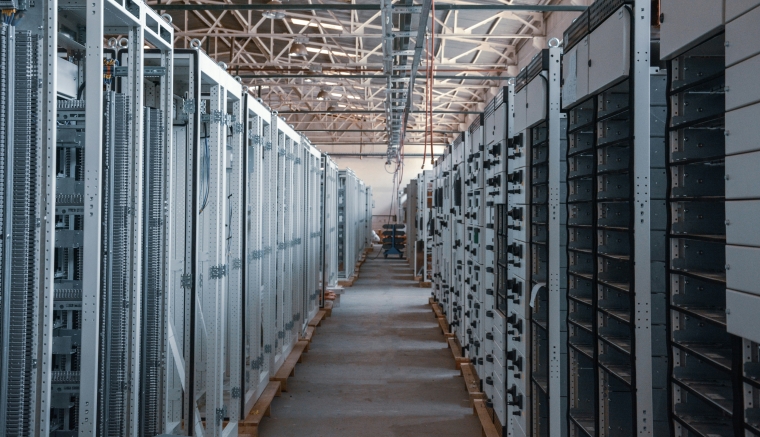
dc
Ismail Enes Ayhan on Unsplash.

New Zealand has the potential to skim off a significant chunk of data centre capacity from the United States but hasn't yet made a strong enough case or pushed hard enough, says Paul Newfield, partner and CEO at infrastructure investor Morrison.

Newfield made the comments while speaking at the Institute of Finance Professionals New Zealand (INFINZ) annual conference in Auckland on Tuesday. Morrison has more than US$30 billion of assets under management including via Infratil and including data centres.

He acknowledged data centres aren't universally popular, saying protests against them are occurring for "some really good reasons." That's due to concerns "they're going to suck up all the electricity and put your power bills up, " use all the water, or be "built next to your house and shake your house."

"Just to be clear, data centres don't need to do any of those things, right? And so [with] our CDC [49.7% Infratil-owned data centre] business we are going out and saying we want regulation. We want regulation to set the floor, and we want to compete on how you meet it," Newfield said.

"You can actually fill the data centre up with water once and keep reusing that water for the next 30 years. It's more expensive, but that's just a design choice. Of course we should do that. And of course data centres should be a spur for new renewables to be built. They shouldn't be competing for existing supply, putting prices up."

He suggested, however, that there's another key reason people are scared of data centres, which is because "they're the only physical manifestation" of artificial intelligence (AI). 

"And so a lot of what you're seeing in these protests is people saying, 'I'm scared of AI and what it means for us'," said Newfield.

The political left and right in the United States can only really agree on one thing at the moment, Newfield suggested, citing comments from Democrat Senator Bernie Sanders and MAGA Republican Senator Josh Hawley; "which is that they hate data centres and they hate AI."

"That means social license is becoming a concern."

"I actually believe the US is going to hit a constraint very soon, probably straight after the mid-terms [November mid-term elections], which will be a lack of electricity and a lack of social license."

"And that will create this massive overflow opportunity of the AI industry needing to move out of the US. So where will it move?"

"There is a simple recipe if you want to be the place it moves to. You want abundant, cheap renewable energy. You want AI-capable sovereign data centre capabilities. So data centers that are actually owned locally, regulated locally."

"[And] you want to be part of Five Eyes. Because particularly, for example, why are Anthropic really interested in this part of the world? They want to demonstrate back to the Pentagon that they can be a trusted partner for Five Eyes governments so that they then get embraced a bit more at home. You need regional geopolitical stability. That really showed through earlier this year when things started kicking off in Iran and missiles were being fired at data centres in the UAE," Newfield said.

"Our data centre business just started getting a lot of inbound interest from people saying, 'actually, you're in a really safe part of the world.' You need forward-thinking regulation, so regulation that doesn't wait for all the harm to happen, that actually says what will make this good for society and how do we make this a win-win for everyone."

"And you need domestic political stability. So, um, can anyone tell what countries I'm describing there? Australia, unfortunately. I know the flags are quite similar, but right now, New Zealand should be eating the US's lunch, and Australia will. You know, Anthropic are coming down saying 'we expect Australia to be our biggest global centre for AI development, after the US, because you have all of those characteristics'," said Newfield.

"Now, actually, New Zealand is naturally way more advantaged than Australia. We just haven't yet made the case strong enough, and we haven't pushed fast enough. This is something we can't afford just to be a fast follower [in]."

"To give you a sense, there's some really good BCG work done this year that said if New Zealand captured, I think it was 2% or 3% of the just Asia-Pacific AI data centre market, it would be a $60 billion opportunity for New Zealand, maybe $70 billion. It was 600 megawatts of capacity they thought it'd get," said Newfield. 

Citing what he described as a "Lloydism," being something Morrison's late founder Lloyd Morrison might've said, Newfield said; "Excuse my language, but If I'd shown that as a target to Lloyd, he would have said, 'that's f**king pathetic. Like, why would we think we should be targeting 2% or 3% of this given our natural advantages?"

"And to give you a sense, that 600 megawatts that they were talking about in the next 10 years, our data centre business in Australia earlier this year signed one contract that was 550 megawatts."

"There's no reason why this can't be [a] hundreds of billions of dollars of GDP opportunity for New Zealand if we get that recipe right," said Newfield.

He noted that in Trump's America a business building renewable energy gets 50% of its capital expenditure covered by tax credits.

"In New Zealand, you get none. That is not because Trump loves renewables, it's because the US needs its AI industry to boom. So they are subsidising renewables, but they can't keep up. So where will that demand go? It will go to countries that have got available energy and are geopolitically safe."

We welcome your comments below. If you are not already registered, please register to comment

Remember we welcome robust, respectful and insightful debate. We don't welcome abusive or defamatory comments and will de-register those repeatedly making such comments. Our current comment policy is here.

15 Comments

Completely agree with this article. 

"[And] you want to be part of Five Eyes. " - a big opportunity for us is going to waste. 

Up
2

Sounds like a bit of the ol' bandwagon jumping if you ask me. Kind of unusual making this bullish takes on data centers well after the fact and the debacle with Firmus. 

Yes Aotearoa has some advantages and good to see Newfield debunking the water usage issue to some extent. 

Up
1

If American's want to come here and spend lots of money building a data centre, what do we care if they go under? Just be careful to bill them upfront!

Up
2

There are several questions that come to mind, which need addressing before NZ joins the AI datacentre bandwagon:

  1. Are we transitioning from being a food producing nation to one that exports electricity?  
  2. What is the main purpose of data centers or AI? I haven't heard a coherent argument for them yet. 
  3. Who is paying for the investment? None of the large AI firms are turning a profit yet. Most of it is free. There is likely to be a massive correction coming soon.

"Data sovereignty". That just a delusion. There is no way any of the US corporate giants will be handing over the keys.

Up
5
  1. I hope we do lots of different things
  2. So many purposes, many of which you would use every day
  3. I suspect the shareholders of a large company. Its not free for enterprise, its actually quite expensive. There will be massive revenue, hard to say for sure if it justifies the debt. 
  4. We don't need the keys


Up
3

What do you mean by "We don't need the keys"?

Up
0

If you own a smart phone, take photos, videos or use a computer you use a data centre already. 

Most would be surprised were there data is held already.


Up
1

The app can read or interact with the photos or videos covered by the device permission you grant. That is a technical permission - not a copyright transfer. 

The app’s terms may give its operator permission to use your content for specified purposes.

Up
0

Great, lets bid down energy supply to these outfits in competition with Aussie...and then make sure they dont pay any tax as well.

Up
4

Oh my, there is so much misleading, rubbish talk in there that I don't know where to start.

For starters though:

Like, why would we think we should be targeting 2% or 3% of this given our natural advantages?"

What natural advantages is he talking about?  Our farmers already can't get enough water for irrigation; our aquifers are already stressed with both capacity and pollutant issues; electricity prices are already unaffordable; land costs are high and in particular large swathes of flat land suited to such construction away from residential areas (take the difficulty find a new landfill site for Auckland); and we have environmental regulations that many other countries do not have.

Just for starters.

Up
3

We have a natural advantage in renewable electricity resources. Geothermal, hydro, wind sites where the turbines are twice as productive as the average German turbine, plenty of great solar areas, excess transmission capacity.


Data centre's aren’t materially competing with agriculture for land or water, orders of magnitude more of both is required for a fairly typical farm. Ie the datagrid consented annual water volume would irrigate about 50ha of Canterbury dairy land. Currently around 500,000 ha are irrigated in Canterbury alone. Plus Southland, wet climate, the aquifer isn’t under pressure, still well under 10% allocated out of its maximum sustainable use after the consent.

Up
1

Yes, I agree that the Southland site might not be a bad choice - water wise - but if our renewable generation of today met all of the electricity we need, then we wouldn't be firing up Huntly, and our costs (compared to others in the world) would be the lowest around. And if we are to future-proof NZ, we need a lot more renewable energy just to replace/wean us off our oil and gas dependence for industries of today that are reliant on non-renewables.  I see heavy transport as a real issue going forward.

https://worldpopulationreview.com/country-rankings/cost-of-electricity-by-country

Of course part of our higher cost is our difficult terrain for transmission - not such a problem in many other countries of the world (AUS being a big one)!  And what do you think the land cost itself in comparison between Aussie outback and NZ coast and plains would be?

I still hold that many, many other countries can do these type of mega facilities for far lesser cost to the builder/owners than we can.  But I could well be wrong.

Up
1

Gibbon's comment is skewed/misleading. 

'Have' is the key word. We are using all we 'have'. 

Meaning AI demand is 'more'. 

Simple stuff. Add in that 'data' doesn't produce anything. It can facilitate efficiency - that's all. 

And at the scale we're at overshoot-wise, it's less than no use at all. History may identify it as an attempt to produce another 'doubling', growth-wise - but RE already failed that, and it's hard to see AI doubling RE.

Up
0

New Zealand has a large amount of very high quality, currently unexploited, wind and solar resources.

All it requires is someone who wants to pay enough that the build pencils.

"It can facilitate efficiency - that's all" - Yes! and that is where a large portion of global economic growth is and always has come from. We become much more efficient with our time, resources, energy... and are better off for it.

Up
0

Yes, we have very competitive electricity prices compared to most OECD countries now. Sure we aren't Canada, but there was never a hope of competing with the likes of the James Bay Project. Huntly solves a legacy hydro system issue that would be very very expensive to solve any other way. Once every 5 years you have to find several tWh of energy, to do that with wind would require an enormous overbuild. Industrial consumers are able to switch whenever they like, the issue isn't electricity costs or being able to find someone to sell it to you. It's either that they relied on gas being cheaper than the US gulf coast which isn't coming back, or the cost of switching their equipment is the barrier.

If you look at an itemised total cost of ownership for a datacenter, land - water - electricity are all fairly low on the list. Annualised cost of capex dominates, the servers themselves, network infrastructure, the facility (halls, backup power, cooling).

Up
0