
ANZ New Zealand, the country's biggest bank, posted a 4% rise in interim profit after a significant drop in credit impairment charges.
ANZ NZ's net profit after tax for the six months to March 31 rose $36 million, or 4%, to $1.038 billion from $1.002 billion in the same period of its previous financial year.
The bank's half-year credit impairment charge fell $88 million to $33 million from $121 million. However, it increased total credit impairment provisions, what's put aside for potential bad debts, by $13 million to $870 million.
"Given the more challenging environment we are in, we do need to remain cautious. The number of customers falling behind on their repayments is rising," ANZ NZ CEO Antonia Watson says.
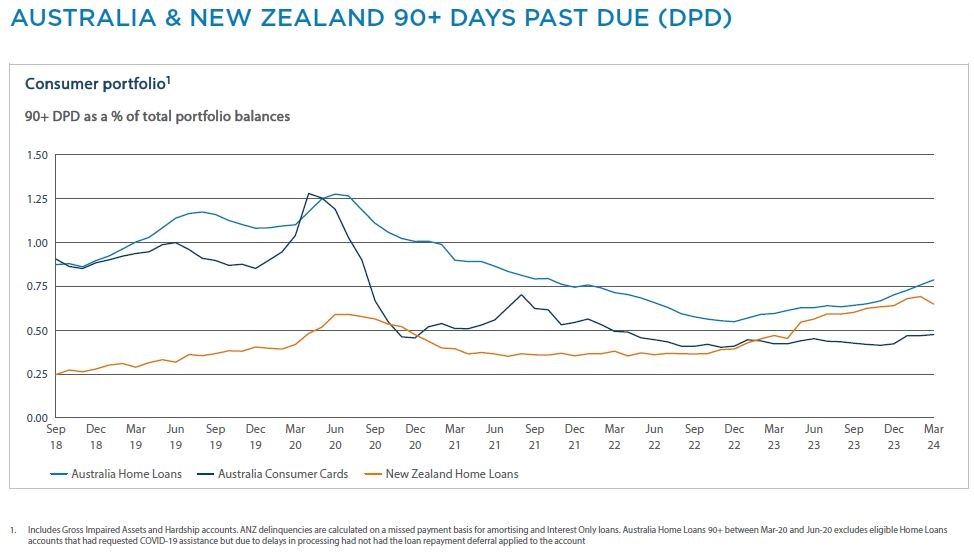
Parent the ANZ Banking Group says its NZ unit's loans at least 90 days past due rose 18% across the half-year.
"For the six months to March 2024, ANZ has reached out to over 200,000 homeowners to offer extra support and 8,500 customers have completed a home loan check in," ANZ NZ says.
Watson says only about 17% of ANZ NZ's home loan customers are still on interest rates below 5%.
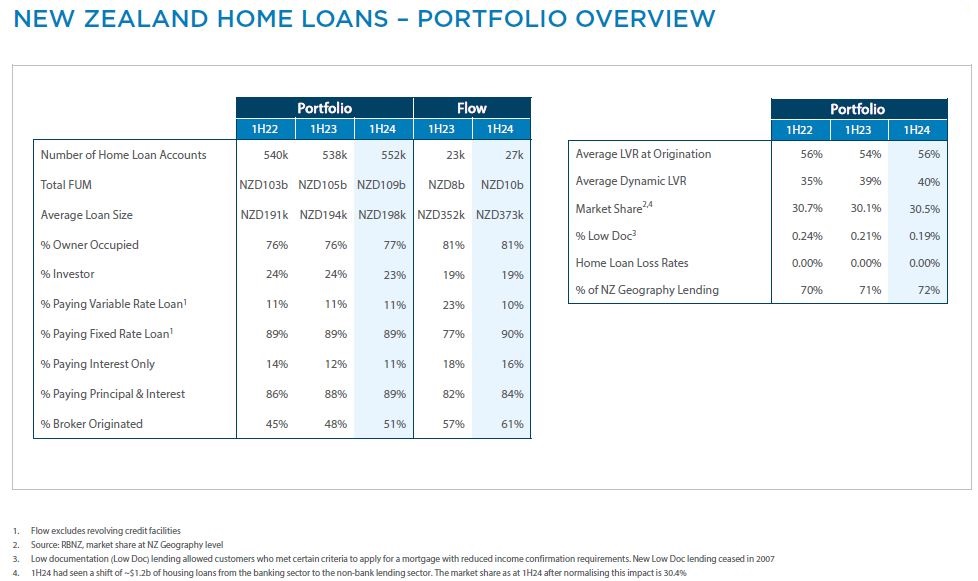
The bank says it provided $10.1 billion worth of new home lending, increasing its share of the housing lending market to 30.5% from 30.1% year-on-year. As of March 31, ANZ NZ's total home loans stood at $109 billion, up $4 billion over the six months from September 30 last year.
Operating income rose $34 million, or 1%, to $2.524 billion, with net interest income up $15 million, or 1%, to $2.142 billion. Operating expenses rose $50 million, or 6%, to $859 million with Watson saying this was "broadly flat" inclusive of higher wage and operational costs. ANZ NZ's cost to income ratio rose to 38% from 35.6%.
ANZ NZ also says its interim fair value losses from economic hedges used to manage interest rate and foreign exchange risk came in at $117 million, a $12 million increase.
Buffers 'being used up'
Speaking to interest.co.nz Watson said borrowers are getting used to the new normal to the extent they're able to.
"But that said, I think that the thing on the horizon that we have to look at particularly is the unemployment rate. It's always as unemployment increases, that's when you also tend to see a lot of hardship when you're not having that regular income coming in. So that's another thing that we're keeping an eye out on," says Watson.
"Last year I was saying that about a third or more of our [home loan] book was more than six months ahead on their repayments. That's come down to just less than 30%. So there's still some good buffers in there, but they're definitely being used up is what we're seeing."
The latest Statistics NZ figures show unemployment rose to 4.3% in the March quarter, or by 31,000 people to 134,000, from 4% in the December quarter.
ANZ NZ is currently testing mortgage applicants at 8.95% to check their ability to maintain payments if interest rates rise further.
ANZ NZ's net interest margin way ahead of ANZ Group's
Figures released by ANZ NZ's Australian parent show the half-year net interest margin - the difference between what the bank borrows money at through the likes of deposits and what it lends it out at - for its NZ unit at 2.56%, down from 2.67% in the same period of the previous year.
The net interest margin drop was attributed to asset margin contraction from home loan pricing competition, and savers shifting to term deposits offering the bank a lower margin. However, the NZ unit's net interest margin was well ahead of the ANZ Group's, which dropped nine basis points to 1.56% in the March half-year versus the September half-year last year.
The ANZ Group put ANZ NZ's net lending at $133 billion as of March 31, up $2 billion over the half-year, and its customer deposits at $109 billion, up $3 billion. The NZ unit's gross impaired assets came in at $130 million, up 21% year-on-year but down 1% half-on-half.
The ANZ Group says ANZ NZ has 82 cents in deposits for every $1 in loans.
Return on equity from its NZ unit was 16%, the ANZ Group says. ANZ NZ contributed 17% of group revenue.
Meanwhile, the ANZ Group posted a 1% drop in March-half cash profit, versus the September-half, to A$3.552 billion. Its return on equity fell 42 basis points to 10.1%, and its dividend rose A2 cents per share to A83c.
The ANZ Group also announced an A$2 billion on-market share-buyback.
The chart below, on loans at least 90 days past due, comes from the ANZ Group.
The table below also comes from the ANZ Group.
We welcome your comments below. If you are not already registered, please register to comment
Remember we welcome robust, respectful and insightful debate. We don't welcome abusive or defamatory comments and will de-register those repeatedly making such comments. Our current comment policy is here.