

Heartland Group Holdings is expecting to face increased competition for reverse mortgages, thus acquiring TSB offers diversification including "immediate scale" in the home loan market and lower funding costs, the independent report Heartland commissioned on its proposed TSB deal says.
Heartland issued the Calibre Partners report on Monday, alongside the notice of meeting for the September 30 meeting where Heartland shareholders will vote on the deal. At least 75% support is required. Heartland also says it has submitted an application to the Reserve Bank seeking approval for the deal, as it strives for completion in December.
TSB's shareholder Toi Foundation has thrown its support behind the deal, which would see Toi receive an aggregate consideration of $620 million, with Heartland Bank (a Heartland Group Holdings subsidiary) and TSB merged, via a short form amalgamation, to create TSB Heartland Bank Ltd.
Calibre Partners says reverse mortgages, or equity release lending for older homeowners secured against residential property, are Heartland's primary growth path in both New Zealand and Australia. Thus it says key risks for Heartland include concentration risk in the NZ reverse mortgage market where Heartland holds over 90% market share.
If the TSB deal doesn't go ahead, Calibre Partners says Heartland "will remain significantly concentrated" in a reverse mortgage market facing increased competition.
"Competition within this segment is expected to increase as the product suite and market participants mature in the New Zealand and Australian markets, likely resulting in declines to net interest margins. In the Australian market, new fintech and non-deposit-taking competitors have captured significant market share in the reverse mortgage segment."
" As a result, Heartland Bank Australia Limited’s share of new originations has declined from around 90% five years ago to around 40% currently. The increased competition has been driven by the attractive net interest margin (NIM) associated with reverse mortgages, relative to actual impairment levels," Calibre Partners says.
"Heartland Bank has a greater than 90% market share in the New Zealand reverse mortgage market. High NIM combined with low impairments will attract new entrants, and potentially the large banks to re-enter this market if it is viewed as a growth market with attractive returns and limited reputational risk."
According to the Reserve Bank's Bank Financial Strength Dashboard, at 3.9%, Heartland had the highest NIM among NZ banks in the June quarter. Heartland doesn't disclose NIMs on specific types of loans such as reverse mortgages.
After its review of banks' regulatory capital requirements last year, the Reserve Bank said it would review risk weights for reverse mortgages this year. This pledge came after "several respondents" told the Reserve Bank reverse mortgage risk weights were too conservative.
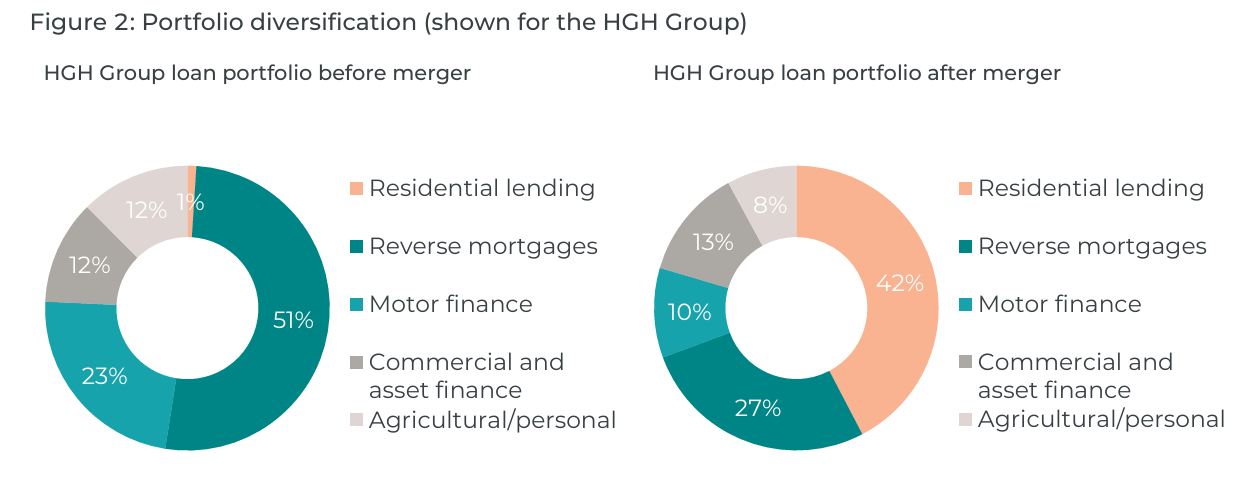
After the merger, Heartland Group Holding’s exposure to reverse mortgages is expected to fall from about half its lending to around a quarter, Calibre Partners says. This will reduce concentration risk, "particularly in light of potential increased competition in New Zealand in the future, the Australian market is substantially more competitive which has resulted in lower margins compared to New Zealand."
'Immediate scale' in home loans
Calibre Partners says although Heartland has been offering residential mortgages, it hasn't been able to reach meaningful size in this competitive market. The acquisition of TSB, however, will provide "immediate scale" thanks to the addition of TSB's home loan book, which stood at $6.5 billion as of June 30.
TSB Heartland Bank would also have a broader funding mix than Heartland currently does, thus reducing funding costs, Calibre Partners says.
"...the funding mix will be widened to include more non-interest-bearing deposits via transaction accounts."
The report says about 12% of TSB’s funding at the end of 2025 came via transactional accounts that don't bear interest.
And a potential credit rating improvement could reduce funding costs further.
"Heartland Bank Ltd (HBL) currently has a Fitch credit rating of BBB with a stable outlook, while TSB has a Fitch credit rating of BBB+ with a stable outlook. The merger of HBL and TSB will result in a significantly larger asset base, with scale improvement opportunities and a more diversified loan book. The strengthened asset quality and risk profile of the merged bank may result in an uplift in the assessed long-term credit rating, which could provide further opportunities to lower the cost of funding," says Calibre Partners.
The report says TSB Heartland Bank will be more diverse and stable than Heartland Group Holdings' is now, and will offer cross selling opportunities.
"TSB customers can be offered motor vehicle loans, asset finance loans and reverse mortgages. Similarly, HBL customers can be offered residential mortgages and transaction accounts. A larger, more diversified bank will be less susceptible to systemic risks and should provide greater financial stability."
Cost saving opportunities from tech synergies not included
Calibre Partners also provides some information on technology upgrades at both Heartland and TSB, with the latter "progressing its digital transformation." However, it says cost cutting from technology synergies isn't included in its analysis, because no final decision was made on technology strategy at the time the report was being written.
"In recent years, a significant share of technology and change capacity has been directed toward regulatory and compliance priorities. As this work is completed, TSB is increasingly able to redirect investment and delivery capacity toward customer and business-focused digital initiatives," says Calibre Partners.
"TSB is continuing to modernise its core technology environment now, with a focus on improving agility, simplifying integration and better supporting digital delivery across the bank. Alongside this work, TSB is also considering modernisation options to ensure its technology environment continues to support customer expectations, business priorities and ongoing innovation."
Calibre Partners points out TSB's shift from a "traditional, branch-led distribution model to a digital-first approach," includes more use of mortgage brokers which originated about 60% of home loans last year up from 43% in 2022, and growing its business banking team. It has dropped to 12 branches today from 21 four years ago. Last year TSB outsourced its ATM network and increased the number of deposit-enabled ATMs.
In NZ Heartland is working with Pega on an $11 million three-year project to move to a single integrated technology platform to boost efficiency through automation and AI-driven processes. And in Australia Heartland has partnered with Constantinople for a new core banking platform with increased automation and AI capability. This is expected to cost A$5 million over three-years.
TSB being bought for less than book value because it's small
Calibre Partners acknowledges the proposed deal would see Heartland acquire TSB in a deal valued at $620 million, which is a discount to its $814.6 million book value. This 0.76x book value price can be justified by the lack of economies of scale characteristic of a small bank like TSB that lacks scale, and therefore generates low return on equity, which was 5.7% for its March financial year, it says.
"Banks have inherently high fixed operating costs, including regulatory compliance, technology platforms, and risk management. These costs need to be spread over a sufficiently large balance sheet to be efficient. A small bank (such as TSB) may hold high quality, performing loans that are valued appropriately on its balance sheet, yet struggle to generate sufficient returns because the cost base consumes a disproportionate share of income."
" As a result, it is not uncommon for a small bank to trade at a multiple below 1.0x, reflecting sub-scale, rather than poor asset quality. We have considered the trading P/BV [price to book value] multiples observed for listed comparator companies and comparable transactions. We have also considered what a reasonable multiple would be considering TSB’s return on equity relative to its peers. On this basis we consider 0.76x is within a reasonable range," the report says.
It looked at Australia's Bendigo and Adelaide Bank and Bank of Queensland for comparison, noting they trade at 0.91x and 0.75x, respectively.
The deal is predicted to provide cost synergies of about $34 million annually over three years with the biggest contribution "through leadership and back-office staff cost savings." There are also expected to be one-off transaction costs of $15 million, and estimated non-recurring integration costs of $34 million over three years post the deal's completion.
"Revenue synergies are also expected to be material but have not been factored into this synergy analysis given inherent uncertainty and greater execution risk," the report says.
The proposed $620 million Toi Foundation would receive for TSB includes the following;
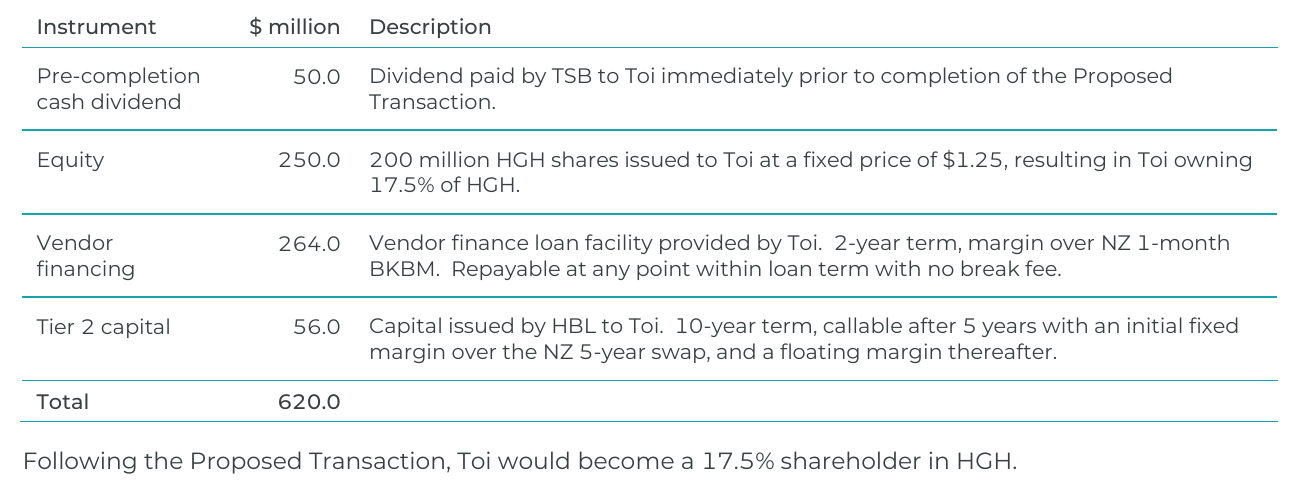
Figure 2 below from Calibre Partners shows Heartland Group Holdings' loan portfolio now, and what it would look like after the TSB acquisition.
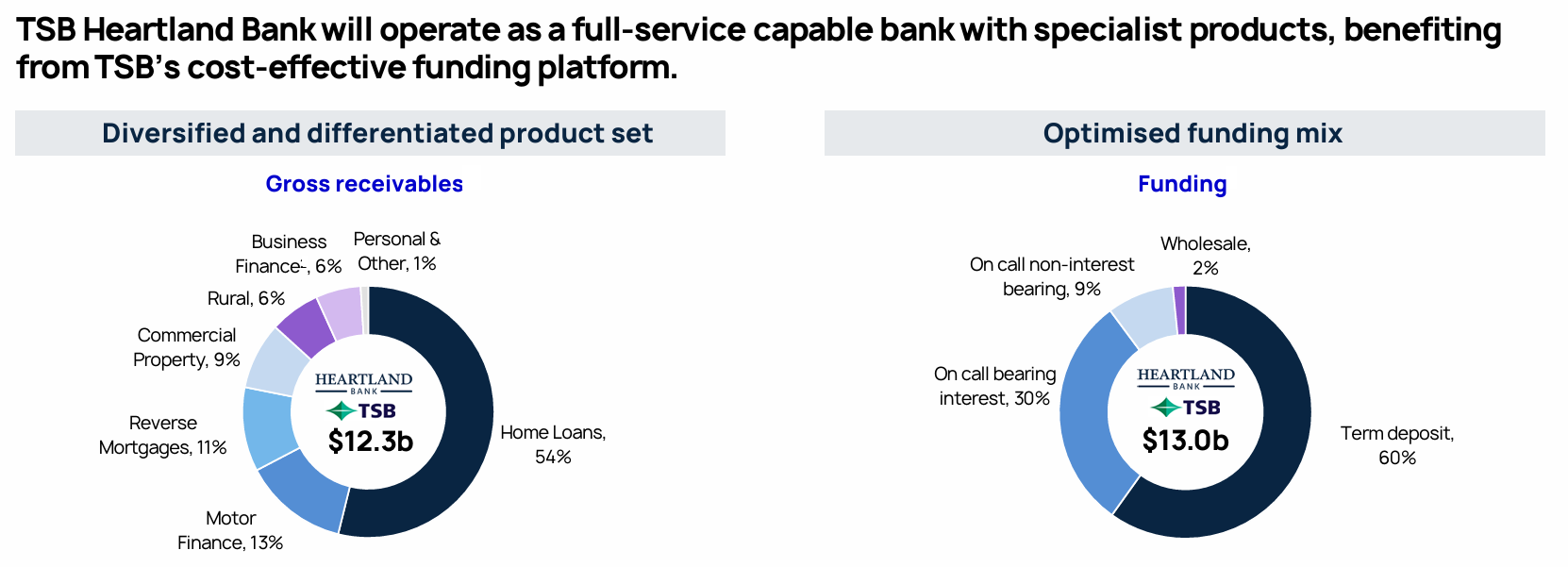
The graphic below, from a Heartland investor presentation, shows what the TSB Heartland Bank lending and funding portfolios would look like.
*This article was first published in our email for paying subscribers. See here for more details and how to subscribe.
We welcome your comments below. If you are not already registered, please register to comment
Remember we welcome robust, respectful and insightful debate. We don't welcome abusive or defamatory comments and will de-register those repeatedly making such comments. Our current comment policy is here.