
New Zealand’s current account deficit was $30.6 billion, or 7.6% of gross domestic product, in the year ended September, according to Statistics NZ data.
This deficit was $600 million lower than the same time last year, when it was equal to 8.3% of gross domestic product.
Stats NZ said the narrowing of the deficit was due to a $4.1 billion improvement in services balance, but was offset by bigger deficits in goods and primary income.
Jason Attewell, a general manager at Stats NZ, said services exports rose $9.3 billion to $24.9 billion, driven by travel exports which were up $6.7 billion to $11.1 billion.
“More overseas visitors to New Zealand in the year ended September 2023 meant an increase in tourism spending, but levels are still below what they were before COVID-19,” he said.
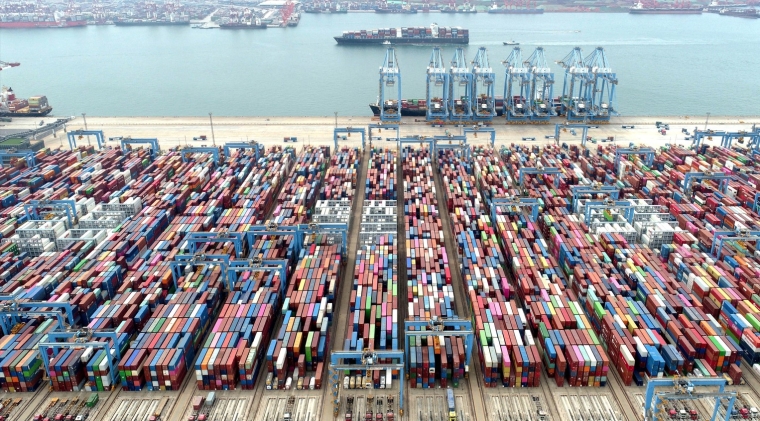
Goods exports were moving in the opposite direction and decreased 0.1% to $70.9 billion, while imports rose $2.4 billion to $84.1 billion.
The largest contributor to the increase in goods imports were fuel imports—petrol, diesel, and jet fuel—which increased $3.5 billion or 52%.
Meat exports, largely sheep meat and beef, decreased $1.2 billion or 12%, and were partly offset by a $500 million, or 3%, increase in dairy exports.
Overseas investors earned more from their investments in New Zealand than Kiwi investors earned from offshore, widening the primary income deficit $1.4 billion to $12.3 billion
“In the September 2023 year, the rise in interest payments to overseas investors was more than double the rise in interest received from overseas,” Attewell said.
“This reflects the structure of the New Zealand economy where our liabilities to the rest of the world are greater than our assets.”
NZ’s net liability position was $191.9 billion, or 47.9% of GDP, at the end of September, having decreased by $1.7 billion since June.
The total value of assets increased $6.7 billion as the Reserve Bank bought additional foreign currency reserves to potentially use in financial interventions, if needed in the future.
However, a falling share market reduced the value of NZ’s portfolio investments by the same amount, which canceled out any positive effect on the net liability position.
Miles Workman, an economist at ANZ, said New Zealand’s external position was still unsustainable and progress bringing it back into balance stalled in the September quarter.
The deficit as a percentage of GDP was unchanged from the June quarter, at 7.5%.
“Fiscal consolidation and tight monetary conditions should help fix that in time, but until it does New Zealand remains vulnerable to a wide range of possible shocks,” he said in a note.
“All up, New Zealand has a potentially lengthy path towards macroeconomic sustainability to walk, and the Q3 data suggest progress is slow”.
We welcome your comments below. If you are not already registered, please register to comment
Remember we welcome robust, respectful and insightful debate. We don't welcome abusive or defamatory comments and will de-register those repeatedly making such comments. Our current comment policy is here.