
Prime Minister Christopher Luxon’s mission to South East Asia was about shoring up New Zealand’s place in a fast-changing world and keeping it on the map.
Our little island nation was at risk of becoming irrelevant as the world reorients itself in the post-covid era and around US-China trade competition.
“The perception of New Zealand is that we are nice but we actually lack relevance, or we are losing relevance,” the Prime Minister said, in an interview on the flight back to Whenuapai.
“The reality is that we were very slow out of covid. We were much more internally focused than other countries … while the rest of the world took off very quickly”.
This isn't entirely accurate. For example, our biggest trading partner China only ended its zero-Covid policy - clumsily - in December 2022, and Japan reopened its border to tourists in October 2022. New Zealand's border was fully reopened in July 2022.
New Zealand urgently needed to demonstrate what it had to offer in a world that was becoming more complicated and volatile, Luxon said.
We are currently living through a massive reformation of geopolitics as the balance of economic, diplomatic, and military power shifts east.
This is not a new trend. Back in 2018, Kiwi diplomat Grahame Morton gave a speech warning the post-Cold War world was being “challenged by new power balances”.
The United States was adjusting the trading system to add to its strengths and protect its advantages, while the “centre of economic geography” was moving towards Asia.
New Zealand could be both a victim and beneficiary of these two trends. We were vulnerable to protectionism but well positioned for Asian economic growth.
South East Asia would be key to NZ’s political and economic interests but could be hotly contested as large countries sought to “capture” its benefits, he said.
It is not clear how closely policymakers were listening, as multiple experts told Interest.co.nz that NZ had been neglecting the region and were pleased to finally see a PM-led visit.
The new Asia
When the new Government took office late last year, the Ministry of Foreign Affairs and Trade advised refocusing diplomatic efforts on South East Asian countries.
Decades of stability were under pressure due to a strategic shift [details redacted] and countries were looking for friends to insulate them from US–China competition, it said.
NZ could benefit as closer diplomatic relationships would make it easier for exporters to sell products to the fast-growing middle class in the region.
Additionally, our economy was hugely dependent on being able to transport more than half of our exports through the contested South China Sea — where tensions are rising.
MFAT’s advice was that the Prime Minister should travel to Singapore, Thailand, Viet Nam, Indonesia, the Philippines, and Malaysia within the next two years.
Just showing up in these capital cities would demonstrate that New Zealand cares about the region and could contribute to stability in the region
Handshakes and hugs
Luxon excelled at the relationship building aspect of the trip. His instant personal connection with the leaders he met was reminiscent of his mentor John Key.
Key managed to befriend superpower leaders such as Barack Obama, Xi Jinping, and Shinzo Abe, winning influence for NZ well beyond its actual importance on the world stage.
Luxon, who is never short of corporate phrases, called this “winning mind-share”.
Jacinda Ardern also had major success on the international stage, although her connections often seemed more like fans than friends.
Some commentators thought Luxon would be a major downgrade after a series of influential leaders, from Clark to Ardern, but he may surprise on the upside.
The new Prime Minister shared enthusiastic handshakes, backrubs, and jokes with other leaders, who responded with a similarly warm welcome.
Philippines’ President Marcos Jr even invited him to stay in the palace guest house and dubbed him an “honorary Filipino” for choosing to have lunch at KFC-equivalent, Jollibee.
Besides the public displays of affection, there were a few tangible announcements that revealed where the more pragmatic interests were.
In Singapore, the cooperation agreement will be upgraded with a new section that ensures supply chains can continue to carry essential goods even in a crisis.
The two countries rely on each other to swap fuel for food. Protecting those links in the case of war, pandemic, or natural disaster will be critical to overall security.
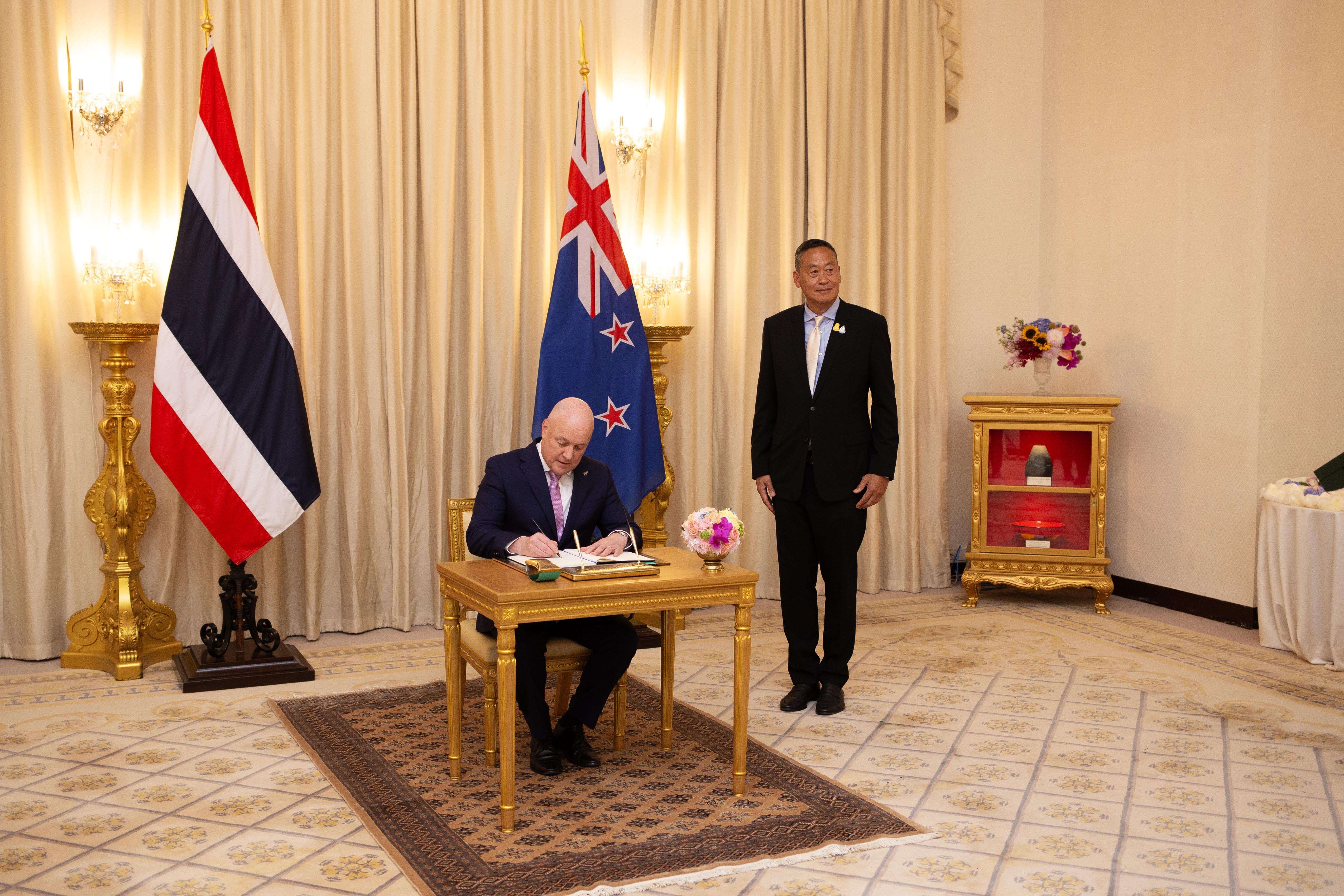
In Thailand, vague and symbolic commitments were made to upgrade the relationship and attempt to triple trade by 2045 – an unambitious goal but a signal nonetheless.
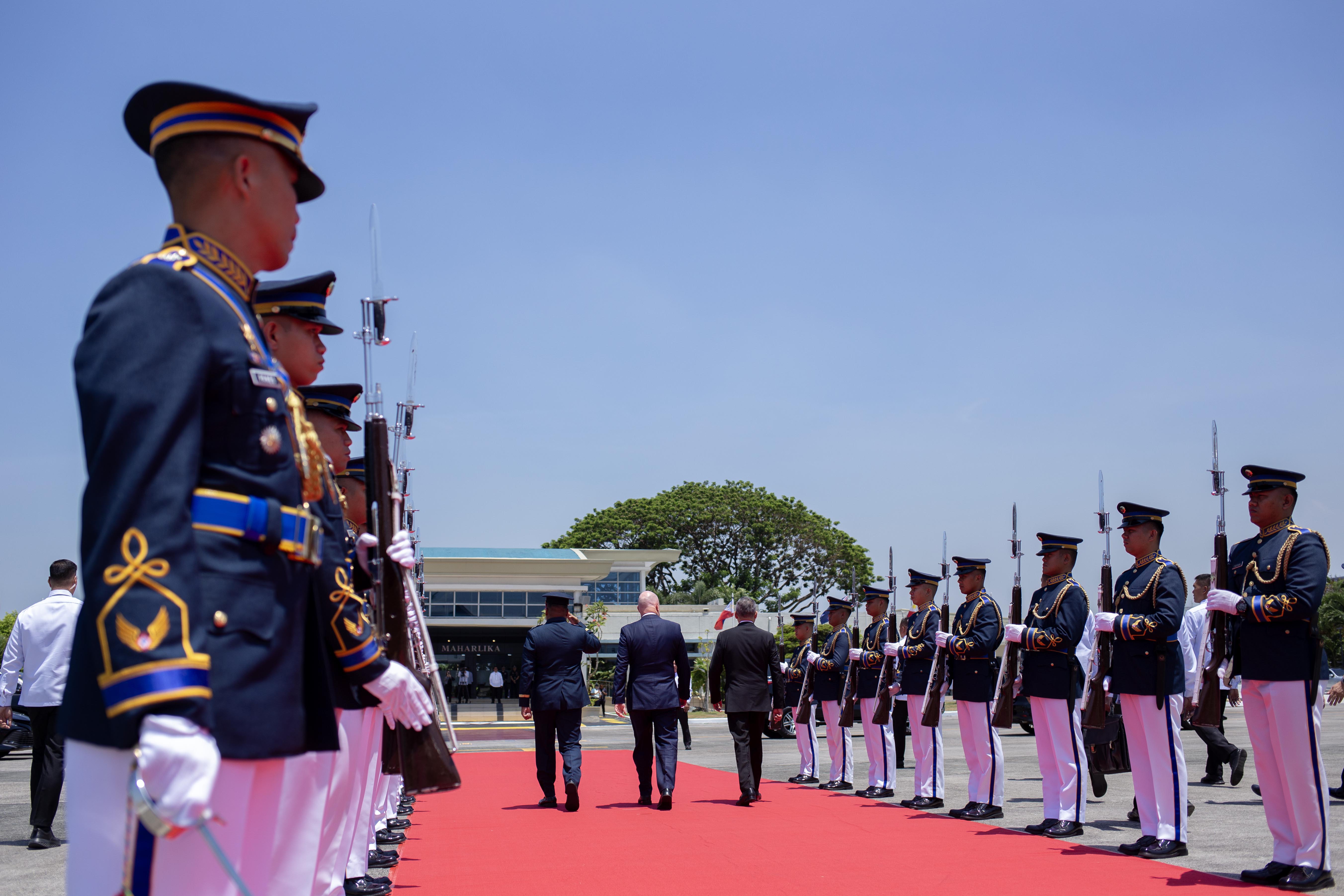
And finally, Luxon struck a deal in the Philippines which would allow more cooperation on defence as well as grow trade 50% in the next six years.
Defending prosperity
The Philippines sees itself as being on the front line of regional competition between the US and China. It has a military alliance with the former and is in a territorial dispute with the latter.
Last month, the NZ Embassy in Manila twice stated concern about Chinese vessels firing water cannons at the Phillipines' ships and harming some of the crew.
The scuffle was over a reef island which is not even internationally recognised as being land, but has been claimed by China, the Philippines, Taiwan, and Viet Nam anyway.
Under international law, each country controls a certain amount of water around its coastline – so even an uninhabitable island can come with access to more resources.
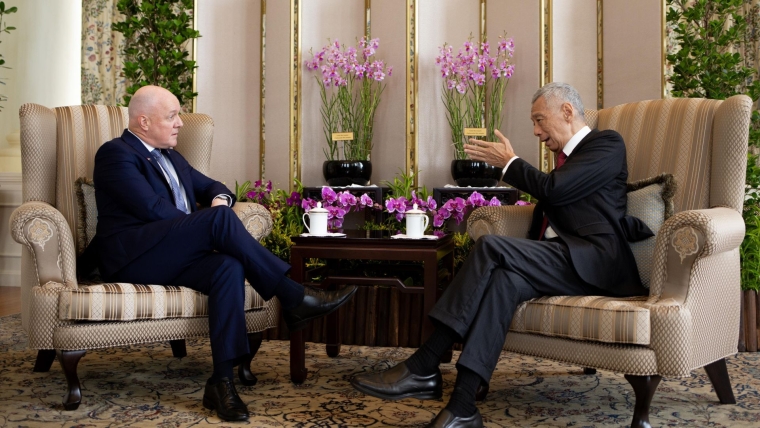
When Luxon was making small talk with Lee Hsien Loong in Singapore, the two Prime Ministers casually discussed the city’s progress on reclaiming land for urban expansion.
Lee noted that building into the sea also expanded its territorial waters. Luxon cryptically replied there had been “some trouble with that type of behaviour in other parts of the world”.
This informal exchange was presumably a reference to China’s construction, or expansion, of these sand islands on existing reefs they are claiming as sovereign territory.
New Zealand’s interest in Western security alliances are partly about protecting freedom of navigation through the South China Sea, and more broadly, for its exports.
Luxon told Interest.co.nz that it was no longer possible to separate trade and security issues.
“New Zealand’s economic and security interests are very merged. If you don’t have a secure, peaceful, stable South East Asia – you actually can’t do the economic bits”.
He reiterated that no decision had been made about joining AUKUS Pillar II, but said he was disappointed Labour was making it a political issue now they are in opposition.
Chaos can be a ladder
In any big geopolitical structural shift, there are opportunities for those who are nimble, or just lucky, to secure for themselves a better position on the playing field.
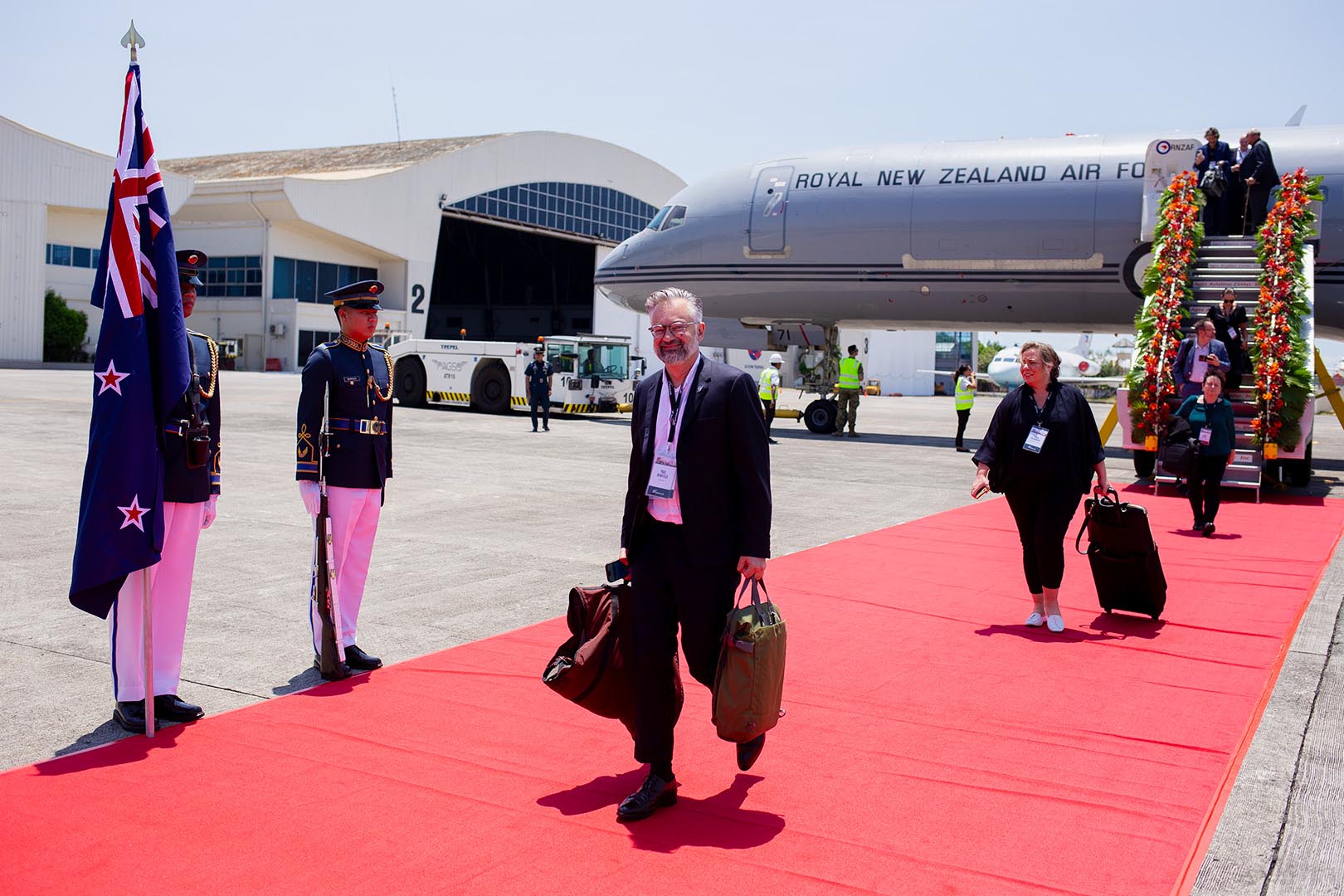
A good example of this is NZ investment firm Morrison, which manages an NZX-listed infrastructure investor Infratil, and had a representative travelling on the trip. Chief executive Paul Newfield said de-globalisation was making the word more complex but also creating anomalies which could be advantageous.
“For example, Longroad’s close relationships with US solar manufacturers meant it was well positioned when the Inflation Reduction Act came into force in the United States,” he said.
“At the same time Gurin (Infratil’s Asian renewables platform) was able to benefit from falling equipment prices from manufacturers who found themselves shut out of the US market”.
While it was possible for individual firms to find advantages, trade restrictions and a less connected world will be fundamentally more expensive and inflationary.
Newfield said his firm was “wary” of predicting a rapid decline in global interest rates.
“We all need to be realistic that the idea that the world’s on its way towards a global free market is a relic of the past. As a small, trade-reliant nation New Zealand needs to be smart about how we navigate this new environment”.
De-globalisation
In August last year, Morgan Stanley wrote a research note for clients about how to invest in a world with competing superpowers and spheres of influence.
It said countries and companies were generally reducing their dependence on each other and attempting to shift production of key goods closer to home.
“The threads of globalization that began fraying a few years ago have been unravelling more rapidly as national security takes precedence over the efficient flow of goods and services,” they wrote.
“Realigning global commerce toward this newly multipolar world could take trillions of dollars of investment and at least a decade to fully take hold”.
While New Zealand is a friendly country to most, it is often said to be at the absolute end of the global supply chain and would be a net loser in a deglobalised world.
Larger countries are able to use industrial policy to attempt to build up domestic industries. The United States, China, the European Union, and even Australia are attempting this.
But NZ is too small to compete in this subsidy race, and so Luxon’s answer seems to be about putting more resources into improving supply chains.
Having an extremely resilient supply chain could be almost as good as having localised production. And so, a big focus of his diplomatic policy will be about supply chains.
South East Asia also has the advantage of being closer to NZ than Europe or the United Kingdom, making it slightly less vulnerable to disruptions like those seem in the Red Sea
Bigger backyard
The South East Asian countries which are now sitting on the top of New Zealand’s priority lists are also net-winners from de-globalisation — at least to some extent.
Many multinational businesses are setting up manufacturing and logistics capabilities just outside of China to reduce their exposure to geopolitical risk.
This means money is flowing into fast developing countries, such as the Philippines or Thailand, and creating a moderately wealthy middle class which can buy NZ-made products.
Luxon said exporters only need to win a niche set of consumers to support a healthy business back home which can then drive employment and pay Kiwi’s higher wages.
He wondered whether New Zealanders fully understand how trade underpins their quality of life and also public services.
“It’s not just about the money, if you don’t get the economy growing then you’ve got a two-cylinder engine trying to support a six-cylinder set of expectations for public services”.
If New Zealand is able to build strong supply chains and trading relationships with a fast-growing market, virtually in its own backyard, then it will be able to afford nicer things.
But that depends on the security situation, as well. If US-China 'competition’ becomes ‘conflict’, these new trading relationships will only partly cushion the agonising fall.

We welcome your comments below. If you are not already registered, please register to comment
Remember we welcome robust, respectful and insightful debate. We don't welcome abusive or defamatory comments and will de-register those repeatedly making such comments. Our current comment policy is here.