
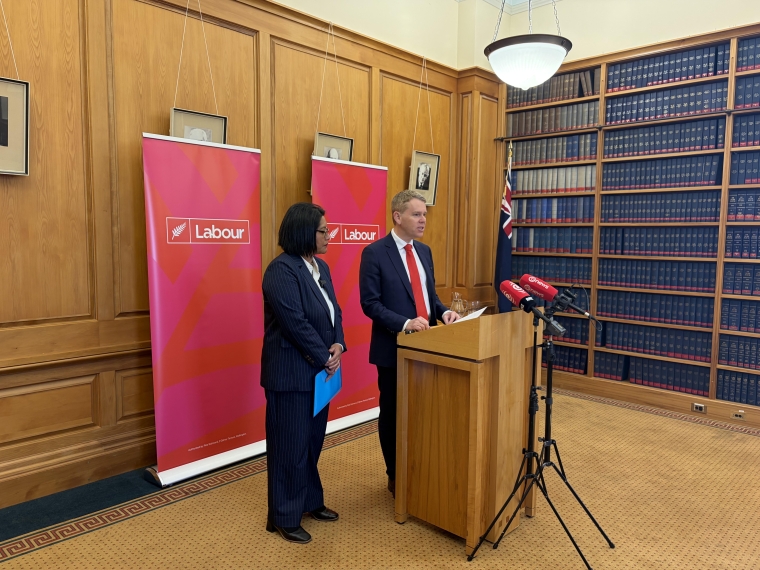
Labour has confirmed that, if reelected to government, it will restore the Reserve Bank's monetary policy dual mandate targeting both inflation and maximum sustainable employment.
“Growth means nothing if Kiwis don't feel it in their pay packet, their household budget, or in their future. Our fiscal strategy is about making sure they do,” Labour leader Chris Hipkins announced on Sunday.
Labour is also pledging to; Balance the books and return to surplus. Return to original measure of OBEGAL, achieve surplus by 2029/30 and maintain a sustainable fiscal position over the forecast period.
Operating Balance Before Gains and Losses (OBEGAL) is a key fiscal indicator used by the Government. Finance Minister Nicola Willis introduced OBEGALx, which excludes the Accident Compensation Corporation.
Finance spokesperson Barbara Edmonds is promising to establish an independent Parliamentary Budget office to analyse government finances and election commitments.
"First, we'll return the books to surplus by 2029/30. We'll use the conventional OBEGAL measure, not a convenient alternative for creative accounting. Second, we'll bring net [government] debt down over time, our long-term objective is 20% of GDP. And third, we will keep spending and revenue sustainable" she said.
"Both will sit at around 33% of GDP once our capital gains tax is fully implemented. But we won't balance the books by shrinking the economy. National has tried it, and it hasn't worked."
Currently, the Reserve Bank has a single monetary policy mandate to maintain inflation between 1% and 3% - it specifically targets 2%.
The Labour-NZ First government implemented a dual mandate in 2018, when then-Finance Minister Grant Robertson added supporting maximum sustainable employment. The current Coalition Government removed the employment mandate in 2023.
NZ First leader Winston Peters also favours returning employment to the Reserve Bank's monetary policy mandate.
"Under National unemployment is at an 11-year high, business liquidations are up 71%, homelessness and KiwiSaver hardship withdrawals are at record levels, and public services are under pressure. That isn’t economic success," said Edmonds.
"Strong public services are an investment in New Zealand’s future. Labour will make every dollar count, invest where it matters and back the people and businesses that can grow our economy."
National finance spokesperson Nicola Willis said Labour's proposal "amounts to nothing more than spending more, borrowing more and taxing more – the same approach that led New Zealand into the sky-high inflation, exploding debt and economic vandalism Labour imposed on Kiwis last time".
"Targeting revenue at 33% of GDP means that by 2031, Labour would need to be collecting an additional $10.3 billion in revenue every year - far more than the $1.35 billion they say their capital gains tax will raise in that same year," Willis said.
"The proposal to water down the Reserve Bank’s inflation target risks faster rising prices for every Kiwi."
Here are Labour's key pledges;
Balance the books and return to surplus. Return to original measure of OBEGAL, achieve surplus by 2029/30 and maintain a sustainable fiscal position over the forecast period.
Bring down debt. We will aim to reduce net debt down to 20% of GDP over time and prioritise investments which support a strong growing economy.
Keep government spending and revenue sustainable. Core Crown Expenditure and revenue will be maintained at around 33% of GDP when the Capital Gains Tax is fully implemented.
Strengthen scrutiny of Government spending by establishing an independent Parliamentary Budget Office to analyse Government finances and election commitments.
Restore the Reserve Bank dual mandate to consider price stability and maximum sustainable employment.
Restore wellbeing reporting to ensure our decisions take into account the impact on New Zealanders.
We welcome your comments below. If you are not already registered, please register to comment
Remember we welcome robust, respectful and insightful debate. We don't welcome abusive or defamatory comments and will de-register those repeatedly making such comments. Our current comment policy is here.