
By Shane O'Driscoll*
Over the last hundred years, has the number of deaths per year from natural disasters approximately halved, stayed the same, or doubled? Take a guess.
Nobel laureate Daniel Kahneman calls it ‘negativity dominance’ while other psychologists refer to the phenomenon as ‘negativity bias’. It involves believing that things are worse than they actually are. It’s part of human nature, and in the modern era, these biases are strongly reinforced by traditional media and social media platforms. If it bleeds, it leads. This logic applies to general information flows: negative stories get more traction.
How strong is this bias? Swedish physician Hans Rogler spent much of his life trying to highlight these negative tendencies, providing counterevidence and measuring the gap between perception and reality. His work is summarised in a popular 2018 book, Factfulness and continues with the Gapminder Foundation.
The book analyses public perceptions collected from survey data and compares these beliefs with empirical evidence. The variations between beliefs and real data reinforce the ‘negativity bias’. The work is commendable and enlightening.
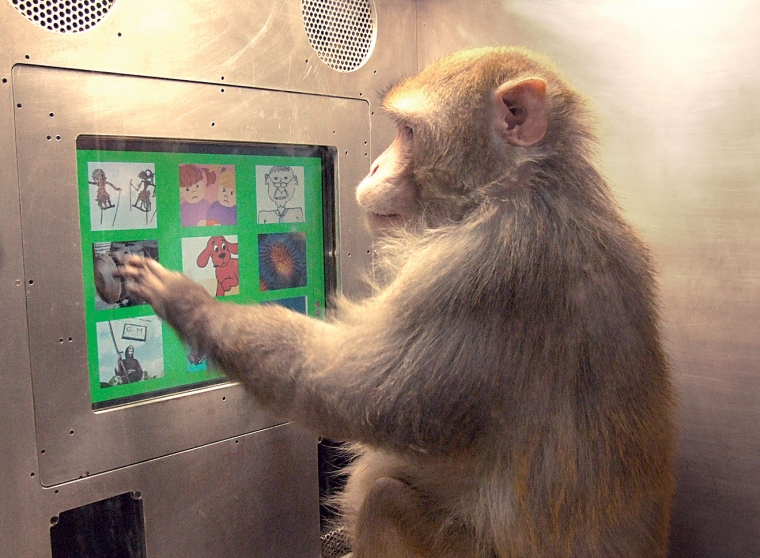
Inspired by this work, Qwizard, replicated some of these questions in a pub quiz environment, collecting the results and comparing the statistics. As the authors of Factfulness regularly highlight, a monkey would score higher than the respondents on most questions.
Over the last hundred years, has the number of deaths per year from natural disasters approximately halved, stayed the same, or doubled?
Answer: halved
How many got it right? NZ pub quiz teams: 13.0%, Factfulness survey data: 10%
According to the World Bank, in all low-income countries, what is the rate of girls who finish primary school: 20%, 40% or 60%?
Answer: 60%
How many got it right? NZ pub quiz teams: 17.9%, Factfulness survey data: 9%
What percentage of the world's one-year-old children today have been vaccinated against at least one disease, according to research by Dr Hans Rosling? 20%, 50% or 80%
Answer: 80%
How many got it right? NZ pub quiz teams: 20.9%, Factfulness survey data: 14%
According to author Hans Rosling, how many people in the world have some access to electricity? 20%, 50% or 80%
Answer: 80%
How many got it right? NZ pub quiz teams: 47.8%, Factfulness survey data: 25%
In 1996, tigers, giant pandas and black rhinos were all listed as endangered. How many of these three species are more critically endangered today?
Answer: 0
How many got it right? NZ pub quiz teams: 2.4%, Factfulness survey data: 7%
Worldwide, 30-year-old men have spent 10 years in school, on average. How many years have women of the same age spent in school: 3, 6, or 9 years?
Answer: 9 years
How many got it right? NZ pub quiz teams: 4.1%, Factfulness survey data: 20%
Compare these statistics to the average score across a group of monkeys, which would be 33.3%.
Note that the pub quiz results are based on team data, with a minimum sample size of 400 people, while the Factfulness surveys involved 12,000 respondents across 14 countries. Factfulness research covers 13 questions in total. Qwizard offered a sample of relevant questions that fit with their pub quiz format.
Overall, the comparisons with the empirical evidence are emphatic, supporting the theory that human preconceptions and negative bias dominates our thinking. Across all the questions, the monkeys reign supreme.
For human results to improve, the negativity bias needs to first be recognised. People should expect that bad news will dominate information flows and is more likely to reach us. Understanding these biases may help to introduce some positivity and may mean we could beat the monkeys.
Shane O'Driscoll is the CEO of Qwizard, the supplier of our weekly quiz.
We welcome your comments below. If you are not already registered, please register to comment
Remember we welcome robust, respectful and insightful debate. We don't welcome abusive or defamatory comments and will de-register those repeatedly making such comments. Our current comment policy is here.