
Every new restriction on trade between the United States and China is supposed to pull the two economies apart—or so we are told. But the global economy refuses to cooperate with the conventional wisdom. In fact, each round of tariffs, export controls, and investment screening has been accompanied by more of the investments that cement the Sino-American economic relationship. Until policymakers recognize this paradox, talk of “decoupling” will describe a world that does not exist.
The pattern that does exist can be understood as “capital realism.” Today’s geopolitical rivalry has become a permanent condition, but because full economic separation remains prohibitively costly, capital flows do not cease; they adapt to the constraints. Tariffs, export controls, and geopolitical shocks are not interruptions to a stable system. Whenever politics fragments the map, capital redraws the fastest routes.
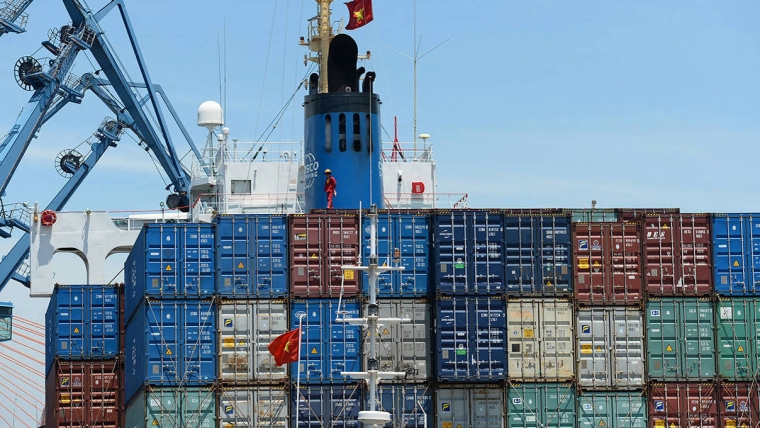
The evidence for this process is unambiguous. US-China trade remains substantial despite escalating restrictions, still exceeding hundreds of billions of dollars annually. Even where direct flows have declined, economic activity has not disappeared; it has merely changed locations. For example, Vietnam’s total trade exceeded $900 billion in 2025, with exports reaching roughly $470 billion, driven largely by foreign-invested manufacturing. Meanwhile, US imports from Vietnam have surged over the past decade, with electronics and components accounting for a significant share of trade.
The pattern is even clearer across Southeast Asia. Association of Southeast Asian Nations (ASEAN) members’ trade and investment flows continue to expand despite geopolitical tensions, with the region becoming increasingly integrated into both Chinese and Western production networks. Far from auguring a collapse of the system, these are signs of economic relationships being rapidly reorganized, albeit at significant cost.
If this reading is correct, several patterns should persist. Trade between the US and China will remain substantial, even as restrictions expand, with flows increasingly being routed through third countries. Investment will continue to concentrate in economies that can operate across both systems. And supply chains will become more geographically distributed, not less, as firms adapt to policy pressures.
Consider semiconductors, the sector most directly targeted by strategic restrictions. Taiwan Semiconductor Manufacturing Company (TSMC) is investing heavily in fabrication capacity in the US, Japan, and Europe, with each new facility serving different markets and operating under different regulatory regimes. Capital realism requires production to be distributed across multiple jurisdictions, because no single jurisdiction can be relied upon for uninterrupted access.
The pattern extends beyond supply chains. Chinese outbound investment is increasingly directed toward Southeast Asia, while investment flows to the US remain subdued. Rather than retreating, capital is rerouting through economies that maintain working relationships with both superpowers.
From where I sit in Singapore, the picture is clear. Countries outside the US-China binary should be viewed not as passive bystanders, but as the infrastructure on which the new system runs. Southeast Asia and India are becoming key production nodes, while parts of the Middle East, despite ongoing conflict, remain critical hubs for capital, energy, and logistics. Together, they allow firms to operate across geopolitical divides without committing fully to either system. Their value rises in direct proportion to the intensity of the great-power rivalry.
Rather than pursuing neutrality or hedging, these economies are staking out structural positions within the system. The countries operating between major powers are the ones enabling the global economy to function. By maintaining relationships across competing systems, they preserve access, optionality, and credibility at the same time.
Most policy frameworks do not account for the implications of this pattern. Every US or Chinese government effort to advance comprehensive economic separation produces unintended consequences. Restrictions accelerate the very adjustments—namely, rerouting through third countries—that make the system more resilient and harder to control unilaterally.
The implication for businesses is that geopolitical risk can no longer be managed at the margins. It must be built into the structure of operations. Firms that invested early in jurisdictional redundancy now hold structural advantages. Those that waited for clarity have discovered that it is not coming. The system has already moved on without them.
For the global economy’s “bridge” countries, the opportunity is real, but the returns will not come automatically. Being useful to both sides requires institutional credibility, regulatory predictability, and the capacity to absorb capital at scale. These must be built and maintained over time.
Of course, these dynamics do not eliminate the risk of a rupture. A severe crisis over Taiwan or sweeping financial sanctions could still force firms to make binary choices. Capital realism does not promise stability. It simply describes the incentives that will sustain integration in the absence of catastrophic shocks.
Capital realism is already reshaping the structure of the global economy. The question is no longer whether the system will fragment or hold together. It is whether policymakers will recognize the system that capital has already built or continue debating about one that no longer exists.
Robin Hu is Emeritus Asia Chairman of the Milken Institute and Advisory Senior Director at Temasek. This content is © Project Syndicate, 2026, and is here with permission.
We welcome your comments below. If you are not already registered, please register to comment
Remember we welcome robust, respectful and insightful debate. We don't welcome abusive or defamatory comments and will de-register those repeatedly making such comments. Our current comment policy is here.