
1) Saving and Spending
The car versus bike debate polarizes people to the extreme. On the one hand car lovers feel threatened they'll be permanently banished to public transit and conversely self-righteous cyclists seems to imagine a two-wheeled paradise with cars banished to the single lanes strictly built for car-pooling. Compromise, middle ground and common sense gets pushed off track.
Amid public discussion on the rebuild of Christchurch and the transformation of the shattered, demoralized city into a more sustainable model that could be upheld one day as a success story, David Haywood offered this sage analysis of the benefits of a more bike friendly transportation system.
According to the article, Christchurch, which has the highest rate of car ownership in the country, could add NZ$131 million to the economy if 36% of commuters switched to bikes from cars. The gains would come from fuel savings and improved health outcomes. Read and disseminate this article far and wide: One-Hundred and Thirty-one Million Reasons to Copenhagenize Christchurch. Thanks to Terry Baucher for putting me on to this one. He spent three days hospital after being thrown from his bike by a driver who did an illegal u-turn. Remarkably, he remains a staunch cyclist. Here's another website exploring urban design in the context of the Christchurch's rebuild, which was once a cycling mecca.
2) Credit and debt
Alternative lending markets continue to thrive as the popularity of traditional banking models continues to plummet. Peer-to-peer lending outfit prosper.com, one of the outfits making headlines, announced growth in April of 19% from the month previous, posting 85% growth in the past six months. Similar growth rates are being seem among other such organisations in the United States and the U.K. In New Zealand, we have two outfits (www.lendit.co.nz and www.nexx.co.nz) that are close to launching pending some regulatory hurdles. Proponents says this alternative money market (which matches willing lenders with wanting borrowers) has proven wildly successful because it offers a more personalised approach to banking that reduces the grab of the middle man. Slate provides a well-rounded analysis on peer-to-peer lending in this piece.
3) Real estate
A reminder that we're hosting a live web interaction with New Zealand investment writer and adviser Martin Hawes this coming Tuesday at 1 p.m. Martin will challenge some cherished beliefs about the residential property investments as well as take questions on the subject. To participate, you'll have to be a registered user. While Martin can't give individual advice in this format, he can speak in general terms and is happy to answer questions you may have. We are taking questions in advance so if you can't make the forum, or you want to ensure your question is answered, I suggest you email them in ahead to: amanda.morrall@interest.co.nz with Martin Hawes as the subject line. You can connect with us through Facebook as well. I encourage our regular readers (and new ones) to take advantage of this opportunity.Read more here.
4) Death and taxes
Tax agents accused the Government this week of "tax by stealth'' through proposed changes to KiwiSaver which will see Member Tax Credits halved and employer contributions taxed starting next week. But wait, there's more. A review is currently underway on whether benefits paid in lieu of salary should also be taxed, beyond what's already covered in the fringe benefit rules. Among the perks that could be targeted according to this New Zealand Herald story: baches, planes, yachts and salary sacrifices like complimentary laptops, carparks, cars, medical insurance and company credit cards.
I don't know about you, but I don't know too many people who are enjoying these kind of perks, outside of Government's top circles and a few corporate execs. Do you suppose Gerry Brownlee had to pay tax on his plum seats for the Bon Jovi concert, compliments of the cozy banking relationship the Government shares with Westpac? Fat chance. A bigger concern, for real folk, on average salaries, is the future erosion of pay through KiwiSaver costs foisted back onto employees. Expect wage bargaining wars to heat up in 2013 when the 3% contribution becomes law.
5) Books and Film
Psychologists often compare the unconscious mind to the sub-merged part of an iceberg; deep, heavy, powerful and potentially dangerous when left to drift.
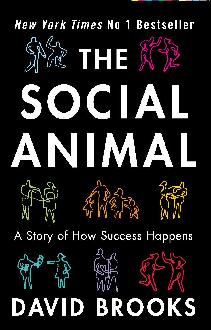
Brooks' opinion is, apparently, so highly sought after and valued that he allegedly gets calls from the White House in advance of his twice-weekly op-ed political columns to find out if they should be worried. The genesis of his book stems from a conversation with ex-British PM Gordon Brown who invited Brooks to coffee to question him on his knowledge of brain research and the implications for public policy.
Brooks maintains that who we partner with is one of the most important yet unexamined decisions we make in life. He suggests a better understanding of the unconscious mind would yield improved matrimonial outcomes through a greater knowing of oneself and the other before the intertwining of personalities.
He suggests universities and higher education institutes have failed in so far as they are structured on a "false view of human nature'', one that divorces the interior life from the external world we create.
Marriage, he suggests, should be a mandatory subject of higher learning.
"They should read novels about marriage. They should study the neuroscience and psychology of marriage. Universities should offer one course after another in marriage."
On such a required reading list, I would add Elizabeth Gilbert's Committed.
27 Comments
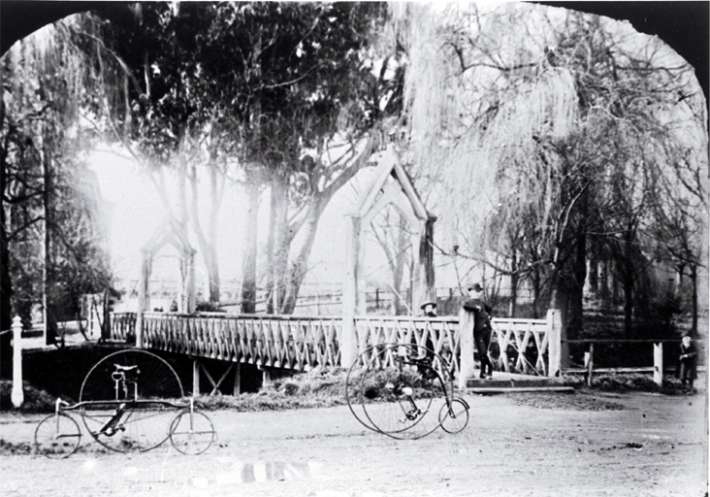
Indeed, and no helmets either! A hardy bunch
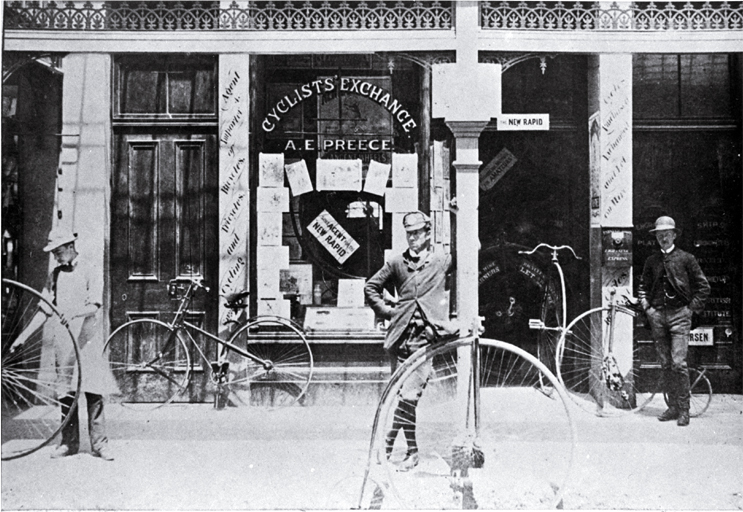
The ones with the little wheel at the back, are Penny Farthings.
There's a dedicated bunch who build and ride them in Oamaru.
http://www.visitoamaru.co.nz/?pennyfarthings
If the little wheel is at the front, You won't go over quite as much - this is called a 'Star'
http://ohtm.org/blg/collections/bicycles/ca-1885-american-star-safety-h…
Then there;'s the Pennyfakething: take a $20 BMX, and a mig welder.....
http://www.odt.co.nz/the-regions/north-otago/104382/here-comes-pennyfak…
It's all fun.
Knew a guy who rode these for fun... car ran into the back - guess he was higher than the car driver and the bike profile was 'hard to see'... took a very hard fall...
As with all that flat stuff in ChCh, opportunity for nice flat cycleways, maybe all the way to Petone? Doesn't work like that I guess. I wouldn't cycle, unless the traffic is so snarled up in traffic as to render it safe (e.g. inner London!). Is Auckland that congested? Mixing it up with a coffee sipping, phone user in an automatic is too dodgy. Shame.
There is the Hutt River trail.
Running alongside the Hutt River from Hikoikoi Reserve, Petone to Birchville, Upper Hutt, the 29km Hutt River Trail is an easy scenic walk and cycle path
Damn - have to get a bike rack now... Didn't realise it ran so far. Ta.
Noticed 4-wheel drive 'walking the dog' on part of it the other day...
Don't expect they could handle the pot holes in Chch so well. Someone posted a picture awhile back of a crush of cyclists early- mid 1900s on their way to work in chch. Was fabulous. Wish I could find it. Was that from your collection PDK?
Nope. David Wilson at the Oamaru Ordinary Cycle Club might help you
There are two disconcerting things about a penny-farthing, one of which may not worry you.
The first is that the tyre goes past very close to some essential anatomical parts.
The second is that you have to counter-steer, completely. Just like a motorbike, but by more than intuition: you seriously have to steer the 'wrong' way, to turn a corner.
Hills are easy - hop back onto the step (back, just up from the rear wheel) and your weight just went aft. Use the other shoe, on top of the small wheel, as a brake. Smell the burning.
I've got some tandem piccys somewhere..............
Funnily enough, I remember reading a piece a couple of months ago about a guy extolling the virtues of Penny Farthings in post-quake Christchurch. He reckoned his large front wheel was able to negotiate cracks and holes where conventional bikes came to grief. Makes sense I guess but can't help thinking about the long fall if you get it wrong.

AJ - cheers. The cowboy reminds me of someone hereabouts...... :)
I think I'll stick to my mountain bike. I would like to try one of those banana seat bikes with the high handlebars I had when I was a kid. I find the weight on my hands of the mt. Bike style less comfortable these days. Do they still make those?
Dont know what to make of this, but its from a commentor on the Telegraph and is generating a lot of interest
mrbomber
Yesterday 08:13 PM
Recommended by
17 people
A new report prepared for Prime Minister Putin by the Federal Security Service (FSB) says that former International Monetary Fund (IMF) Chief Dominique Strauss-Kahn was charged and jailed in the US for sex crimes on May 14th after his discovery that all of the gold held in the United States Bullion Depository located at Fort Knox was ‘missing and/or unaccounted’ for.
According to this FSB secret report, Strauss-Kahn had become “increasingly concerned” earlier this month after the United States began “stalling” its pledged delivery to the IMF of 191.3 tons of gold agreed to under the Second Amendment of the Articles of Agreement signed by the Executive Board in April 1978 that were to be sold to fund what are called Special Drawing Rights (SDRs) as an alternative to what are called reserve currencies.
This FSB report further states that upon Strauss-Kahn raising his concerns with American government officials close to President Obama he was ‘contacted’ by ‘rogue elements’ within the Central Intelligence Agency (CIA) who provided him ‘firm evidence’ that all of the gold reported to be held by the US ‘was gone’.
Upon Strauss-Kahn receiving the CIA evidence, this report continues, he made immediate arrangements to leave the US for Paris, but when contacted by agents working for France’s General Directorate for External Security (DGSE) that American authorities were seeking his capture he fled to New York City’s JFK airport following these agents directive not to take his cell-phone because US police could track his exact location.
Once Strauss-Kahn was safely boarded on an Air France flight to Paris, however, this FSB report says he made a ‘fatal mistake’ by calling the hotel from a phone on the plane and asking them to forwarded the cell-phone he had been told to leave behind to his French residence, after which US agents were able to track and apprehend him.
Within the past fortnight, this report continues, Strauss-Kahn reached out to his close friend and top Egyptian banker Mahmoud Abdel Salam Omar to retrieve from the US the evidence given to him by the CIA. Omar, however, and exactly like Strauss-Kahn before him, was charged yesterday by the US with a sex crime against a luxury hotel maid, a charge the FSB labels as ‘beyond belief’ due to Omar being 74-years-old and a devout Muslim.
In an astounding move puzzling many in Moscow, Putin after reading this secret FSB report today ordered posted to the Kremlin’s official website a defense of Strauss-Khan becoming the first world leader to state that the former IMF chief was a victim of a US conspiracy. Putin further stated, “It’s hard for me to evaluate the hidden political motives but I cannot believe that it looks the way it was initially introduced. It doesn’t sit right in my head.”
Interesting to note about all of these events is that one of the United States top Congressman, and 2012 Presidential candidate, Ron Paul [photo bottom left] has long stated his belief that the US government has lied about its gold reserves held at Fort Knox. So concerned had Congressman Paul become about the US government and the Federal Reserve hiding the truth about American gold reserves he put forward a bill in late 2010 to force an audit of them, but which was subsequently defeated by Obama regime forces.
When directly asked by reporters if he believed there was no gold in Fort Knox or the Federal Reserve, Congressman Paul gave the incredible reply, “I think it is a possibility.”
Also interesting to note is that barely 3 days after the arrest of Strauss-Kahn, Congressman Paul made a new call for the US to sell its gold reserves by stating, “Given the high price it is now, and the tremendous debt problem we now have, by all means, sell at the peak.”
Bizarre reports emanating from the US for years, however, suggest there is no gold to sell, and as we can read as posted in 2009 on the ViewZone.Com news site:
“In October of 2009 the Chinese received a shipment of gold bars. Gold is regularly exchanges between countries to pay debts and to settle the so-called balance of trade. Most gold is exchanged and stored in vaults under the supervision of a special organization based in London, the London Bullion Market Association (or LBMA). When the shipment was received, the Chinese government asked that special tests be performed to guarantee the purity and weight of the gold bars. In this test, four small holed are drilled into the gold bars and the metal is then analyzed.
Officials were shocked to learn that the bars were fake. They contained cores of tungsten with only a outer coating of real gold. What’s more, these gold bars, containing serial numbers for tracking, originated in the US and had been stored in Fort Knox for years. There were reportedly between 5,600 to 5,700 bars, weighing 400 oz. each, in the shipment!”
To the final fate of Strauss-Kahn it is not in our knowing, but new reports coming from the United States show his determination not to go down without a fight as he has hired what is described as a ‘crack team’ of former CIA spies, private investigators and media advisers to defend him.
To the practical effects on the global economy should it be proved that the US, indeed, has been lying about its gold reserves, Russia’s Central Bank yesterday ordered the interest rate raised from 0.25 to 3.5 percent and Putin ordered the export ban on wheat and grain crops lifted by July 1st in a move designed to fill the Motherlands coffers with money that normally would have flowed to the US.
The American peoples ability to know the truth of these things, and as always, has been shouted out by their propaganda media organs leaving them in danger of not being prepared for the horrific economic collapse of their nation now believed will much sooner than later. ReportRecommend
lol...bitchy eh....
Never mind, I'd rather have Maths and engineering right over a bit of grammer...
regards
It's grammar by the way! lol - a pot kettle black moment.
Well indeed the Egyptian banker also had a problem with a maid in Manhatten!
http://online.wsj.com/article/SB10001424052702303657404576363690548810056.html
and Russia did a surprise interest rate increase
http://www.bloomberg.com/news/2011-05-30/russia-s-central-bank-signals-…
and
A ban on grain exports introduced as a result of the drought will expire July 1, representing the “only serious, significant risk factor” for inflation, Ignatiev said yesterday, the RIA Novosti news service reported.
Manhatt... write it out 10 times please.
AndrewJ - Strewth! Perhaps they hid the real stuff somewhere else!...
http://home.comcast.net/~lcmgroupe/2010/Article-Sultans_of_Swap-Gold_Sw…
AndrewJ
A bit more on the gold story, possible origins of the tungsten bars, AEP gets a mention.
You choose how big the pinch of salt should be...
http://cnsnews.com/news/article/china-has-divested-97-percent-its-holdin
China has dropped 97 percent of its holdings in U.S. Treasury bills, decreasing its ownership of the short-term U.S. government securities from a peak of $210.4 billion in May 2009 to $5.69 billion in March 2011, the most recent month reported by the U.S. Treasury.
Non-news according to TD at Zerohedge;
this is complete non-news. First of all, as we pointed out a long time ago, China's T-Bill holdings fluctuate based on prevailing short term rates. Second, Bills account for less than 1% of total China bill/bond/note holdings and thus their notional is completely irrelevant in the grand scheme of things. Third: TIC data is consistently wrong, and the bulk of China's marginal purchases (of both bonds and bills) occurs via the UK, and are only captured once a year with a 2 year lookback. In other words, only the June 2010 number is valid. Lastly, the linked article did the same error Bloomberg did by comparing apples and oranges, i.e., the post June 2010 and pre June 2010 time series.
Part of the thread comment for the above article post.
"Leveraging up 400% in an illiquid investment with no diversification is a scary concept to me and should be to any rational person."
and of course PIs do it many times over......
http://www.freakonomics.com/2011/05/18/why-id-rather-shoot-myself-in-th…
Interesting piece.........
This fake gold bar story first surfaced back in late 2009 with a piece written by Rok Kirby
http://news.goldseek.com/GoldSeek/1258049769.php
......
Roughly 15 years ago – during the Clinton Administration [think Robert Rubin, Sir Alan Greenspan and Lawrence Summers] – between 1.3 and 1.5 million 400 oz tungsten blanks were allegedly manufactured by a very high-end, sophisticated refiner in the USA [more than 16 Thousand metric tonnes]. Subsequently, 640,000 of these tungsten blanks received their gold plating and WERE shipped to Ft. Knox and remain there to this day. I know folks who have copies of the original shipping docs with dates and exact weights of “tungsten” bars shipped to Ft. Knox.The balance of this 1.3 million – 1.5 million 400 oz tungsten cache was also plated and then allegedly “sold” into the international market.Apparently, the global market is literally “stuffed full of 400 oz salted bars”.
From the NZ Herald
Business New Zealand chief executive Phil O'Reilly admitted the country faced some real environmental issues, but said Dr Joy's article was full of hyperbole.
He told Newstalk ZB the clean green issue was actually much more complex than simply talking about the environment.
Truely one of the funniest lines ever, you could not make it up. What on earth does Phil o'Reilly think Clean and green is about in any context if not the environment.
Give him a medal, build him a statue. But do not let the man speak again. Imagine if someone offshore got to run that line.
Catch up Plan B.... "100% pure(r than lots of others)". Spreadsheet job. Steven Sackur's interview defined this. This 'Clean and Green' / 100% Pure' is not really working - too easy to pick to bits. Embarrassing for the country.
Yes KW sorry it was a little old, but I just read it and thought it was very funny that's all. Only the bit about 'Clean and Green more complex than simply talking about the environment'.
We welcome your comments below. If you are not already registered, please register to comment
Remember we welcome robust, respectful and insightful debate. We don't welcome abusive or defamatory comments and will de-register those repeatedly making such comments. Our current comment policy is here.