
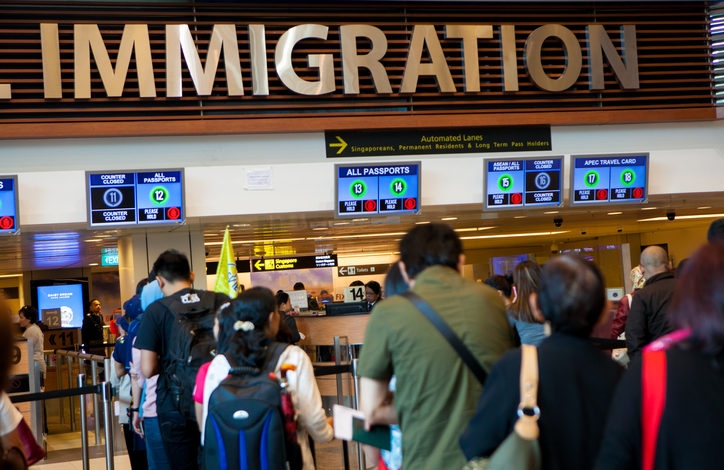
The Government has asked the Productivity Commission to take a comprehensive look at New Zealand's working-age immigration settings.
In the terms of reference for what has officially been dubbed the "Inquiry into Immigration Settings for New Zealand's Long-Term Prosperity and Wellbeing," Finance Minister Grant Robertson said the disruption caused by COVID-19 provided a rare and unique opportunity to take a system-wide view of immigration settings, including the impact of immigration on the labour market, housing and associated infrastructure, and the natural environment.
The terms of reference note that before the COVID pandemic, more people were entering this country's labour market through permanent and long term migration than from the school system.
"Migrants can bring to New Zealand a highly valuable diversity of skills, talents, knowledge, experience, international connections and financial, social and cultural capital," the terms of reference state.
"However, questions have from time to time been posed about the economic and other impacts of New Zealand's working-age immigration settings," it said.
These include:
- The impact of large increases in net migration (and hence rapid population growth) on housing markets and associated infrastructure, social cohesion and the natural environment.
- The impact the above have on interest and exchange rates, GDP growth and NZ's international competitiveness.
- How we should think about meeting future skill or labour shortages.
- Whether the skills of migrants are well-matched with the jobs available and how these skills are assessed and recognised.
Other matters to be considered by the Commission include:
- How access to migrant labour affects businesses' incentives develop the skills of existing and future local workers in their own firm or industry and their efforts to attract new local staff.
- Perceptions that crowding out of domestic workers by migrant workers will disproportionally affect New Zealanders who lack work experience and qualifications, a group in which Maori and Pacific people are disproportionally represented.
- The length of time migrant workers remain in NZ.
- The use of the student visa as a pathway to residency.
The Commission has also been directed to consider associated migration that is a direct consequence of working-age migration, such as migration of partners, children and parents of working-age migrants.
"The Commission should aim to provide concrete advice on how immigration affects labour market outcomes and the overall wellbeing of New Zealanders, including through productivity growth, the development of skills, levels of capital investment and labour market opportunities among different groups," the terms of reference state.
It should assess evidence on the impact of low-skilled migration on wages, working conditions and business models in relevant sectors, and consider the impact on those sectors of reduced access to migrant labour, including any lessons learned from border closures due to COVID-19."
The Commission is due to make its final report by April 30, 2022.
The full terms of reference for the inquiry are available here.
The comment stream on this story is now closed.
75 Comments
Inquiry? Labour Market? Depressed wages. Housing? Bubble, sprawl, homelessness. Environment, more emissions, more resource use, more waste, more crowding. There. That wasn't too difficult? Is my cheque in the mail?
I think you also need to list all of the upsides to immigration and then draw some kind of reasonable conclusions based on facts and figures before you get your cheque. For example who is going to pay for our aging population without younger immigrants? And what about all of that bland NZ food we will have to eat?
who is going to pay for our aging population without younger immigrants
You're right. A planned approach to productivity enhancement is more important than ever with a rapidly ageing population.
Limiting migrant influx to a few thousand high-wage individuals each year will ensure the same if not more is contributed into our government coffers than a hundred thousand low-wage workers.
A smaller increase in national population also means we can get away with spending less on growing our infrastructure and social services.
"...... who is going to pay for our aging population without younger immigrants...."
And
"...... In 40 years time who is going to pay for our aging population of immigrants who came in after the year 2000...."
List of positives for mass immigration.... Cant think of any
Negatives are endless
Most importantly Akld is choked, traffic is insane, even on weekends. We have been on water restrictions for what close on a year. Hospital wait lists are long, emergency rooms crowded. Schools Jam Packed. Residential streets jammed with cars parked down both sides
I hear that the population of Akld will increase by 50K per year over the next 10 years. Cant see how that is going to help solve these ever declining, basic living standards
#5millionisenought
One positive - you got me and my family. You can raise the drawbridge now.
But who will make the coffee? There are a number of jobs kiwis just won't do, well paid or not.
I've noted a number of well educated immigrants (educated locally) who then stay on and apply for residency. As long as this is for skilled work that we need, this generates income and a good range of skilled workers, most of whom are more motivated than our current NZ population. If we restrict them from bringing parents etc as part of family resettlement, then we would avoid aging the population faster
Propping up oldies is like a ponzi scheme because in say 30 years, we have to prop up the young ones we brought in 30 years ago... and on and on. You have to keep bringing in more and more young people to pay for the oldies. It's no long term solution.
Agreed, but it still needs to be considered. It isn't as simple as stopping immigration and expecting no bad outcomes.
We cannot stop immigration - almost 10,000 Kiwis fall in love with a foreigner every year. Then add refugees.
My gripe is the low paid immigrants; today I passed the local manicurist shop - half a dozen apparent young female of Asian heritage were attending to customers toenails. If it had been a single expert immigrant earning over $100k pa teaching and supervising half a dozen Kiwis I would be happier. Genuine valuable (>$100pa) talent whether in beauty treatment, computer programming, chef, engineering or medicine gaining residency is fine. Low paid immigration is a curse.
And about 10,000 foreigners fall in love with the idea of moving to NZ
Oh and we're already considered an ultra diverse country. So we have plenty of immigrants from pretty much every country in the world. More than 1 in 3 people in Auckland were not born here. And so we have pretty much any/every kind of food you can imagine. Cafes and restaurants of all flavours everywhere.
There may be some advantage in diversity. If so adding another POM like myself doesn't increase it. There should be a quota for each country and then adjust it for reciprocal emigration.
I was going to answer, but Davo and Advisor beat me to it. :-) If food is bland, it's a lack of imagination, not a lack of ingredients (or immigrants). There is this thing called the internet for those seeking to expand their cooking repertoire. The aging thing? Have to bite the bullet at some point, otherwise we'll have a population of 100 million, AI and robotics doing all the work and still wondering who'll pay for it all?
"And what about all of that bland NZ food we will have to eat?"
Seriously, what are you on about?
It's a standard argument supporting diversity - selling it on things that don't matter much - festivals, music, cuisine (and yes, as a veggo I'm glad we have more Asian food (as long as it's bland) now - the 60s was crap) and that's fine in good times. But when resources get tight, the stress comes from important things - differing work ethics, saving habits, reproduction rates and skills. The immigrants can be great or a burden.
Good but does the Productivity Commission really need 1 full year to compile such a report? Does not seem that "productive"
Long overdue. No party campaigned on increasing immigration from 10-15k a year (net) to 50k a year. National just decided to do it with no thought or research into the impacts.
What a disaster its been.
It was Clarke that open the flood gates to low skilled migrants. Key only wanted migrants with high skill levels or lots of capital they could invest in NZ. https://ozkiwi2001.org/2000/10/fortress-first-world/
That may be what he said, but that's not what happened while he was PM
What Key said and did were totally different. He opened the flood gates to any who who had money and invested in property. Just need to go back and see where National party’s donations came from.
He also brought in tens of thousands each year who would pay rents to those rich investors, serve them coffee, and cook them their curries and chop-suey.
And it was the John Key govt that opened the investor category for migrants to include residential housing, should never, ever have happened
Didn't this already exist in another category in essentially the same form?
This Labour Govt has actually been responsible for record numbers of immigrants - the number of migrants coming in went from 120,000 in National's last year to 150,000 under Labour. That's an extra 30,000 people a year. The only reason they got away with it is because headlines like to use the NET immigration figure, and under National New Zealanders stopped leaving for Australia (instead they came home) while under Labour the exodus across the Tasman resumed making the net number lower than it would have been had Kiwis stayed.
Key did nothing to encourage kiwis to come back from Australia. It was in fact the punitive measures Australia has put in that realisticly closed the doors on kiwis in Aussie calling it a permanent home and being treated like second class citizens.
Key just happened to be in power at the right moment when a lot of kiwis in Australia decided they had enough.
Thank goodness Winston Peters put the handbrake on immigration. lol.
Yeah, he's a cynical bugger. Knows how to jawbone his way into votes at certain points in the election cycle. Action man? Not so much.
He liked the baubles of office
I think net migration was running at just over 90,000 prior to Covid – an absolutely absurd situation.
I hate to think what the numbers would be now if that little virus hadn’t turned up.
Great! This should have been done this years ago.
Stop the use of the student visa as a pathway to residency. Get quality migrants, not people who drive ubers and work menial jobs.
Also note there will be a massive surge in migrants from South East Asia given the pandemic is raging there right now. Once things settle a bit, those who can, will get out of their country and you will see the number of applicants grow even higher from countries like India.
The government should also tighten rules around sponsorship and using family ties under immigration law. Certain groups bring the whole village if you let one in. Most of them don't bring any special skills - why are we giving residence status to people who work at a supermarket checkout or pack in a factory? Are kiwis that lazy??
The Government should get some advice from some ethnic people who are not in favour of mass migration and ask them a simple question: what are the loopholes and how do we close them?
Good idea. Most who got here through the right channels as skilled migrants are distraught with the few bad apples ruining the good names of their communities in the public eye.
I don’t think anyone is in favour of mass migrants. They just want to bring their families and from countries where population exceeds 1 billion, everyone is family. The spousal and parental sponsorship, study to work and work to residency and the investor category (like let’s invest in a liquor shop, dairy or restaurant) is infested and greatly abused. Chefs underpaid and passports ceased, workers paid $4 an hour, wage arrears, tax evading, migrant exploitation the list goes on unfortunately. It just seems like for every 1 reasonable, productive migrant we get 3/4 migrants who are under productive and exploit the country they have come to live in. Sensible migration is a must.
They should ban the parent visa altogether. The idea that in return for one (low) tax paying migrant, the country has to support two elderly parents, give them a fully funded pension after 10 years, and allow them to clog up the public health system for free while New Zealanders languish on waiting lists for surgery, is completely repugnant. If you want to be with your parents, go back to where they are.
Two elderly parents ???????
Try 4 elderly parents - his and hers
I’d say it’s extremely productive “politically”. The government continues its go slow on approving migrant visas with the excuse we are waiting to see the commission report. Meanwhile they hope the “housing development boom comes to fruition correcting the supply demand issue and then the government reintroduces migration at current levels. Problem solved until the next supply / demand crisis or business bleats it’s paying too much for labour or we have stagflation resulting in a recession - one of the three
Labour should have had this in their election campaign. And the work should have started in November last year, not now, and been completed by November this year.
Haha, immigration was part of their previous election campaign. They said they would reduce numbers by 20 to 30,000 per annum. So, it just doesn't matter what they say. It's what they do.
The problem is, it's a choice between tweedledum and tweedledee every three years. If this lot get chucked out, the immigration open signs will be out to anyone drawing breath, by breakfast time.
I doesn't matter what they say, it only matters what they...kindness, aroha etc.
NZ has being managed by people only capable of talking nonsense for very longtime and the damage seems irreversible.
Inquiry - first order of business: deport Xingmowang.
Love the moniker. ;-)
I wonder if Xingmo knows anything about "The Great Leap Forward".
How many million Chinese died? 30 million?
Makes NZ's managers look amazing.
Finally the possibility of some sanity being injected into the immigration debacle.
And yes – should have been sorted out some years ago.
I’ll take it as a real positive if between now and the implementation (hopefully) of a more soundly based policy the immigration doors remain relatively shut.
20 years too late and 1m extra people. Horse and house has bolted.
Yep, agree with Rogue Pirate.
Too late now. NZ's demographic will be completely different to what it is now in 25 years.
At least it starts now. Imagine if nothing happened at all how the next 25 years will look? Just even the next 5 years?
Meanwhile the John Key is listened to as a man of knowledge. The shambles surrounding us directly attributed to the smile and wave nothing to see here populist do nothing approach.
Why he gets any traction is beyond me. As far as foresight, the man had none.
And yet if you called his BS out at the time you were a doom, gloom, merchant...
Because everything was just fine until November 2008, right? There was a reason people voted Helen Clark out.
Can we please stop using GDP growth rate as a measurement of economic well being.
It attributes any activity as being good and that simply is not the case. We could have a country of Baristas, beauty technicians, prostitutes, land agents and investment advisors etc. These carry equal weight to farmers, doctors, nurses, factories, and all the other sectors that produce exports, goods and services that make a really meaningful contribution to the countries material and social well being.
How about adding a weighting to the index. 0% weighting to prostitutes up to 100% for exporters?
Yes, it's the point I'm making as well. We have got to shift our analyses away from that GDP metric altogether.
Do you believe that Baristas and barbers and the likes, do not produce any value? no one is ever forced to user the services of anyone you listed. If some do, it indicates that there is value there and such value is measured in money exchanged. Are you trying to say that coffee is an unneeded luxury? thus what a Barista does is a worthless activity?
When the Mongols conquered Baghdad centuries ago, the Mongol commander ordered the poets, the athletes, the jokers and clowns, (many people in entertainment and art really) to be drown in the Euphrates river, following the same logic you have here: they do not produce any thing of real value and thus are waste of space.
So you equate the value of any one of the over supply of uber drivers to a doctor or nurse.
A completely wrong agency to look at immigration policy. The fundamental question of is one of environmental/biophysical sustainability and wellbeing of the human population, as well as giving voice to our Treaty partner in the discussion/decision-making;
https://teara.govt.nz/en/document/1364/immigration-and-the-treaty-of-wa…
Immigration policy need have little to nothing to do with productivity (economics) - disciplines more needed are anthropology, ecology and sociology.
Didn't Dr Ranginui Walker argue that the treaty only permits immigrants from countries that have the Queen as head of state? Or was it the commonwealth?
It is very popular these days to 'giving voice to our Treaty partner'. Just so long as it is only a voice.
Yes, here's the article. The Treaty specifically refers to immigration from Europe, Britain and Australia;
https://www.thesocialcontract.com/artman2/publish/tsc0402/article_316.s…
Amazingly prescient given it was written nearly 30 years ago.
It should be a population policy. Time to stop encouraging those at the bottom to breed.
Pretty sure they know NZ runs an immigration economy since the change of the immigration framework in the late 1980s. I refer to all major political parties when I say "they".
Another witch hunting attempt at distracting their lemmings from Labour's failures.
The "impact" studies would probably cost a couple of million and I won't be surprise it takes 5 years for a strong report.
Every time something went south for Labour, it seems like the strategy is to find something that the public has a bias on and blame it; thereafter, announce themselves to be the saviour and offer to 'fix' it.
Not much brains are required to see that since the pandemic, immigration grind to a halt, house prices rose even faster, state housing wait list expanded more than ever and the economy went into recession.
I find it also a joke that whilst it appear Labour is concerned about social cohesion for this pet project, it is splitting the country into halve with a barrage of new policies based on race.
The failure is with the those in the government, not immigration. It's extremely childish to blame one's failure on something or someone else.
I agree with the whole blame shifting thing. But to say bringing in net 70,000 people per annum has no effect on housing or infrastructure just can't be right.
I'm pretty sure that when you're in government you never ask for a commission of enquiry if you don't know what outcome will come from it i.e. what the commission will come up with.
So they'll get the report they want. And then ignore any of the smaller bits they don't like. So, as others have said, cue mass immigration again, low skills totally OK, students using crappy courses as a residency pathway and so on.
If you put in place perverse incentives to encourage a behavior. You will get that behavior. Anyone remember the Tax Working Group?
The best immigration minister NZ has had in the last 20 years has been Mr Covid.
1) The holistic NZ Inc goal should be to increase total welfare (wellbeing) per capita & its distribution thereof. (not just gdp/capita & definitely not gdp growth)
2) This requires a population strategy that targets increasing wellbeing per capita (this is likely to be a growth rate that grows gdp/capita but keeps externalities low so net wellbeing increases.)
3) The PC needs to take this approach & make recommendations from that perspective. e.g.
i) our carbon emission requirements are absolute & not per capita. NZ cannot sustain a high population growth rate and meet a zero carbon target
ii) we've proven we cant build enough houses (ignoring RMA, capital gains tax & low interest rate issues) to keep up with a high immigration growth rate.
iii) Our roads cant sustain high traffic growth rates. We cant fund the capacity increases needed and most of the network is very unsafe 1x1 undivided roads with unsafe priority intersections.
3) [now 4] If we have a population target then based on 1 & 2 the government can tender immigration places to employers to bid for. Employers then need to decide whether to pay the bid fee (i.e. the skilled labour is worth the fee or no the fee is too high and train New Zealanders instead)
I like the cut of your gib KO. I especially like your idea point 3. Err, make that second point 3.
And the Greens want to give residence to illegals. FFS. Those drop kicks will bring in their whole families at a massive cost to the tax payer. NZ needs heavily reduced immigration, much tighter controls on eligibility for superannuation and medical e.g. residence and tax paying status for 25yrs. Start cutting off residence after 40yrs of age except in exceptional circumstances. #5millionistoomany.
""more people were entering this country's labour market through permanent and long term migration than from the school system""! Insane.
The Productivity Commission has produce reports about productivity but our productivity continues to decline compared to other countries. What probability a report on a subject they are not expert in will be any more persuasive.
It kicks the can down the road for another year or two. At least the Greens have said what they want however dumb some of those suggestions were.
Not planning for our population growth using immigration is the main reason we have a housing crisis, and infrastructure is struggling due to not being able to cope with the rapid population growth. Can't believe they are only doing this now. 15 years too late IMO.
Well, we've ignored all the Productivity Comissions other recommendations so why not keep going?
They'll soon leave for aussie when they discover paradise ain't cheap
Let me guess the outcomes: "Costs of living are making Kiwis have smaller families, therefore we need to import more people to pay taxes to offset our living costs".
Where can I collect my cheque for $400,000?
We welcome your comments below. If you are not already registered, please register to comment
Remember we welcome robust, respectful and insightful debate. We don't welcome abusive or defamatory comments and will de-register those repeatedly making such comments. Our current comment policy is here.