
[The following is a media statement released here.]
The Government recognises that at all times and particularly in challenging economic times globally, it is important that Australians retain faith in our financial institutions and the decisions they are taking.
The Australian economy depends critically on the performance and strength of our banking and financial system. Banks operate under a social licence and have responsibilities to the Australian public.
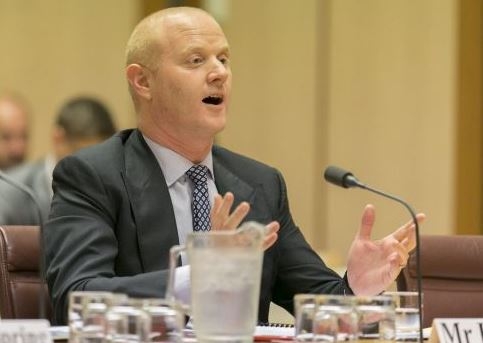
As part of a broader terms of reference to be provided to the Committee by the Treasurer, the Committee will be asked to examine and report to the Parliament on the banking and financial system, calling Australia’s banks separately to appear before the Committee. This will provide the opportunity for banks to explain how they are responding to funding issues to support Australian consumers and businesses.
In particular the banks will be required to explain:
- International economic and financial market developments and how these are affecting Australia
- Developments in prudential regulation, including capital requirements, and how these are affecting the policies of Australian banks
- The costs of funds, impacts on margins and the basis for bank interest rate pricing decisions
- How individual banks and the banking industry as a whole is responding to issues previously raised in Parliamentary inquiries through their package of reforms announced in April 2016
- Bank perspectives on the performance of the Australian economy, including strengths and risks
The appearance by the banks will ensure they have the important opportunity to transparently account for their decision making and how they balance the needs of borrowers, savers, shareholders and the wider community.
The Coalition Government has already taken significant steps to further strengthen our banking and financial system through the conduct of the Murray Financial System Inquiry and the ongoing implementation of the recommendations of this report. In addition, the Government has acted to strengthen the resources and capability of ASIC, which has not just the investigative and reporting powers of a Royal Commission but also the ability to prosecute and otherwise act against those responsible for malfeasance in the banking and financial sector.
Furthermore, the banking sector has announced their own reforms to banking culture and practice designed to put their customers at the centre of their business.
Tasking the House of Representatives Economics Committee to monitor and report on the ongoing implementation of these policies and commitments, as well as addressing broader regulatory and economic impacts on the banking and financial system, will provide a useful contribution to improving public understanding and informing policy settings.
It is envisaged the Committee would report at least annually on its assessment of the evidence presented by the banks and other witnesses relevant to the subject of its inquiries.
These arrangements will ensure that the banks are regularly, and permanently, accountable to the Committee. This will be a regular, and we would expect, a permanent part of the Committee’s business in the same way that the RBA and APRA have been regularly appearing before the Committee for many years.
The Government would respond to the Committee’s reports and any recommendations therein.
The House of Representatives Economics Committee already has hearings with the RBA and APRA and is therefore the appropriate body to hold the banks to account in a transparent, responsible, timely and cost effective manner.
Malcolm Turnbull is the Prime Minister of Australia
The Australian Bankers Association has responded as follows:
“The Federal Government is entitled to call the banks before a parliamentary committee, however no other businesses are required to justify their commercial pricing decisions in this way,” ABA Chief Executive Steven Münchenberg said.
“We are confident banks can explain why the interest rates they set for borrowers are determined largely by the costs of funds and the pressures of a highly competitive market, not the Reserve Bank cash rate,” he said.
“Since the start of the global financial crisis, over eight years ago, the Reserve Bank’s cash rate has not mirrored the actual funding costs of banks. Banks have explained repeatedly why the Reserve Bank does not set interest rates.”
The ABA has pointed out that one example of higher bank funding costs comes from the recent announcements by a number of banks that they are raising deposit interest rates.
“About two-thirds of bank funding comes from deposits and banks have raised interest rates on a range of those deposits, even as the Reserve Bank cut the cash rate,” Mr Münchenberg said.
“This is great news for the many Australians, in particular seniors, who rely on their savings in retirement and who are being squeezed by low interest rates. At the same time, those Australians with a mortgage continue to enjoy the lowest interest rates in over 50 years,” he said.
“As well as higher deposit costs, we have seen increases in banks’ short-term funding in wholesale markets. Banks are also having to build their capital to withstand any future shocks, which adds further pressure on their margins.
“In making interest rate decisions, banks have to balance the needs of borrowers and savers, and shareholders in banks, most of whom are also ordinary Australians.
“The industry welcomes the opportunity to discuss the international and domestic context for banks, and how we are responding to concerns around bank practices.”
We welcome your comments below. If you are not already registered, please register to comment
Remember we welcome robust, respectful and insightful debate. We don't welcome abusive or defamatory comments and will de-register those repeatedly making such comments. Our current comment policy is here.