
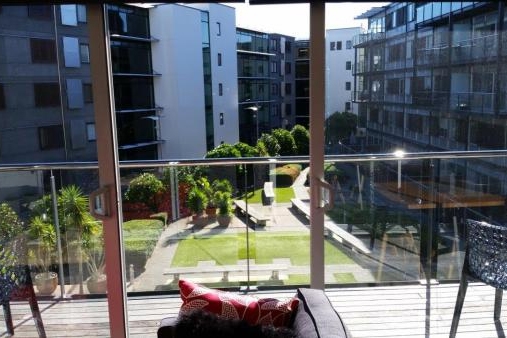
The level of building consents issued took a jump in November, rising to a 13-year high.
All up, 3,262 new consents for residential units were issued in November nationally, a level we haven't seen since June 2004.
That was largely driven by apartments, especially in Auckland.
The number of consents issued for new houses was 1,870, which is about the average for the past nine months, so is unremarkable.
However, there were 543 consents for apartments in the month nationally, and another 577 for townhouses, flats and units. In addition, a further 272 were issued for retirement units.
In Auckland, where there is a widely recognised housing shortage, the increase in building consents was even higher.
They reached their second-highest level on record at 1,450 units, beaten only by October 2002 when nearly 2,000 new homes were consented due to a much larger spike in apartments.
Of the total in Auckland, 530 were for houses, 436 for apartments and 311 for townhouses, flats, etc.
Apartment consents tend to be spikey, but over the past twelve months consents for them in Auckland reached 2,351, the highest annual rate since October 2005. (The highest was 4,928 in 2004.) However, the 2017 level is qualitatively different to those earlier periods when there was a frenzy of building shoe-box apartments. This sector has moved on to higher spec units in 2017, more suited to downsizing baby boomers. Apartments for first-home buyers are also being built, and the growth of this sector is increasing. The average floor area of Auckland apartments rose to 130 m2 in October 2016, but with the first-home buyer market rising (which probably includes paroperty investors as well), that average dropped below 100 m2 for the first time in November since mid 2012.
And the level of townhouse building in Auckland is the highest since August 1999. On an annual basis it is a 17 year high.
Auckland townhouses tend to be about 120 m2 and are being built at about $2100/m2. (That compares with an average Auckland house consent at 230 m2 and an average consent value of $2,030/m2.) However, there could be buyer resistance on the horizon as cost/m2 are growing at about +12% pa/m2. (Housing consent values are growing at +7% pa/m2.) These types of market forces (capacity constraints mainly) will have an impact on th eimpending KiwiBuild program, and the demands of KiwiBuild will likely have a large cost impact on those outside that system as well.
ASB says capacity constraints, credit conditions and a slowing housing market have constrained house building demand. Looking ahead over the next few months, additional uncertainty, as developers await further details of the proposed KiwiBuild plan, may weigh on construction demand but this should be a short-lived dip. They expect further growth in Wellington housing construction over the coming year, and for Auckland activity to hold up at very high levels.
Consent levels in centres other than Auckland are unrekmarkable in November, although things are strong in Bay of Plenty and in Gisborne. There was a surprising dip in Tasman, however.
Building consents - type
Select chart tabs
And this one is by region:
We welcome your comments below. If you are not already registered, please register to comment
Remember we welcome robust, respectful and insightful debate. We don't welcome abusive or defamatory comments and will de-register those repeatedly making such comments. Our current comment policy is here.