
By Chris Trotter*
The internet is a strange beast: part pussycat, part junkyard dog. For every “Oooh!” elicited, an “Ugh!” is never more than a couple of clicks away No other human invention has had the power to communicate so much information, so quickly, to so many receptive audiences. In theory, the Internet should be producing the best-informed voters in history. In practice, it appears to be producing the opposite. After reading Plato’s “Republic”, the Roman poet Juvenal famously quipped “Quis custodiet ipsos custodes?” Who will watch the watchmen? Were he around today, Juvenal might well demand to know: “Who is fact-checking the fact-checkers?”
It’s not that all the information we encounter on the Internet is “fake news”. Most of it is dead accurate and enormously helpful. Our globalised financial and industrial systems could not function without the near instantaneous transmission of reliable data which the Internet makes possible. When it comes to politics, however, we are, more often than not, dealing with people’s opinions, or, even worse, their ideological convictions. Dealing with these requires a very different set of skills. Foremost among them being the interpretative skills we acquire from face-to-face encounters with our fellow human-beings. And therein lies the problem with politics communicated through the Internet. We are never entirely sure who we are talking to.
When I was a young man (we’re talking 40 years ago!) I travelled the length and breadth of New Zealand alongside my fellow citizens on inter-island ferries, trains and buses. Mostly, however, I used my thumb. I still marvel at how willing Kiwis were in those days to offer complete strangers a free ride in their cars and trucks. Mostly, they did it for company. Someone to talk to on what would otherwise be a long and conversationless journey. Partly, though, it reflected the either direct or inherited memories of economic depression and war. Those profoundly collective experiences had embedded the notion that, on your home ground, an outstretched hand (or upraised thumb) was not something any decent citizen should ignore.
So we talked – these drivers and me – about everything under the sun. It was on those journeys that I first learned to listen attentively and sympathetically to my fellow New Zealanders. Some of the things they said were utterly hair-raising. Much of what they believed to be true was anything but. Even so, when you’re travelling in someone else’s vehicle for free, it is neither polite (nor particularly wise) to be too vociferous in the defence of your own pet likes and dislikes. What these experiences also taught me was that, generally speaking, more wisdom arrives through one’s ears than exits via one’s mouth. For a young man in his late-teens that was a truly life-enhancing lesson.
What I also learned was that good people can have bad ideas. Certainly, the sort of person willing to give a stranger a lift has already demonstrated a generous and caring nature, so my sample was skewed. Those lacking in empathy and generosity were the people who drove straight past without so much as a rueful shake of the head. That said, however, in the year or so leading up to the General Election of 1975, it was impossible not to notice the subtle shift in the mood of my benefactors. Increasingly, they wanted to talk about politics, or, more accurately, about what had gone wrong with politics. The rising level of impatience – shading into sullen mistrust – of the Third Labour Government was unmistakable. Equally unmistakable was the positive tone that entered their voices when they talked about Rob Muldoon.
Long before that fateful night in November 1975, when the election result was declared, I had known that National was going to win. My very own, personally conducted, opinion poll – augmented by all those one-on-one focus groups conducted up and down State Highway 1 – had told me.
It’s that certainty: that “in your bones” grasp of the overall direction-of-travel of contemporary politics; that the pollsters purport to offer those with the money to commission their surveys. It is also what the focus-group moderators claim to be bringing to the table: the interpretation of that sudden shift in tone; that dark expression flitting across a participant’s face when, without warning, a fraught issue is raised, or a controversial name mentioned.
Would that it were true. Lately, however, the pollster’s art has failed – and failed spectacularly – to adequately apprehend the sudden and dramatic mood-swings in voters all around the world. Think Brexit. Think Trump. Think Scotty Morrison!
More and more, voters worldwide have begun to look upon polls as a sort of Establishment trick: a means of making them feel that they’ve got it all wrong; that their own judgement can’t be trusted; that it’s safer, always, to follow the herd. Well, they’re not buying it. They’re putting their faith in family and friends. Who needs the “guidance” of the Establishment and its “lying mainstream media” when you have Facebook and Instagram and Twitter?
Are they aware that these vast global data gatherers already know more about them than any pollster could hope to discover? Don’t they realise they’re in a global focus group numbering more than a billion participants: daily amassing more data-points than the stars in the night sky? And those “friends” of theirs; those people that they “follow”; are they really their friends? Are they even real at all?
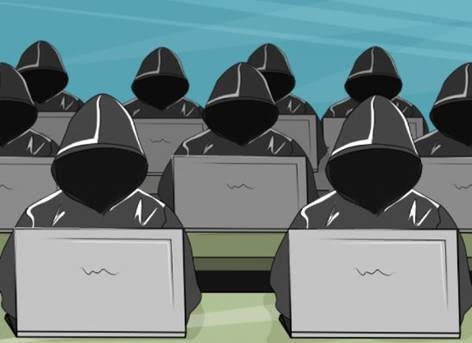
Reports emerged over the weekend of a Polish “troll farm” employing dozens of people to manufacture and manage hundreds of bogus social media accounts designed to promote the products, services and causes of their clients. Yet further proof that, thanks to the power of the Internet, political consultants and PR experts are now able to replicate something frighteningly close to the encounters I experienced as a youthful hitch-hiker all those years ago.
Forget about polls, newspaper editorials, current affairs programmes, posters, pamphlets and billboards. None of them can offer the same feeling of connection, or provide the same insights, that emerge naturally from a conversation between one human-being and another. Even when people may not be talking to the human-beings they think they’re talking to? Even when voters may not be connected to a human-being at all?
Yes, even then. When we are no longer able to tell the difference, what does it matter?
*Chris Trotter has been writing and commenting professionally about New Zealand politics for more than 30 years. His work may be found at http://bowalleyroad.blogspot.com. He writes a fortnightly column for interest.co.nz.
We welcome your comments below. If you are not already registered, please register to comment
Remember we welcome robust, respectful and insightful debate. We don't welcome abusive or defamatory comments and will de-register those repeatedly making such comments. Our current comment policy is here.