
By Chris Trotter*
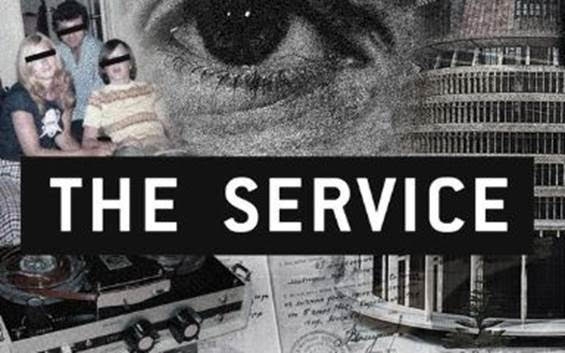
What possible reason could Radio New Zealand have for re-visiting the Cold War? It’s podcast series, “The Service” is nothing if not a jarring reminder of just how deeply the political paranoia of US-Soviet rivalry penetrated public life in post-war New Zealand. More jarring still, however, is the amount of effort our national public broadcaster has devoted to fanning the embers of a fire most New Zealanders believed to be well-and-truly out.
Even the title of the series – “The Service” – has an odd ring to it. For fifty years, New Zealand journalists, employing a tone that ranged from the strictly neutral to the openly sceptical, have been content to designate the initials of the Security Intelligence Service – S.I.S – as the appropriate noun. “Ess-Eye-Ess” is what New Zealanders have called their spooks for yonks. So why the sudden shift in tone? Where has this more formal, respectful-bordering-on-
It has about it the very particular smell of what the Americans call “public diplomacy”. Say SIS to most New Zealanders of a certain age and they will think of two things: Penthouses and pies; and Bill Sutch. The former harks back to the contents of an SIS man’s (at least we assume it was a man’s!) briefcase. It was left inadvertently on a Wellington wall about 40 years ago and the SIS has been trying to live down the incident ever since. The story of Bill Sutch is altogether more serious and tragic.
William Ball Sutch (1907-1975) was a public servant and historian of enormous political, economic and cultural influence who dwelt at the heart of the New Zealand state from the 1930s to the 1970s (rising to become the Secretary for Industries and Commerce 1958-1965). Proudly and openly a man of the Left, Sutch was long suspected by those on the right of New Zealand politics of being, if not a Soviet spy, then something uncomfortably close to it. Certainly, the SIS had long been convinced that in Sutch they faced the antipodean equivalent of Kim Philby (the Soviet spy who operated for years at the heart of Britain’s MI6) and in 1974 they set out to prove it.
They failed. A New Zealand jury acquitted Sutch of the espionage charges the SIS had brought against him. Vindicated, but broken physically, Sutch was dead within a year. Death was not the end, however. Not for the SIS. For more than 40 years they have not ceased to seize every available opportunity to prosecute Sutch as a Soviet agent in the court of public opinion. That RNZ should now be rendering the “Service” so much service in this endless prosecution is troubling – to say the least.
Things get even murkier when the RNZ podcasts move on from Sutch to drag the Fourth Labour Government’s (1984-1990) anti-nuclear policies – and the much more independent New Zealand foreign policy which they spawned – into the “wilderness of mirrors” for which the Cold War’s “national security” paranoia was so notorious.
Listening to these podcasts, it is impossible to ignore the soft – but relentless – drumbeat of suspicion that every part of the foreign policy revolution of the 1980s: the grassroots movement for a nuclear-free New Zealand; Labour’s embrace of the cause; the enacting legislation; the banning of the USS Buchanan; New Zealand’s departure from the Anzus alliance; bears the unmistakeable imprimatur of the KGB’s Moscow Centre. This impression is in no way lessened by the former Labour Prime Minister, Sir Geoffrey Palmer’s, admission that he authorised SIS surveillance of his own Labour Party’s members.
Emerging from all the tendentious reminiscing of the old Cold Warriors featured in these podcasts is the clear impression that, in the eyes of New Zealand’s national security “community”, Sutch’s “economic nationalism” and Labour’s long pursuit of a more independent foreign policy were all of a piece.
Geopolitically, they were said to represent a decades-long effort on the part of the Soviet Union to detach New Zealand from “The West” (that all-powerful Anglophone alliance now referred to as the ”Five Eyes”.) That effort, these warriors have long insisted, came perilously close to succeeding. Undisputed is the energy so many of these old warhorses have expended between 1985 and the present day to: firstly, discredit Sutch’s economic nationalism; and secondly, to refasten the geopolitical ties that formerly bound us so tightly to Washington, London and Canberra.
It is this context, I believe, which explains RNZ’s public diplomacy in “The Service”.
There is clearly a serious risk that the generations of New Zealanders who have grown up with no direct experience of the Cold War will look upon the whole historical era as an absurdly dangerous exercise in diplomatic brinkmanship, military overkill and ideologically-inspired myopia. Unchallenged, this view of the Cold War can only strengthen the argument for an even more independent New Zealand foreign policy.
From the pro-USA “public diplomat’s” point-of-view, therefore, it is vital that the highly intrusive and often illegal behaviour of this country’s Cold War spooks be re-cast as both necessary and courageous. “The Service” and its agents simply did what had to be done to protect New Zealand from the predatory ambitions of a totalitarian superpower.
This is indeed a fortuitous and timely recharacterisation, because in the estimation of its national security community New Zealand is once again threatened by the predatory ambitions of a totalitarian superpower. Not, this time, by Russia (although the nuclear claws on that old bear have lost none of their lethal sharpness) but by the rapidly expanding power and influence of the Peoples Republic of China.
Once again, say the spooks, we find prominent citizens whose loyalties are increasingly difficult to discern. Once again, there is evidence of Communist Party-controlled “front organisations” exerting undue influence over the formulation of New Zealand’s economic and foreign policies. Once again, it has become necessary to place some Members of Parliament under SIS surveillance.
The sub-text of RNZ’s “The Service” is nothing if not ingenious.
Clearly, in the estimation of RNZ’s public diplomats, the Baby-Boom generation is guilty of allowing their rose-tinted “New Left” spectacles to blind them to the real intentions of the Soviet Union. Consumed by an anti-Americanism constantly fed and carefully stoked by KGB agents who “knew the Left” and how to “push their buttons”, the Labour Party adopted a programme that came within an ace of detaching New Zealand from the West. It is vital, therefore, that younger New Zealanders refuse to allow the Chinese to do to them what the Soviets did to their parents: i.e. turn them into the Communist Party’s “useful idiots”.
Not that they are expected to face this new threat alone. Standing alongside them in the fight: just as they stood alongside their easily manipulated and ungrateful parents in the long, secret struggle against Soviet totalitarianism; will be the un-named and un-sung heroes of “The Service”.
That’s quite a pitch!
*Chris Trotter has been writing and commenting professionally about New Zealand politics for more than 30 years. His work may be found at http://bowalleyroad.blogspot.com. He writes a fortnightly column for interest.co.nz.
We welcome your comments below. If you are not already registered, please register to comment
Remember we welcome robust, respectful and insightful debate. We don't welcome abusive or defamatory comments and will de-register those repeatedly making such comments. Our current comment policy is here.