
By Bernard Hickey
Prime Minister John Key seemed to capture the mood of the moment a few months back when he mused about risk of New Zealanders becoming 'tenants in their own land.'
That followed the debate around the Chinese-funded bid for Crafar Farms and prompted the government's review of large foreign purchases of farmland. Key is, if nothing else, an excellent sniffer of the breeze of public opinion and economic trends, and not just in New Zealand.
The concern about China using its massive foreign reserves to roam the planet buying supplies of the commodities it needs is genuine and global. The World Bank published a report this year about the risk of China and other large surplus nations buying up land in developing countries. It rightly pointed to the risksof corruption and of exploitation.
But it's worth looking at the economic forces behind China's great land grab that are creating such turmoil in global capital and currency markets. They highlight a great clash between the forces of capitalism and nationalism and between a rising global power in China and a declining global power in America.
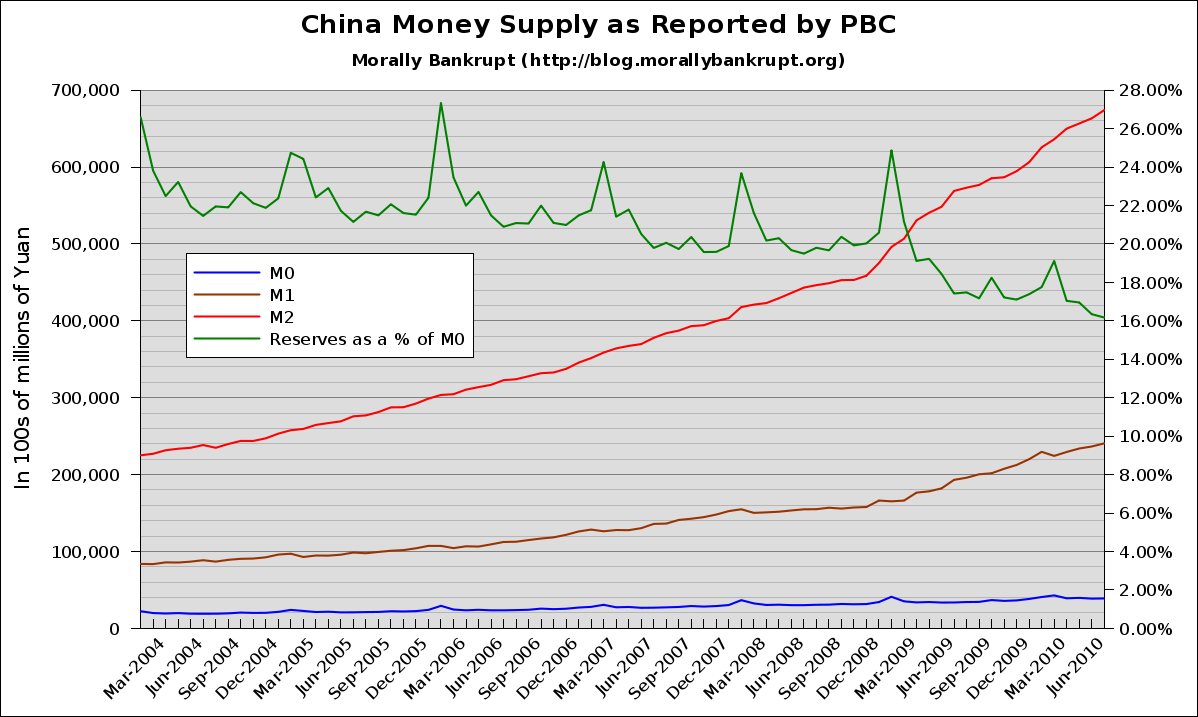
China has built up the biggest foreign reserves in the history of the world in the last 10 years, increasing them from US$165 billion to US$2,454 billion. It did this by holding its yuan or renminbi currency relatively low to encourage its exporters. It effectively subsidised its exporters at the expense of its own consumers. This strategy of keeping a currency low to build exporters and manufacturers is known as mercantilism. It's been happening for centuries and it's understandable for developing economies who want to industrialise their societies.
It seemed to work a treat too for American companies, who systematically moved their factories from America to China to reduce their costs and increase their profits. Many promptly paid out those profits to themselves in the form of bonuses and high salaries while laying off skilled manufacturing workers in America. It seemed like a good idea at the time. It depended on the theory that America would reinvent itself as it has done before through a process of 'creative destruction'.
This reinvention has happened, but only partially, and now as the tidal wave of easy money has gone out in the wake of the Global Financial Crisis it's becoming clear to most Americans their economy has been hollowed out and most have been made much poorer. Real wages for America's middle and underclasses stagnated or fell through much of the 2000s, but they kept spending as if they were getting richer. They did it with the help of bankers in Manhattan who were lending them money hand over fist and paying themselves big bonuses throughout. Those same bankers were borrowing their money from China.
It was a big money go round that left China holding a lot of US Treasury bonds and Americans in an awful lot of debt. This all worked well for both countries until America's debts built up to unsustainable levels.
The Global Financial Crisis was essentially triggered by America's realisation that it had borrowed too much, fueled by the cheap money provided by China. At some point this imbalance of trade and capital flows has to be turned around if the global economic system is to be sustainable. That's why there is such pressure on China to allow its currency to rise versus the US dollar. That would allow the natural automatic stabilisers to kick in.
A higher yuan makes Chinese exports more expensive and American imports cheaper, helping to boost the US economy and slow down the Chinese economy. The problem is China is refusing to quickly revalue its currency because its government itself benefits from the growth of these factories. They employ many migrant workers and have helped lift wages to keep the populace happy. The political pressures on the Chinese are intense.
Where to put the money?
So now they hunting around the world for other places to put their cash pile, other than the US dollar, which is about be devalued by a flood of money printing.
Key, a former currency trader, is more aware than most of the dynamics of these global stresses and why the Chinese are so interested in our land, in Australia's mines and Brazil's soya beans. This weekend finance ministers are meeting to Washington to talk about these tensions in the global trading and capital system, now described as 'Currency Wars'. We can only hope they find a solution and can cajole China into allowing its currency to float higher.
If they can't we have to be ready to deal with a potential flood of these newly minted US dollars looking for hard assets that produce food with our ample water.
Key is right to worry about our ability to keep control of our assets.
We welcome your comments below. If you are not already registered, please register to comment
Remember we welcome robust, respectful and insightful debate. We don't welcome abusive or defamatory comments and will de-register those repeatedly making such comments. Our current comment policy is here.