


By Roger J Kerr
The Kiwi had another peak at 0.8000 this morning; however a slightly lower than expected March quarter’s CPI increase of +0.8% has caused some short-term profit taking down to 0.7950.
There is always a debate as to the nature of the Kiwi dollar buying that has caused the dramatic spiral higher from below 0.7200 just four short weeks ago.
How much of the NZD buying is real permanent capital inflows into New Zealand and how much is speculative, hyped-up hot money chasing a short-term profit is never really measured and known.
What we do know is that over recent weeks the increased volumes of NZ Government bonds sold to foreign investors and earthquake reinsurance payments have caused heavy NZD buying.
These are two permanent capital inflows that will not reverse next week.
The borrowing activities of NZ banks in foreign debt markets is not a cause of NZD buying as the banks simultaneously sell the NZD forward to hedge their USD borrowing and create NZD liabilities.
If the debt issuance and reinsurance flows reduce from current high volumes the support for the NZD will reduce.
Outside these capital-flow influences, is the speculative element that latched onto Alan Bollard’s comments last week that the much higher agricultural commodity prices are very positive for the NZ economy and currency going forward. While the Governor’s comments were correct in one sense, his comments were interpreted as very bullish fore the Kiwi and it was sent another two cents higher.
The Governor’s musings are in sharp contrast to his deliberate jawboning down of the currency just a few months ago.
Non-commodity exporters will not be too pleased at this seemingly reversal in currency opinion from the head of the central bank.
The NZD/USD exchange rate has never been able to sustain rates above 0.8000 when is has been here before. I do not think it will hold onto its gains this time either, due to two expected currency market changes over coming weeks:-
- The EUR/USD reversing from $1.4400 to below $1.4000 following a more upbeat US Federal Reserve next week and continuing deterioration in European sovereign debt markets.
- The AUD correcting down from $1.0550 against the USD after its too-far-too-fast appreciation over recent weeks. Tighter monetary policy in China must bring global commodity prices off their highs soon, I would have thought.
USD importers have an opportunity to hedge much higher proportions of future USD payments at these levels, particularly those with 'filter-test' triggers in their hedging policies (15% above the 7-year average rate = 0.7950) requiring longer-term hedging beyond 12 months.
Importers need to act quickly as wide-scale profit-taking in the NZD - that is, NZD selling - cannot be very far away.
Is intervention selling in the NZ dollar forex market likely from the RBNZ as the Kiwi soars to 0.8000?
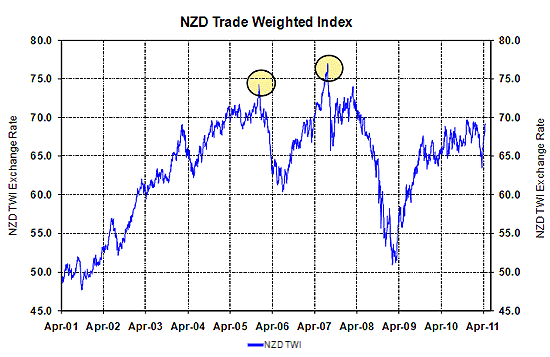
I do not think so, the pre-requisites do not appear to be there and the TWI value at 69.0 is a long way below the 74.0 level where the RBNZ intervened in 2007 (see chart below). Even though the NZD is at cyclical highs against the USD at 0.8000, the NZD/AUD cross-rate at 0.7500 is at cyclical lows. In 2007 the NZD/AUD cross-rate was above 0.9000.
--------------------
* Roger J Kerr runs Asia Pacific Risk Management. He specialises in fixed interest securities and is a commentator on economics and markets. More commentary and useful information on fixed interest investing can be found at rogeradvice.com
No chart with that title exists.
We welcome your comments below. If you are not already registered, please register to comment
Remember we welcome robust, respectful and insightful debate. We don't welcome abusive or defamatory comments and will de-register those repeatedly making such comments. Our current comment policy is here.