
By Bernard Hickey
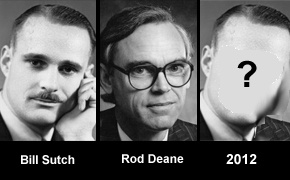
Where is the next Bill Sutch or Rod Deane hiding?
Maybe I've missed them and they're there in the background beavering away pushing for change, but I can't see them yet and New Zealand needs them to step up and start making a noise.
New Zealand has a great history of intellectuals and thinkers who roll up their sleeves and get involved in the messy and hard business of mashing those ideas into policy.
These bureaucrat/thinkers act like the halfback of the government's rugby team, driving the forwards of the bureaucracy around the paddock before spreading it wide for the glory boys (and girls) of politics in the backs to score the tries and win the votes of the public.
New Zealand has had two of these great great 'halfbacks' of public life in the last century.
Both were economists who played crucial roles in public life from somewhat behind the scenes at times of great and necessary change.
Bill Sutch began his life as a policy maker as an adviser to the then centre-right Minister of Finance Gordon Coates in 1933. He carried on in that office when Labour won the election and Walter Nash became Finance Minister.
Sutch generated much of the intellectual grunt for the great reforms of the 1930s that helped pull New Zealand out of the great depression and redevelop its economy and social system.
He went on to serve as as the Secretary for Industries and Commerce in 1958.
He was later wrongly accused of being a Russian spy and acquitted.
In the late 1970s and 1980s fellow economist Rod Deane played a similar role in first challenging the leaders of the time and then reshaping the nation when new leaders came in.
As first Chief Economist and Deputy Governor of the Reserve Bank in the early 1980s, Deane clashed with then Prime Minister Robert Muldoon over the country's economic direction.
He was at the vanguard of a generation of policy advisers and bureaucrats who radically reshaped New Zealand from 1984 onwards, liberalising and deregulating government and the economy.
Deane went on to become the State Services Commissioner that worked with then Finance Minister Roger Douglas to drive those reforms. It's unlikely he'll be accused of being a Soviet spy.
Both Sutch and Deane were part of the great world-wide intellectual movements of their time that were spawned by economic crisis - Sutch in the 1930s and Deane in the 1970s.
Fast forward another 40 years to the next great crisis. I look around the world and see a massive debate in Europe and the United States and Asia about how to respond and reform after the Global Financial Crisis.
Assumptions about banking, monetary policy, government spending, social policy, the environment and corporate structures are all being challenged.
Yet in New Zealand public life and inside the bowels of the Reserve Bank and Treasury I can't see the next Bill Sutch or Rod Deane.
Maybe I'm not looking hard enough or they aren't there yet, but I can't see the same intellectual energy and creativity in policy circles here that I see in Britain or America.
New Treasury Secretary Gabriel Makhlouf gave an interesting speech on November 1 about how Treasury wanted to be a hothouse for ideas and analysis, and how it was focused on improving living standards, not just the hard, dry targets of economic growth.
His speech was welcome, but I've yet to see the next Bill Sutch or Rod Deane.
---------------------------------------------------------------------
This piece was first published in the Herald on Sunday. It is used here with permission.
We welcome your comments below. If you are not already registered, please register to comment
Remember we welcome robust, respectful and insightful debate. We don't welcome abusive or defamatory comments and will de-register those repeatedly making such comments. Our current comment policy is here.