

Here's my Top 10 links from around the Internet at 10:00 am today in association with NZ Mint.
Bernard is back tomorrow with his version.
As always, we welcome your additions in the comments below or via email to bernard.hickey@interest.co.nz.
See all previous Top 10s here.
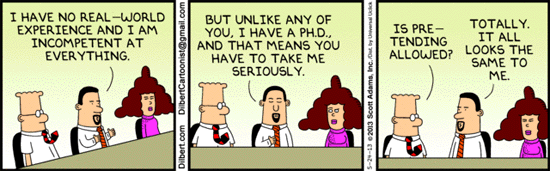
1. The leverage party redux
Buffett is avoiding bonds, PIMCO's Gross says the bond rally is over. But international corporates are issuing debt fast these days. Even Apple. Someone's buying. In fact corporate junk (like Graeme Hart's) is rallying spectacularly - US corporate junk debt averages yields of only 5.3% these days. However why are those high profile investors wary?
Perhaps every investor should be wary. Fortunately there is very little junk in the New Zealand bond market, but demand for investment grade is way higher than supply. It's a real problem getting hold of any for your portfolio. Here is Roben Farzad in BusinessWeek:
"There is nothing inherently good or bad about leverage," says Michael Lewitt, publisher of the Credit Strategist. "Cheap leverage is better than expensive leverage. Too much leverage is always bad. The difference is that now companies can disguise excessive leverage because it costs them much less to service it and it is easy to refinance or extend."
"When the price of this leverage normalizes,” he predicts, “nobody is going to be saying anything positive about it. The smart ones are those who are repaying their debt now, not adding to it."

2. EU threatens France
France is about to be named and shamed for its lack of action on reform of its fiscal position and competitiveness. Apparently its inaction is a threat to the whole EU project.
But what is about to happen is much more than naming and shaming. It seems that Brussels now has teeth to enforce changes and "reverse qualified voting" procedures may mean France can't actually block enforcement.
This will be fun to watch. Apparently the system is about to be tried out on tiny Slovenia in the coming weeks. Stay tuned. More from the UK's Telegraph:
European Union studies on “macroeconomic imbalances” have been given new teeth this year under eurozone “governance” legislation that gives the commission powers, backed by substantial fines, to override national sovereignty to impose reforms.
“The macroeconomic imbalance procedure is very broad, intrusive and has, for the first time, teeth. Sanctions can be taken unless countries implement structural reforms,” a senior European official told The Sunday Telegraph. “This has moved on over the last 12 months from a naming and shaming exercise to interventions with a cutting edge for the eurozone. The commission is going to go much further than ever before.”
Under the new eurozone rules, if a country fails to address “the gravity of imbalances [it] can eventually lead to the imposition of sanctions on euro area member states” under a new radical procedure that makes it easier for the commission to impose reforms.
------------------------------------------------------------------------------------------------------------------------------------------
Keep it safe. Keep it in a New Zealand Mint safety deposit box. Details here »
------------------------------------------------------------------------------------------------------------------------------------------
3. Electric roads
Here's an idea - make roads out of solar panels. An intelligent road surface could be used for all sorts of things, including recharging electric cars as they drive on it. It's an idea two Americans are pursuing and people are watching with interest. It's even got official seed funding. Spiegel Online has more:
"In the beginning, half the people thought we were geniuses, and the other half thought we were off our rockers," says Scott Brusaw. The electrical engineer has spent years trying to bring his wife's idea to fruition. Julie Brusaw is a psychotherapist. Roads didn't fall into either of their areas of expertise. But as the discussion in the United States about climate change intensified, the Brusaws were struck with the idea of solar roads, and the project took on a life of its own. In 2009 they received their first government grants to construct the prototypes.
The Brusaws' work was impressive enough that this spring, they are launching a pilot project, for which the state awarded them $750,000. In their hometown of Sandpoint, Idaho, near the Canadian border, the couple has built their first parking lot made from solar panels.

4. Today's raw market data ...
A quick new week update:
| as at 11:10am |
Today 9:00 am |
Friday |
Four weeks ago |
One year ago |
| NZ$1 = US$ | 0.8085 | 0.8109 | 0.8498 | 0.7598 |
| NZ$1 = AU$ | 0.8388 | 0.8349 | 0.8264 | 0.7729 |
| TWI | 76.33 | 76.50 | 78.36 | 69.21 |
| Gold, US$/oz | 1,390 | 1,381 | 1,468 | 1,575 |
| Dow | 15,319 | 15,309 | 14,816 | 12,593 |
| Copper, US$/tonne | 7,240 | 7,286 | 7,079 | 7,740 |
| Volatility Index | 13.99 | 14.07 | 13.71 | 21.03 |
------------------------------------------------------------------------------------------------------------------------------------------
New Zealand Mint. Experts in gold & silver bullion, commemorative coins and jewellery. Details here »
------------------------------------------------------------------------------------------------------------------------------------------
5. Big China changes signaled
Is China about to make a major change of economic direction? - one that requires a fundamental social change as well?
They could well be moving to the full capitalist 'creative destruction' model, one that will only work with strong independent civil society institutions. And patience. I wonder if they have the guts to go through with it because it will set in train some huge changes for them.
If they can pull it off it will have a monumental impact. If not, it could be a mess. Legendary NY Times China reporter David Barboza has the story:
In a speech to party cadres containing some of the boldest pro-market rhetoric they have heard in more than a decade, the country’s new prime minister, Li Keqiang, said this month that the central government would reduce the state’s role in economic matters in the hope of unleashing the creative energies of the nation.
On Friday, the Chinese government also issued a set of policy proposals that appeared to be intended to show that Mr. Li and other leaders were serious about reducing government intervention in the marketplace and giving competition among private businesses a bigger role in investment decisions and setting prices. The overhauls, if successful, could also make China an even stronger competitor on the global stage by encouraging innovation and expanding the middle class.
Maybe this is one reason.
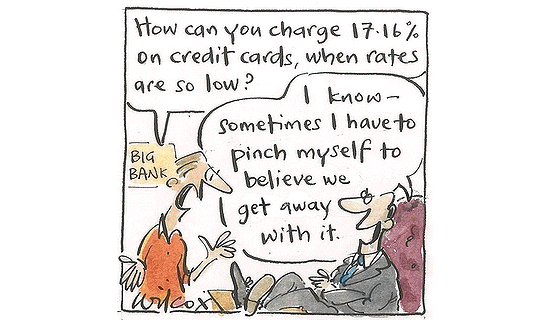
6. Not all it seems
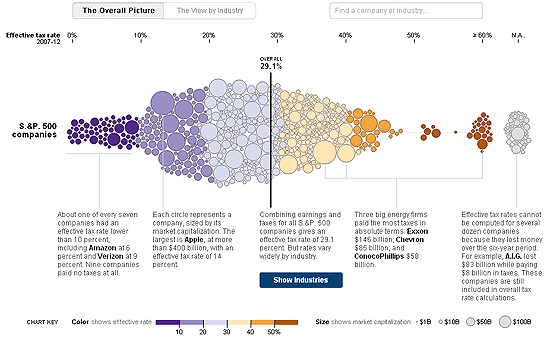
Apple only pays 14% income tax on its worldwide income. Cue outrage, from politicians and journalists alike. Corporate America is privileged and not paying its share. Kiwi companies pay 28%, why can't Americans pay the same? Think of the US deficit benefits if they did.
Well, like many things, this narrative is flawed, it seems. In the period 2007-2012, the S&P500 companies paid 29.1% in Federal, State and Local income taxes in the US, on their worldwide income. Heck, that's more than kiwi companies.
In fact, most big oil and energy companies who have vast international revenues, paid closer to 40%. Ditto their big banks (you know, the ones we love to hate).
You can see the actual data here in a fantastic NY Times interactive graphic, or click on the image below. It does raise the question that if US companies actually pay higher taxes on average than kiwi companies, should we raise our rate? Their higher effective rate doesn't seem to hurt those companies results.
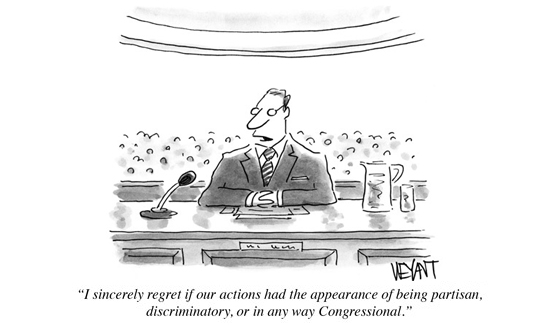
------------------------------------------------------------------------------------------------------------------------------------------
Available now. Our brand new 1 oz Taku gold bullion coin. Details here »
------------------------------------------------------------------------------------------------------------------------------------------
7. Suckers?
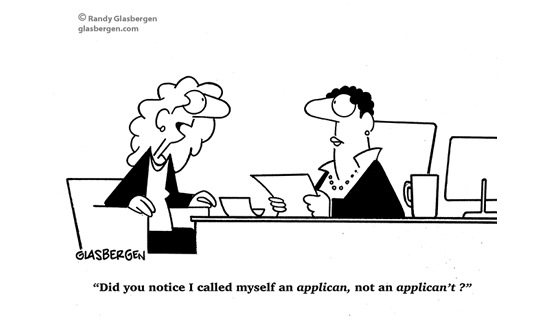
Sydney and Australian politics is agog over a corruption enquiry involving state Labor Party ministers and the awarding of coal mine contracts. All very tawdry. Now the AFR claims some of the private backers are Hollywood big-names, those usually associated with substantial funding of Democrat politicians.
But also interesting in the revelations is how many ex-Kiwis are involved. Rich-listers Ron Brierley, Neville Crichton were both big investors. Earlier in the year they tried to sue their broker for placing their funds into this highly dodgy enterprise, but have since given up that effort. A lot of this is not 'new' but the Hollywood connection is, and it is the first time I have seen a list.
8. Binge culture spreads
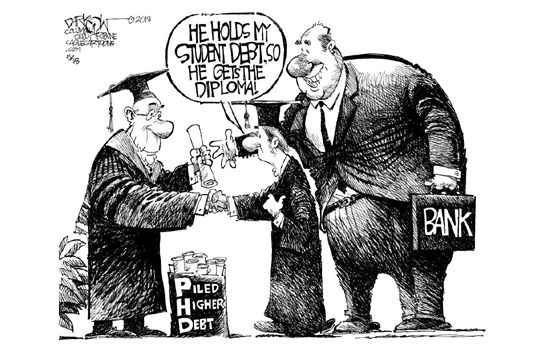
I am not sure he is right about the comparative. Alex Frangos of the WSJ has noticed that "Asia is going on a debt binge, just as most of the rest of the world has sobered up". You could hardly say the US or Europe are 'debt sober'. Still, a binge does seem to be underway in Asia.
Borrowing has increased all across the continent. State-owned companies and local governments in China are taking on more debt, as are motor-scooter buyers in Indonesia, washing-machine purchasers in Thailand and real-estate investors in Singapore and Hong Kong. Malaysia's government has borrowed to fund the new subway and to pay for cash handouts to citizens.
Debt loads in Asia's emerging economies—gauged by public and private debt as a percentage of gross domestic product—now exceed what they were in 1997, when Asia went into a financial crisis that lasted for several years. Much of the run-up has come over the last four years. The overall debt-to-GDP ratio rose to 155% in mid-2012, from 133% in 2008, according to the most recent data from McKinsey Global Institute, a unit of consulting firm McKinsey & Co.
9. Making denser environments acceptable
OK, apartment or condo living is not for me (yet?), but all the same no-one advocating density has yet shown that it can address the affordability issue except when the floor plans are tiny. Density fans will always stumble over that issue; if they don't solve it buyers are always going to choose "freehold single family homes on a section" and stretch till it hurts to get one.
In New Zealand density defies affordability. It never happens except at the margins and which no-one chooses willingly.
But perhaps there is a solution - modular or prefab housing. These are units build offsite and positioned onsite in a wide array of unique structures. They are being seen as a solution in one of the toughest housing markets in the world, Manhattan. Density boosters (and developers) should check out Allison Arieff's NY Times review:
More innovation in factory-produced housing, says GRO’s Robertson, “prevents the cookie-cutter sameness often associated with the process and allows for novel architectural form, nuance and variation” as well as efficiency. This is critical to moving from highly individuated single-family home design to multifamily buildings where individuality can find architectural expression.
Now that the market for housing has rebounded and indeed is booming in some cities, multifamily prefab makes sense for many reasons. The demand for rental housing is rapidly increasing as the interest in home ownership has waned post-housing bust. For the first time ever, California cities are seeing the need for more multifamily housing over single-family homes. And a recent study by Smart Growth America that examined three distinct housing development types revealed that mixed-use infill (when buildings are constructed to occupy the space between existing ones) produced 1,150 times more net tax revenue per acre than suburban development. The sort of community a growing percentage of the population is seeking takes the form of a denser, walkable urban neighborhood. Prefab can make that happen more quickly, efficiently and economically than conventional construction - and increasingly, it’s doing exactly that.

10. Today's quote
"Here’s something to think about: How come you never see a headline like ‘Psychic Wins Lottery’?" – Jay Leno
Dairy prices
Select chart tabs
11. Darwin 101
Watch to the end ...
We welcome your comments below. If you are not already registered, please register to comment
Remember we welcome robust, respectful and insightful debate. We don't welcome abusive or defamatory comments and will de-register those repeatedly making such comments. Our current comment policy is here.