

Today's Top 10 is a guest post from Craig Simpson, senior analyst for interest.co.nz. His is the third Top 10 in our new Friday series from a range of different contributors.
As always, we welcome your additions in the comments below or via email to david.chaston@interest.co.nz. And if you're interested in contributing the occasional Top 10 yourself, contact gareth.vaughan@interest.co.nz.
See all previous Top 10s here.
1. Toyota, Ford, Honda and Nissan lead the global green brand list - really?
The Interbrand Top Green brand list for 2013 shows the top five global green brands are Toyota, Ford, Honda, Panasonic and Nissan. Shell by the way was ranked number 40, just ahead of Avon.
"Sustainability continues to dominate the headlines and minds of executives managing brands across industries and sectors. Customers, too, are concerned about the health and welfare of their families and communities—and how their spending is impacting people and the planet. However, as our research shows, that concern doesn’t always translate into modified consumer behavior" says Jez Frampton, Interbrand Global Chief Executive.
For a definition on judging how green is green you can refer to the ISO 14020 standard. This standard deals with different aspects of environmental labels and declarations.
Some of the traditional global polluters who also made the list were (rankings in brackets): VW (7); BMW (13); Mercedes Benz (17); UPS (32); Hyundai (34); Kia (37); Caterpillar (39) & Shell (40).
2. Forget about fancy asset allocation modelling and start with a 60/40 split
In my past life as a portfolio Manager I literally spent thousands of hours running computer models and mean-variance optimisation in search of the holy grail of asset allocations for investors.
Now, one of the leading Exchange Traded Fund (ETF) providers, Blackrock, basically says I was wasting my time. Using data going back to 1900 Blackrock found that a simple 60/40 “rule” was a useful starting point for investors considering a basic allocation. In a New Zealand context a 60/40 asset allocation would resemble a 'balanced' portfolio.
Capital Spectator has chipped in with a US centric perspective too.
3. Want a gauge on the US economy just follow a handful of Dow Jones component companies
Forget all the economic indicators coming out of the US. If you want a pulse on what is happening look no further than Johnson & Johnson, McDonalds, Wal-Mart, Cisco, Microsoft and Nike.
Since 1990, research shows that those 6 company's sales are closely correlated to US GDP. In fact J&J and McD's sales are 99.2% correlated to US GDP.
4. A white elephant for the "Paris of the tropics"
The city of Manaus in the northern Brazilian state of Amazonas is referred to as the Paris of the Tropics and attracts tourists to its eco attractions and Belle Epoque buildings.
Soon Amazonas will be home to a brand new 42,000 seat steel and fibreglass stadium (Amazônia Arena) and masses of football fans (and no doubt some hooligans) for the 2014 World Cup.
The stadium will cost 600m reais (US$265m), which will make it one of Brazil’s most expensive football venues and a white elephant when running costs are set at 500,000 reais a month and the city’s football team plays in a low division, with matches attended by only a few hundred fans.
5. How to make a city great
Want to know how to make a city great? Follow Copenhagen says McKinsey research.
By 2030, five billion people, or roughly 60% of the world’s population, will live in cities. Ageing infrastructure, stretched budgets and rapid urbanisation are some of the challenges facing city mayors.
According to McKinsey, cities can transform themselves into great places to live and work by doing three things; achieve smart growth, do more with less and win support for change.
6. Performance of the sharemarket during and after a US government shutdown
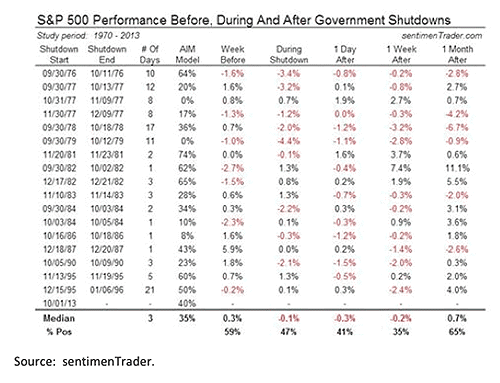
One of the questions on the minds of investors is should I sell my shares or ride out the US government shutdown?
From 1976 until September 30, 2013 there have been 17 US government shutdowns with the longest lasting 21 days. During 53% of the time of a US government shutdown the S&P 500 Index has fallen, with the largest correction being 4.4%.
One month after a shutdown, on average the S&P 500 has risen 65% of the time. Following the shutdown of September/October 1982, the S&P index was 11.1% higher.
The odds are certainly stacked in favour of the market rising and if investors hold great companies with good earnings and strong track records why would they sell?
7. Iran and America break the ice
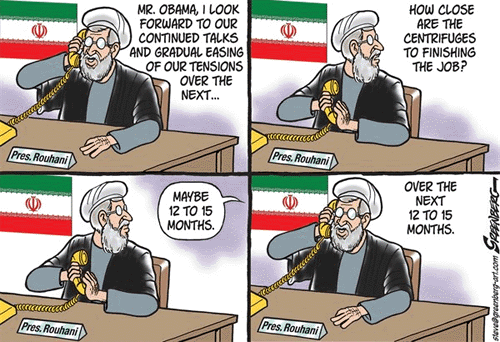
For the first time since 1979, leaders from the US and Iran have talked to each other. Neither America nor Iran published a transcript of the conversation but both hinted that it had been good-natured and constructive, touching on proposed negotiations over Iran's nuclear programme.
The Economist through their own secret sources has revealed what the leaders said to each other. An alternative version is below.
8. If you want to sell the low-cost Apple iPhone 5c in Asia you'd better make it with a gold cover.
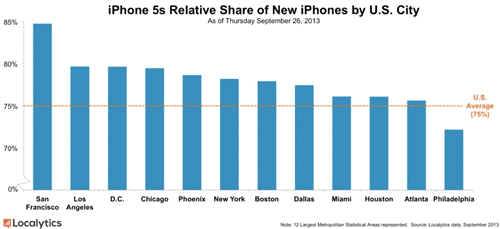
Retailers in China are discounting the iPhone 5c by as much as US$130 just to shift stock. As it happens China was the least interested in the cheaper version. The Americans also appear to be shunning the low-cost version with an average 75% preferring the more up-market brushed aluminium version.
Gold-coloured iPhone 5s in hot demand with prices being pushed over 10,000 yuan (US$1,634) in some stores. Not to be out done Samsung, Apple's biggest rival, has just announced its Galaxy S4 will be offered in two golden colours, following HTC One’s expensive version in 24-carat gold.
9. Cinnabon’s signature product is an 880-calorie cinnamon roll.
I like my food and am quite partial to a warm plum and white chocolate brioche from my local cafe on a Sunday morning, but somehow I don't think I'll be lining up for what the Dallas Observer has called a "gut bomb." Cinnabon's cinnamon roll which has 330 more calories than a Big Mac, is described as a swirly pillow of dough dripping with cinnamon, brown sugar, margarine, and cream-cheese frosting.
We welcome your comments below. If you are not already registered, please register to comment
Remember we welcome robust, respectful and insightful debate. We don't welcome abusive or defamatory comments and will de-register those repeatedly making such comments. Our current comment policy is here.