

Investors who momentarily dipped out of the New Zealand share market in 2020 could’ve missed out on nearly all the year's returns.
Research done by actuarial firm, Melville Jessup Weaver (MJW), shows the S&P/NZX 50 Index’s largest three-day rebound of 2020 occurred from March 26.
The spike is equivalent to 96% of the year’s total return. So, being out of the market during these three days would’ve reduced an investor’s total return from 13.9% to 0.6%.
There were a number of other three-day periods that saw hefty gains (and falls) on the S&P/NZX 50 Index.
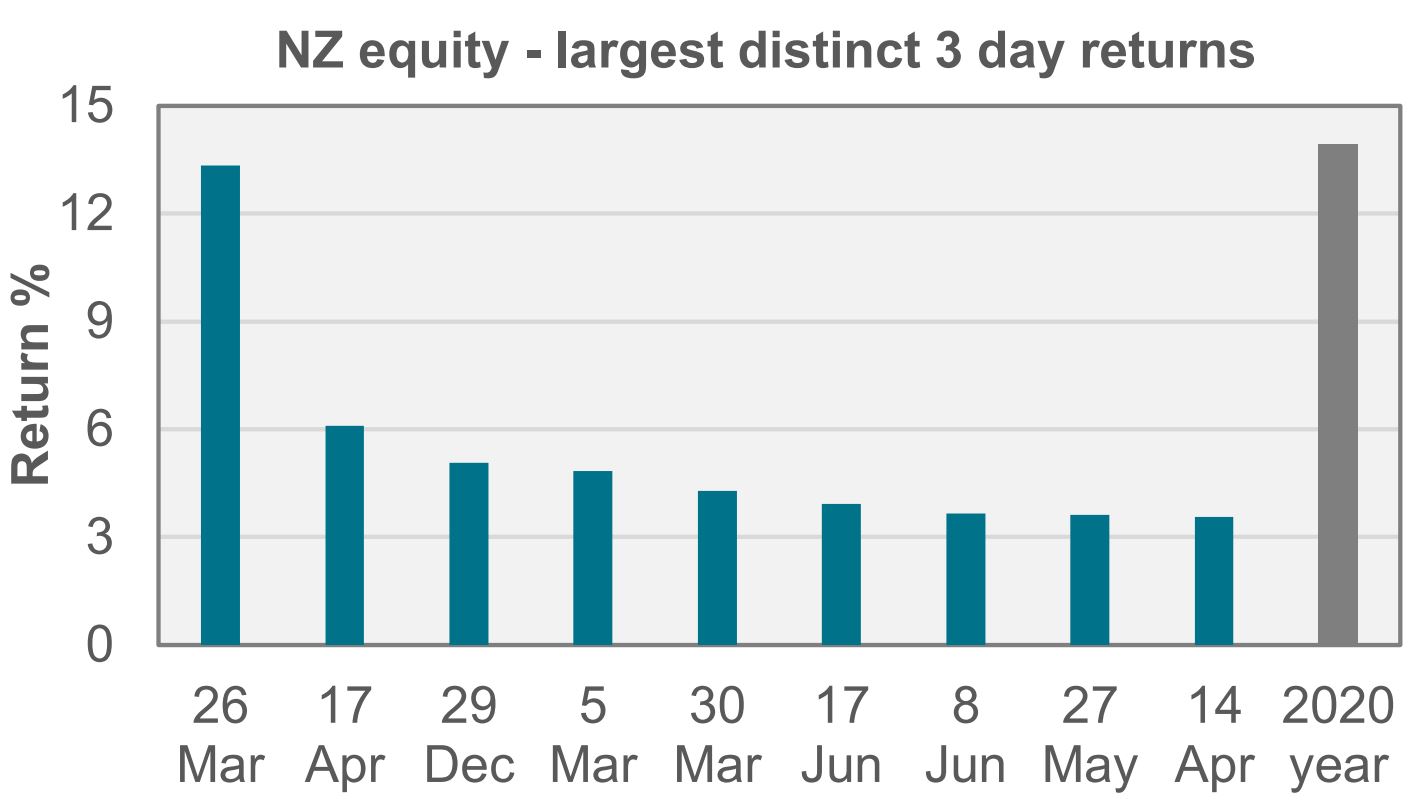
“All of the movements shown on the chart [above] contributed at least a quarter of the total year’s return," MJW actuary, William Nelson, said.
The analysis shows how even a small length of time spent out of the market could see an investor end up with quite different returns to other investors who stay put.
Good opportunities can be fleeting
However the MJW analysis also shows how a fortunately-timed exit and re-entry into the S&P/NZX 50 Index could’ve been lucrative in 2020.
Nelson said the “most decisive win” could’ve been experienced by exiting the market during the period of heavy losses from March 10 to 23.
This would’ve resulted in a return of 48.7% for the year, compared to the actual return of 13.9%.
Exiting 10 days earlier would’ve still produced a return of 21.8%, but the impact of moving too late would've been more significant.
“Investors who exited the market 10 days late would have seen a negative return for 2020, some 15 percentage points below the market return,” Nelson said.
“While volatile markets create opportunities for significant market timing victories, these opportunities can be fleeting and investors must be nimble as well as decisive to fully capture them.”
High volatility, lots of trades
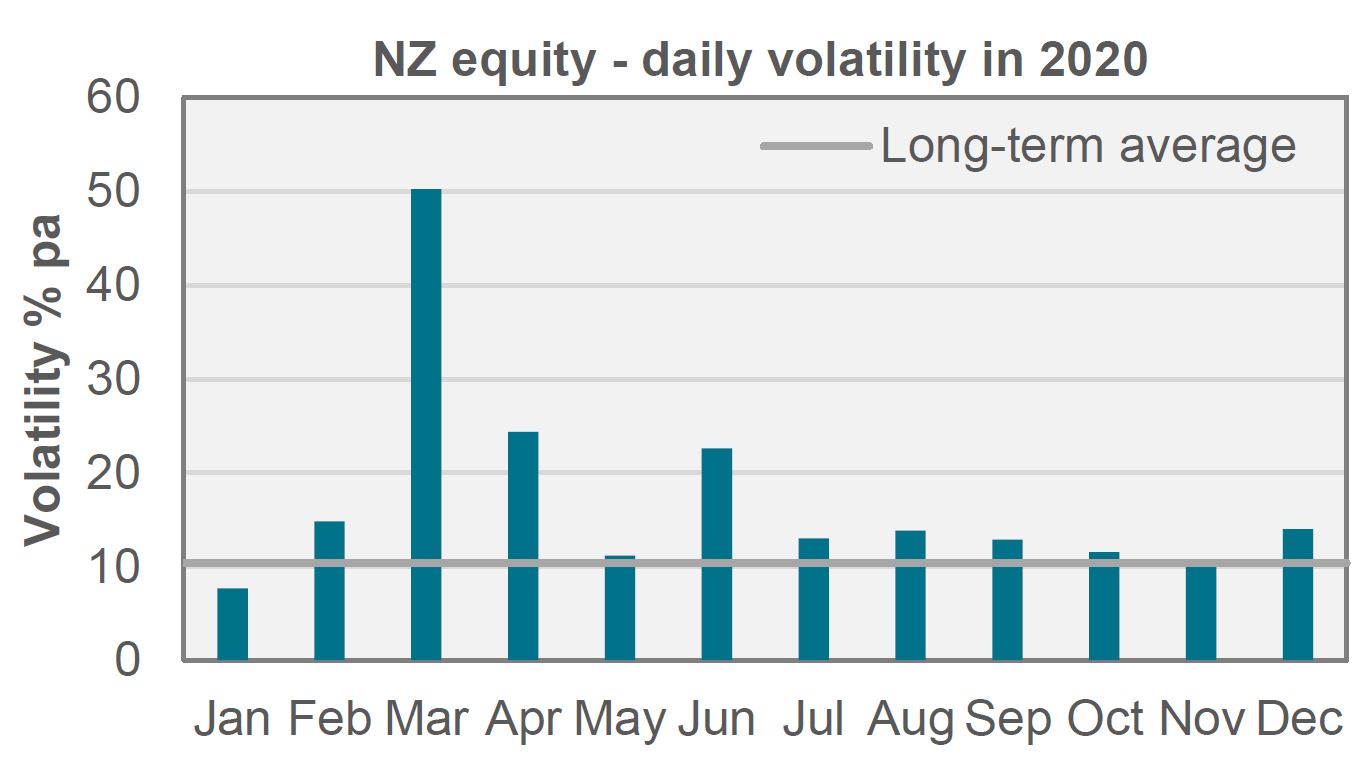
MJW’s graphs reflect the extreme levels of volatility seen in 2020, which were marginally above those at the Global Financial Crisis in 2008, and more than twice the usual level.
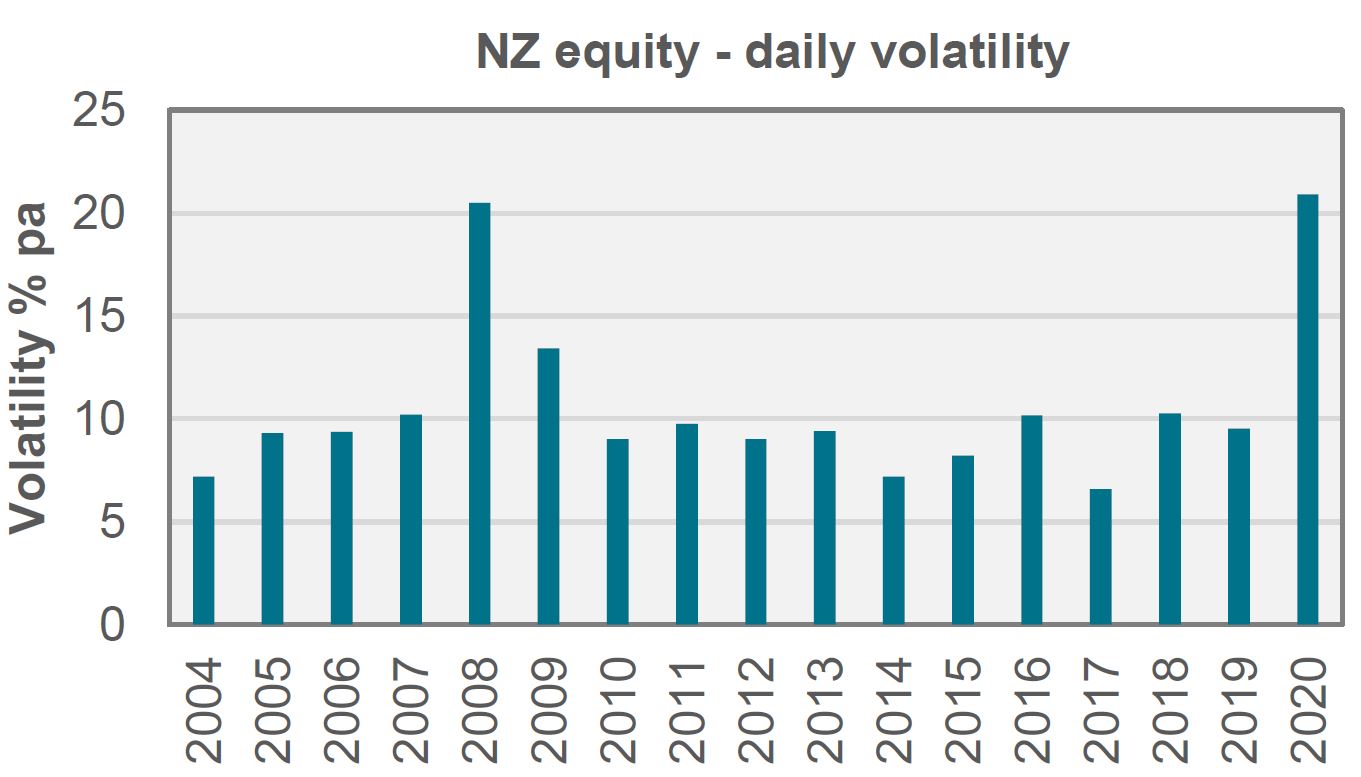
Much of the volatility occurred during March and April.
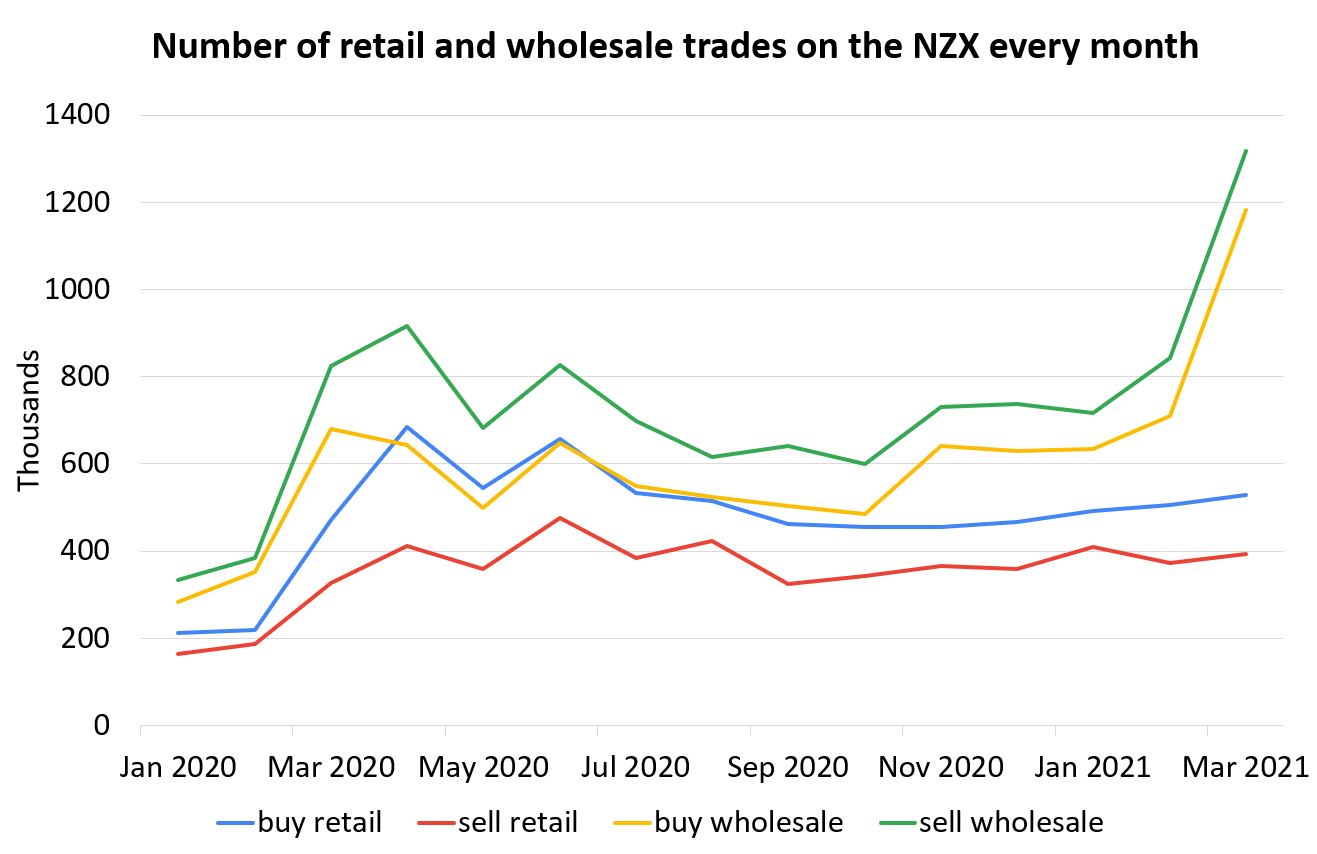
Indeed, data from the NZX shows how active both retail and wholesale investors were in 2020, making seismic numbers of transactions, way above historic levels.
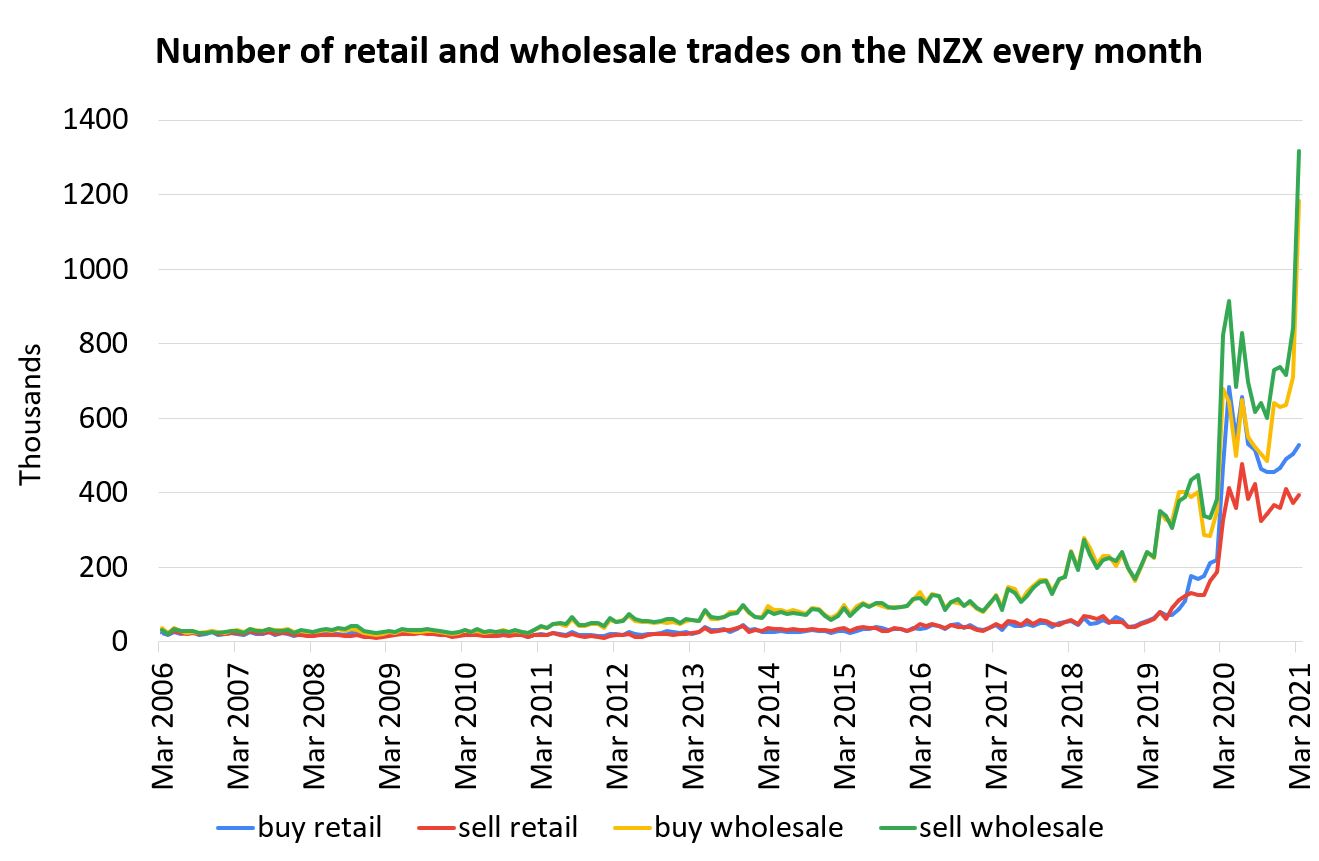
Much of spike from retail investors can be put down to greater access through share trading platforms like Sharesies and ASB Securities.
Wage subsidy payouts also saw more cash enter the economy in 2020, while low interest rates prompted people to look for yield in equity markets.
Interestingly, retail investors have been doing more buy trades than sell trades over the past year or so, while the opposite is the case for wholesale investors.
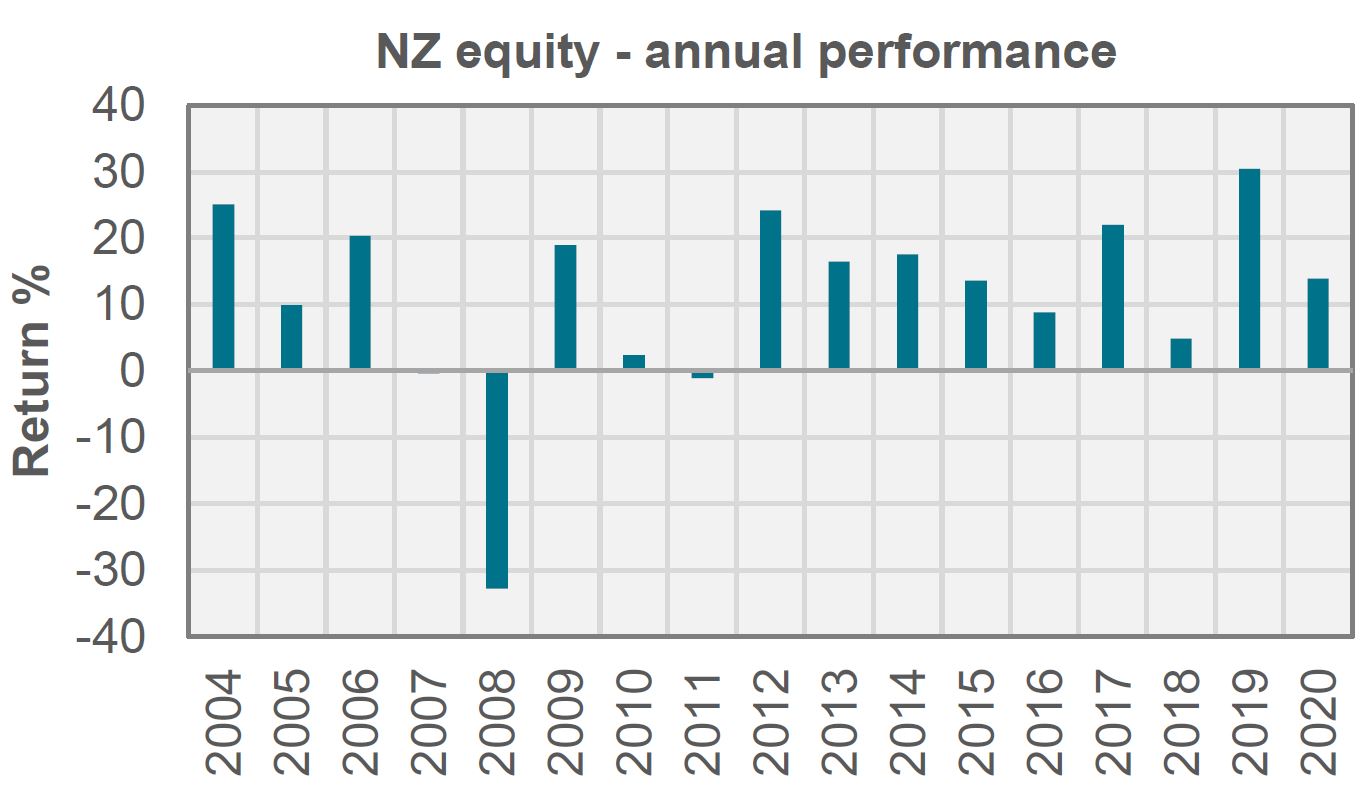
At 13.9%, returns over 2020 were just above the S&P/NZX 50 Index’s average since inception of 11.3%.
Discipline
Nelson said investors who want to reposition themselves, but avoid the risks associated with doing so, could divide their transaction into separate tranches and execute them at different times.
“As the number of tranches increases, the likely losses due to a sudden spike in asset values will decrease,” he said.
Investors could also wait until markets are less volatile before repositioning themselves. Although it’s difficult to know when a period of calmness will come.
Nelson concluded: “From an institutional investor’s perspective, 2020 has demonstrated shorter-term positioning has the ability to generate superior returns.
“However, the risks of repositioning are great, and this article highlights the benefits of retaining a disciplined approach; transacting during times of turbulence has the potential to lead to significant loss.”
*This article was first published in our email for paying subscribers. See here for more details and how to subscribe.
We welcome your comments below. If you are not already registered, please register to comment
Remember we welcome robust, respectful and insightful debate. We don't welcome abusive or defamatory comments and will de-register those repeatedly making such comments. Our current comment policy is here.