
The following was issued on behalf of tax consultancy OliverShaw, whose Principal, Robin Oliver, is former Deputy Commissioner of Policy at Inland Revenue.
New research shows New Zealand’s wealthiest pay their fair share of tax
New independent research shows that high-wealth individuals pay more tax on average and represent a higher proportion of the total tax take than may previously have been thought.
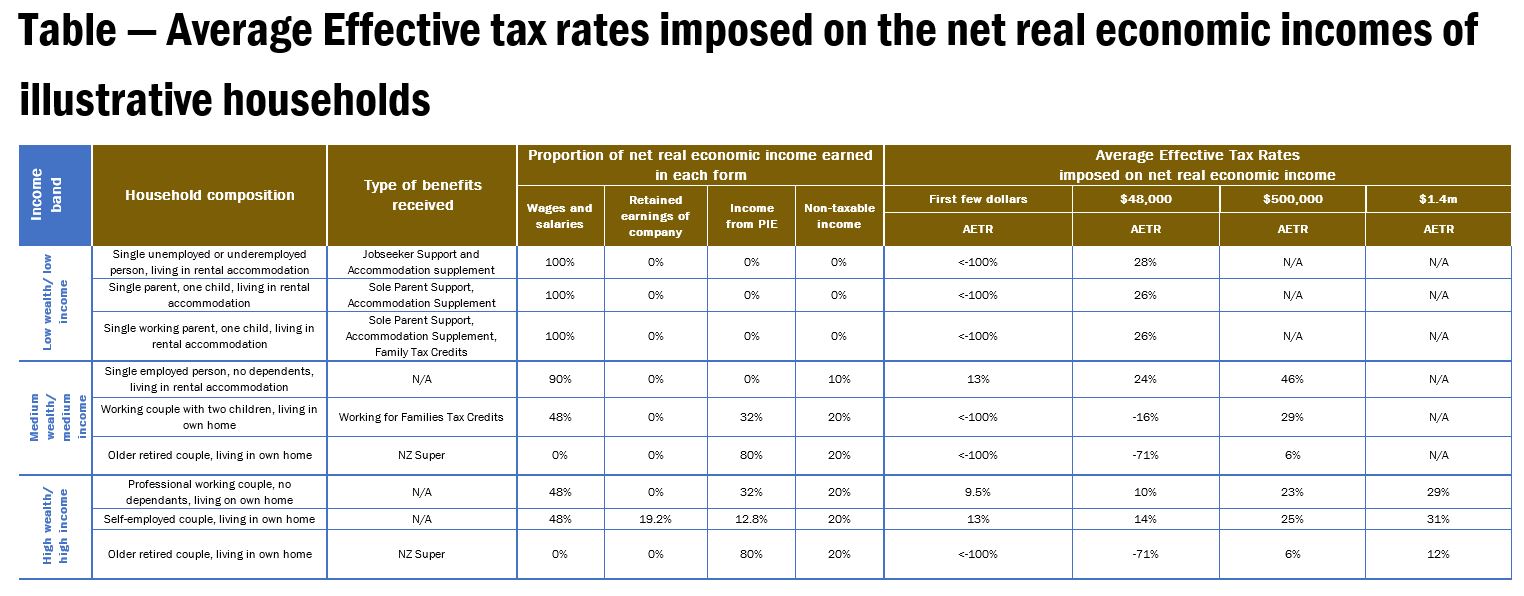
It has been strongly suggested that, in practice, New Zealand’s income tax regime is not as fair as statutory tax rates would suggest. However no reliable data exists to support this claim. Leading tax consultancy OliverShaw commissioned Australasian consulting firm, Sapere Research Group, to prepare a report on the effective rates of tax that New Zealand’s tax and benefit systems impose on the incomes of its residents. The 263-page report adopted the standard modelling methodologies used in the OECD Taxing Wages study to review the income and tax of illustrative households to calculate the average effective tax rates paid by low, medium and high-income earners in New Zealand.
“One of the questions asked is whether the very wealthy pay taxes at the same or higher rate than middle income earners,” says OliverShaw Principal, Robin Oliver. “This research shows clearly that, whether you consider taxable income or other measures, such as economic income, the answer is: ‘Yes, they do.’ The key conclusion of the Report is: “Average effective tax rates increase as the net real economic incomes of households increase.”
“However, when it comes to considering whom to tax, on what basis and at what rate, trade-offs have to be made between taxing all income at the same rate and other policy concerns such as providing assistance to lower income families and encouraging investment. Tax rules are the product of policy conclusions as to what is reasonable, workable, efficient and equitable.”
In order to standardise the data the Sapere Report, following the OECD model, takes into account Working for Families and other benefits, as you cannot sensibly consider average effective tax rates (AETR) without doing so.
“Apparent inequities with the existing tax and benefit system are easy to identify,” says Oliver.
“These occur when lower income earners pay tax at a higher effective marginal rate than higher income earners – for example when people on benefits have their benefits drastically abated once they start working and earning even a modest wage. They also occur when people who earn the same income are taxed at vastly different effective rates, as happens with the widely supported Working for Families tax credit. Inequities are usually the result of deliberate and considered government policy: Working for Families creates inequities because governments have decided to give more assistance to people with families to support, who need it most.
“The problem begins with a lack of agreement on what constitutes income,” says Oliver.
“Is it taxable income as defined in the Income Tax Act? Does it include KiwiSaver earnings? Does it include monetary benefits received from the government? Does it include services that the government funds – healthcare and education – which are delivered to citizens? Does it include the appreciation in value of the family home – value that will be realised only on the sale of that home? Does it include the part of interest that merely compensates the loss of value resulting from inflation? Does it include investment in education that is expected to lead to higher future income?
“The problem is compounded because those who earn most also have most discretion about how they earn. Wealthier individuals generally derive a greater share of their income from sources other than wages and are encouraged to take advantage of the different tax rates payable on income from companies, trusts, property and PIEs. Thus, increasing the top marginal income tax rate will likely have only a modest effect on their effective tax rate. This apparent anomaly is unsurprising. In taking advantage of different tax rates high, income earners are behaving in ways that economists advising government predicted, in the process meeting those policy objectives which governments favour highly – saving for retirement, protecting assets, investing in businesses, creating jobs, developing commercial and residential property.
“The Sapere report provides a model for considering economic income which addresses some of the challenges faced in collecting hard, reliable data and considering the equity and efficiency implications of potential changes in the way income is taxed. The report makes clear that, to achieve equity, consideration of the redistributive function of the income tax system must take into account both taxation and the redistribution of funds by way of concessions, benefits and government-funded services.”
Key findings
The rich pay most of the tax collected in New Zealand and the richer a person is, the more tax they are likely to pay.
Effective tax rates are generally less than the statutory rates.
Average effective tax rates increase as the net real economic incomes of households increase.
As a result of deliberate government policies, households of single employees renting face some of the highest average effective tax rates, and some of the highest marginal tax rates apply to some of the lowest income earners.
Notes on the Sapere Report
Who pays what proportion of taxes
The Sapere study addresses the question of who pays what proportion of tax and where does the burden fall. The IRD’s own data, from 2021 shows that indeed, the rich pay most of the tax collected in New Zealand and the richer a person is, the more tax they are likely to pay.
• Most (68.5%) of the income tax revenue raised by government from individuals in the 2021 income year was paid by the 21.2% of taxpayers in the two top income tax brackets (i.e. those with taxable incomes between $70,001 and $180,000, and those with taxable incomes greater than $180,000 per annum). They collectively paid $31,931 million of tax on their assessed taxable incomes of $122,244 million.
• Individuals earning taxable income from $70,001 to $180,000 each year (18.8% of taxpayers) collectively earned $81,889 million (37.7%) of taxable income and paid $19,562 million (42%) of tax.
• Individuals earning taxable income in excess of $180,000 each year (2.4% of taxpayers) collectively earned $40,355 million (18.6%) of taxable income and paid $12,369 million (26.6%) of tax.
• Individuals earning taxable income from $180,001 to $300,000 each year (1.6% of taxpayers) collectively earned $15,042 million (6.9%) of taxable income and paid $4,350 million (9.3%) of tax.
• Effective tax rates (the percentage of tax paid when income is defined more widely than in the Income Tax Act) are generally less than the statutory rates for most people. The divergence is the result of the way that marginal tax is charged coupled with deliberate policy decisions by successive governments.
We welcome your comments below. If you are not already registered, please register to comment
Remember we welcome robust, respectful and insightful debate. We don't welcome abusive or defamatory comments and will de-register those repeatedly making such comments. Our current comment policy is here.